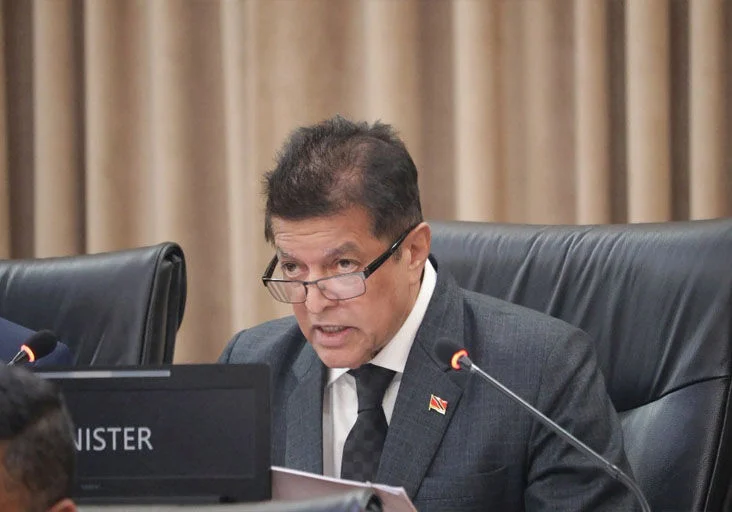
During a Thursday session of Trinidad and Tobago’s Standing Finance Committee, Health Minister Dr Lakram Bodoe delivered key updates on public health spending, ongoing medication access challenges, and national emergency preparedness while fielding targeted queries from Diego Martin West MP Hans Des Vignes. Bodoe confirmed the government’s fiscal 2027 budget projection for the Chronic Disease Assistance Programme (CDAP) pharmaceutical costs sits at $33 million, marking a notable uptick from the $29.9 million expended on the programme’s medications in the 2026 fiscal year. The hearing was convened to conduct line-by-line scrutiny of the Ministry of Health’s upcoming budget allocation. Des Vignes opened his line of questioning by pressing for clarity on whether the recently revised CDAP medication formulary would resolve persistent supply gaps that have disrupted care for patients managing chronic conditions including cardiovascular disease and various forms of cancer. In response, Bodoe outlined that the administration completed a full review of the long-running CDAP list to phase out older, less effective drug formulations in favor of more advanced therapeutic alternatives, while keeping the total number of covered core chronic disease treatments at 52 items. He emphasized that 49 of the 52 listed medications are currently in steady supply, with only three narrow chronic disease categories facing intermittent shortages at the time of the update. The nationwide CDAP network serves roughly 300,000 registered citizens across 289 partnered private retail pharmacies, according to the minister. Bodoe acknowledged that some patients may encounter out-of-stock notices at their nearest local pharmacy, but noted that formal cross-pharmacy coordination protocols are already active to redirect patients to nearby locations with the required medication on hand. He cited a recent case reported to his office the Wednesday prior, where a resident unable to access their prescription at their neighborhood pharmacy successfully secured the treatment at a different participating outlet through the established referral process. Bodoe also reassured the public that clinically equivalent alternative medications are available for all items facing temporary supply disruptions, to prevent gaps in patient care. Shifting to specialized care allocations, the minister confirmed a dedicated $35 million line item has been earmarked exclusively for oncology radiation therapy services, covering treatment costs for local cancer patients receiving care at designated public health institutions. When Des Vignes raised concerns over whether the $1.145 billion allocation to the North West Regional Health Authority (NWRHA) would be sufficient to cover full staffing rosters, consistent drug stock, and uninterrupted operations at the St James oncology centre, Bodoe confirmed the budget line is structured to cover all personnel salaries, medical supplies, utility costs, security services, and operational expenses for the facility, and would be fully adequate. He extended the same guarantee of sufficient funding to the North Central Regional Health Authority, following a parallel line of questioning. The final segment of the exchange addressed emerging global public health risks, after Des Vignes referenced a recent confirmed human fatality in France linked to the Shamonda virus – a pathogen spread by biting midges that historically primarily impacted livestock populations. Des Vignes pressed the minister on whether Trinidad and Tobago has a coordinated response plan in place if the virus were to reach the country’s borders. Bodoe clarified that the national Disaster Preparedness Coordinating Unit focuses primarily on natural disaster response, while all communicable disease surveillance and outbreak response protocols fall under the oversight of the Office of the Chief Medical Officer, before confirming that the country has all required frameworks in place to mount a rapid, effective response if the virus is detected locally.