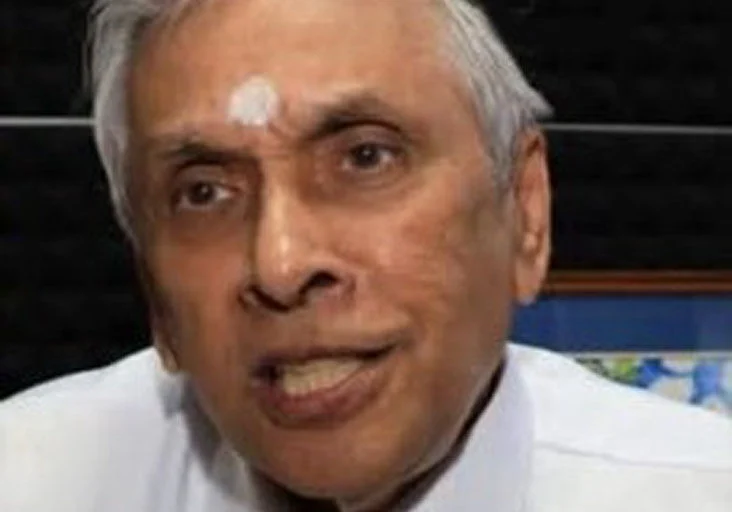
A cascade of resignations has completely dissolved the board of the South West Regional Health Authority (SWRHA) in Trinidad and Tobago, a development that unfolded over the span of just two recent weeks. The exodus began with three core members stepping down: board chairman Anil Gosine, director Dr. Anand Chattergoon, and member Sinanan Dass, all of whom had received their official appointments to the body in the prior year. Gosine cited personal, undisclosed reasons for his departure when he spoke to local outlet the Express at the time of his initial resignation, declining to share additional context. Chattergoon, by contrast, noted he was stepping away to advance a national-level initiative that he argued would deliver tangible improvements to the country’s entire public healthcare network. In the days following these three exits, every remaining board member also submitted their formal resignations, leaving the SWRHA with no sitting governing body in place. Per the Regional Health Authority Act’s second schedule, a properly constituted SWRHA board must hold between seven and nine members, all formally appointed by the national President. In a recent phone interview with the Express, Chattergoon shared that he took action the moment the number of remaining board members dropped to five, well below the legal minimum quorum for valid operations: he sent a formal letter to Health Minister Lackram Bodoe and copied Prime Minister Keith Rowley via email to flag that the board had ceased to be a legally recognized entity. “I warned the minister explicitly that he was in significant jeopardy,” Chattergoon recounted. “Without a functioning board acting as a check on the chief executive officer, any unlawful or improper decisions the CEO makes will have no governing body to serve as a buffer, and the minister will be held directly liable for those missteps. I flagged that this scenario could lead to embarrassing, legally fraught outcomes that would put him in professional and political trouble.” Chattergoon emphasized that his outreach was motivated by personal regard for the minister, rather than a desire to confront or criticize, and that he did not expect a formal response to his correspondence. He outlined that under standard SWRHA governance rules, the elected board holds exclusive authority to set organizational policy, oversee long-term strategy, govern internal operations, and take disciplinary action against the CEO when required. With no board in place, the health minister will be forced to assume full interim oversight of the SWRHA’s operations. “The law clearly states the CEO reports directly to the board, so my biggest concern is who is left to hold the CEO accountable when there is no board in the room?” Chattergoon explained. “That is an extremely high-risk situation: an unsupervised CEO running the entire regional health authority with no formal oversight mechanism, and every choice they make now falls directly on the minister’s shoulders.” He also noted that the Medical Professional Association of Trinidad and Tobago (MPATT) had previously raised formal objections to a specific physician appointment at the SWRHA, a process that per internal policy requires explicit board approval. With no governing body in place, the CEO now has unilateral power to sign off on executive and senior staff appointments without independent review, a loophole Chattergoon warned could quickly expose the authority to costly legal challenges. Chattergoon clarified that there was no coordinated, collective decision for all board members to resign at the same time, so he had no insight into the personal motivations that led other members to step down. For his part, he said he had grown increasingly uncomfortable remaining in his board role, and chose to resign to dedicate his full attention to rolling out a standardized client feedback system that he hopes to implement across every regional health authority nationwide to improve patient care quality. When the Express reached out to Health Minister Bodoe for official comment on the dissolved board and the urgent calls to appoint a new governing body, no response had been received at press time.