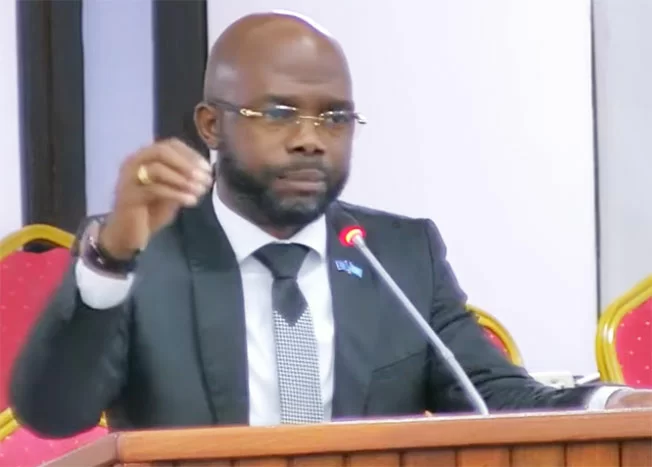
Suriname’s Minister of Public Health, Welfare and Labour André Misiekaba announced a phased, nationwide decentralization of nursing education programs during a recent parliamentary session in De Nationale Assemblée, as the government moves to address longstanding critical shortages of frontline care workers across regional districts. The first decentralized training cohort is already operational in the Marowijne district, where 41 local young learners are enrolled in mid-level (BO) nursing tracks, with an additional smaller group pursuing higher professional (hbo) level nursing qualifications. The first graduation ceremony for this inaugural Marowijne cohort is scheduled for the end of December 2029. To enrich hands-on learning for Marowijne trainees, the ministry has formalized a cross-border partnership that places students for clinical rotations at a healthcare facility in Saint-Laurent-du-Maroni, French Guiana, offering them expanded practical experience opportunities. Misiekaba noted that the localized training model is designed to build a stable, homegrown nursing workforce in the district, rather than forcing local residents to travel to the capital for education, which will directly strengthen regional primary care capacity. The government has already begun preparatory work to launch a parallel nursing training program in the Brokopondo district, targeting a March 2027 launch date, following high levels of demonstrated interest from dozens of local young people in the area. After the Brokopondo site becomes operational, the ministry will extend the program to the Wanica district, a move explicitly aligned with projected staffing gaps at the Wanica Hospital. Misiekaba also contextualized the expansion plans by noting the very high global demand for qualified Surinamese nurses, a trend that has driven significant numbers of trained local care workers to seek higher-paying positions abroad. By scaling up decentralized training capacity, the government aims to produce enough new nursing graduates to maintain a sufficient domestic workforce for Suriname’s own healthcare system, even as a portion of newly qualified professionals pursue international career opportunities.