GEORGETOWN, Guyana – Oct 23, 2026 – U.S. global engineering and procurement giant Bechtel has confirmed that energy major Chevron opted out of further funding for the front-end engineering and design phase of a planned $1 billion to $2 billion deep-water port development in Guyana, shortly after completing its acquisition of Hess’ regional assets. The ambitious port scheme, which was initially backed by Hess, is currently evaluating two potential sites: Crab Island, situated at the mouth of the Berbice River, and the previously proposed CGX shorebase location.
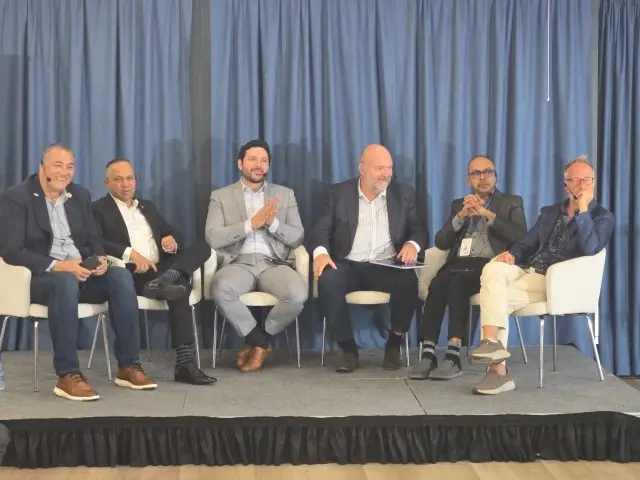
Speaking during a panel session at the World Trade Centre Guyana, Bechtel’s Country Manager for Guyana Harry Pastuszek revealed that the firm had finalized a full pre-front-end engineering and design (pre-FEED) assessment for the port two years prior, with Hess having contributed $4 million to cover the cost of those initial feasibility evaluations. The original terms of the partnership outlined that Hess would continue co-funding subsequent development stages in collaboration with the Government of Guyana, a commitment that Chevron declined to honor after taking over Hess’ operations. Pastuszek emphasized the firm held no negative sentiment toward Chevron’s decision, framing it as a routine corporate strategic reassessment following a large-scale acquisition.
In the wake of Chevron’s withdrawal, the Guyanese government has now contracted independent advisory firm Cross Boundary Group to deliver an updated feasibility study, which revises and expands on 2016 foundational research conducted by the Inter-American Development Bank. The core objective of this updated analysis is to map out how the proposed Atlantic deep-water port can serve as a critical trade gateway for landlocked northern Brazilian regions, including the industrial hub of Manaus. Jamie McInerney, Deputy Head of Latin America and Caribbean Investment Advisory at Cross Boundary Group, explained that the ongoing study is compiling granular operational and market data to calculate the port’s projected cargo throughput, revenue streams, and long-term cash flow, to formally verify the commercial bankability of the high-cost infrastructure. McInerney noted that the port, linked to a planned new road corridor connecting the Guyana-Brazil border to the coast, would create a far more time-efficient and reliable shipping route for manufactured goods moving out of northern Brazil, compared to existing overland and riverine pathways.
U.S. Embassy Senior Commercial Officer Bruce Ellsworth announced during the same panel that the U.S. Export-Import Bank, the federal government’s official export credit agency, has already submitted a formal letter of interest to the Guyanese government to provide financing for the port’s phase three full engineering design study, a $50 million process that is expected to kick off immediately after the current feasibility assessment is finalized. Additional potential funding support has also been flagged by Guyana’s President Irfaan Ali, who recently confirmed that Qatar has expressed willingness to contribute unspecified levels of investment toward the port’s eventual physical construction.
Local Guyanese shipping industry leader Chandradat Chintamani noted that to unlock the port’s full operational value, the development will need to be paired with a 100-kilometer dedicated cargo superhighway connecting the Berbice port zone directly to the national capital Georgetown. The broader industrial plan for the port’s surrounding region also includes government-backed incentives to attract data centers, fertilizer manufacturing facilities, and a potential oil refinery, all located in close proximity to ExxonMobil’s Longtail energy project, which is slated to produce 1.5 billion cubic feet of natural gas and 290,000 barrels of condensate per day at full operation.