At a formal ceremony hosted at Baha Mar on Tuesday, the Bahamas Ministry of Education, Science and Technology unveiled the independent Bahamas Education, Science and Technology (BEST) Foundation, a private-sector governed non-profit designed to mobilize corporate investment and philanthropic contributions for underfunded public education initiatives. The event also saw the launch of the ministry’s refreshed official logo and a multi-year strategic roadmap for national school system upgrades.
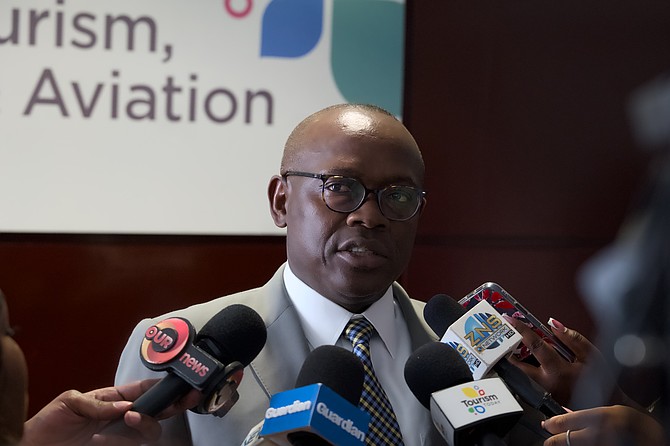
Speaking to reporters on the sidelines of the event, Deputy Prime Minister and Education Minister Chester Cooper confirmed that attendees pledged a combined $500,000 in initial donations at the launch, a sum that represents less than 1% of the $300 million in additional funding the ministry estimates it requires to deliver sweeping, system-wide transformation of Bahamian public schools. Cooper explained that the ministry’s annual government allocation sits at roughly $400 million, but the vast majority of that budget is earmarked for staff salaries and statutory allowances, leaving almost no discretionary funding for critical upgrades to school infrastructure, edtech rollouts, and expansion of the Bahamas Technical and Vocational Institute (BTVI). “Every bit of support helps push this work forward,” Cooper noted, framing the foundation’s work as the start of what he called a “revolution in education” and urging the broader private sector to step up with larger, sustained commitments in the months ahead.
The minister outlined a slate of priority initiatives the foundation’s funds will support: scaling the recently launched Young Innovators Club, expanding targeted special education services, building teacher and administrative capacity, rolling out standardized student assessment frameworks, expanding vocational training access, constructing new technology-equipped modern school campuses, and developing a dedicated new BTVI facility. He emphasized that the foundation is structured to complement, not replace, core government public education spending, with binding governance rules that mandate independent annual financial audits and full public transparency reports every year to ensure donor funds are deployed as intended. The accompanying new strategic plan sets a concrete target of lifting the national high school graduation rate to 85% by 2030.
The launch event featured pre-recorded video testimonials from Family Island education leaders, who laid out stark gaps in resources that leave thousands of rural students at a systemic disadvantage. Abaco District Superintendent Chester Cooper described the aftermath of a 2023 house fire that left multiple local students without all their personal learning belongings, noting that while the local school community rallied to provide emergency support, the ad-hoc aid was insufficient to fully address the students’ needs. He added that sustained, dedicated foundation funding would create a safety net for families hit by unforeseen hardship, ensuring no student loses access to learning support due to circumstances outside their control.
Don Barr, who oversees schools across Exuma, Cat Island, Long Island and Ragged Island, highlighted the total absence of purpose-built, well-resourced special education centres for students on the autism spectrum in his district, noting that local school budgets are regularly stretched to cover out-of-pocket costs for low-income families, including national exam fees and emergency medical flights for students whose caregivers cannot afford the travel costs. Andrew Dean, South Central Bahamas District Superintendent, outlined that science classes across his region lack even basic lab equipment including microscopes, beakers and test tubes, leaving students unable to complete hands-on experiments, while most campuses also lack reliable high-speed internet, updated textbooks, sufficient computers, and interactive digital learning screens. “Just because a child lives in Mayaguana does not mean they should be denied the same supplies and opportunities as a student in New Providence,” Dean said, arguing for full equity of access to learning resources across all islands.
Student representative Roneika Joseph, a science and technology-focused learner at SC McPherson Junior High, also addressed the launch, calling for targeted investment to modernize public school classrooms so that public system students can compete on equal footing with their peers at private institutions, and on the global academic stage. The event followed a national address delivered by Minister Cooper in August, where he confirmed there are currently 67 special education units and programmes operating across the Bahamas, 22 of which are located on the Family Islands.