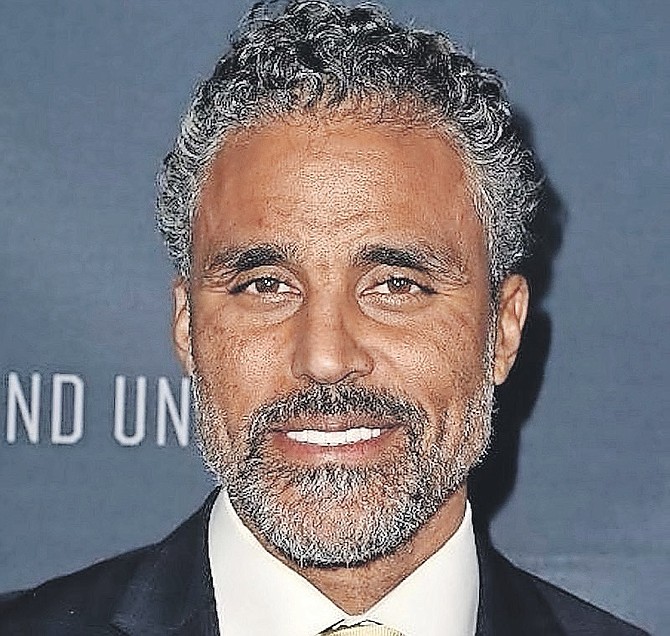
During a recent Senate deliberation over two 2026 legislative amendments — the Anti-Terrorism (Amendment) Bill and the Companies (Amendment) Bill — prominent Bahamian Senator and former NBA athlete Rick Fox delivered a sharp, wide-ranging critique of the incumbent Davis administration’s policy prioritization, flagging longstanding unaddressed domestic hardships as officials allocate resources to an upcoming royal visit. Fox, Tribune Media’s chief reporter Leandra Rolle confirmed, opened his remarks by highlighting cascading public grievances across The Bahamas: recurrent, unplanned nationwide power blackouts that disrupt daily life and commercial activity, persistent structural deficiencies in the local public healthcare system, and a growing backlog of unpaid public sector debt. He contrasted these unmet domestic needs with the government’s decision to earmark funding for the forthcoming royal tour, arguing that ordinary Bahamian citizens are being sidelined behind priorities that include the British monarchy, outstanding national debt servicing, cruise line industry incentives, and foreign stakeholder interests. Drawing a cautionary parallel to widespread mass protests that have roiled Paris in recent months over soaring cost of living and eroding public services, Fox warned that unaddressed public frustration could escalate into similar civil unrest if policymakers continue to ignore constituent demands. “History repeats the same hard lesson for every administration: when communities are overlooked for too long, they stop making polite appeals. We should never test just how long that threshold can be,” he emphasized. Fox also pushed back against the disconnect between Prime Minister Philip Davis’ recent high-profile address at the United Nations, where he advocated for national sovereignty and greater empowerment for small island developing states, and the administration’s domestic policy choices. He noted that the rhetoric of sovereignty being promoted on the global stage rings hollow without tangible action to deliver basic functional services for Bahamian residents. Expanding on the theme of sovereignty, Fox argued that consistent, reliable electrical grid access is the foundational prerequisite for advancing national data sovereignty and building local artificial intelligence infrastructure — goals that The Bahamas cannot possibly achieve while grappling with unstable, unreliable power supplies. He framed this core priority as a call for collective “grid sovereignty” that delivers tangible, consistent results for every household: the ability to flip a light switch and have power come on reliably, no exceptions. Rejecting partisan framing, Fox stressed that the national power crisis is not a problem exclusive to either the PLP or FNM political parties, but a shared national challenge that demands cross-party, collective action — one that can only be resolved if the government reorders its priorities to put local citizens first. Fox also touched on recent government efforts to erase vestiges of colonial history, such as the plan to rename the historically named Columbus Primary School, and questioned why officials have not extended that commitment to renaming Prince Charles Drive, a major public thoroughfare. He issued a direct challenge to the administration to place formal reparatory justice and full local economic independence on the official agenda for the king’s upcoming visit, rather than only rolling out ceremonial red carpet treatment. “At times we present ourselves as if we are eager to follow Barbados’ path toward full republican status, but then we defer and lay out all the stops for visiting royal representatives,” Fox noted. “We speak with bold rhetoric out of one side of our mouths, then bow in deference out of the other.” Partway through Fox’s address, fellow Senator Latrae Rahming raised a point of order, arguing that Fox’s remarks about the royal visit and domestic service gaps were not relevant to the anti-terrorism legislation under consideration. Fox pushed back to defend the relevance of his comments, noting that the anti-terrorism bill’s core purpose is to safeguard public safety and national stability. When Rahming pressed to ask if Fox was labeling the visiting king a terrorist, Fox clarified that modern acts of oppression and harm take many varied forms, and that systemic, prolonged neglect of a population’s basic needs can constitute a form of pervasive, oppressive harm that the legislation is intended to mitigate.