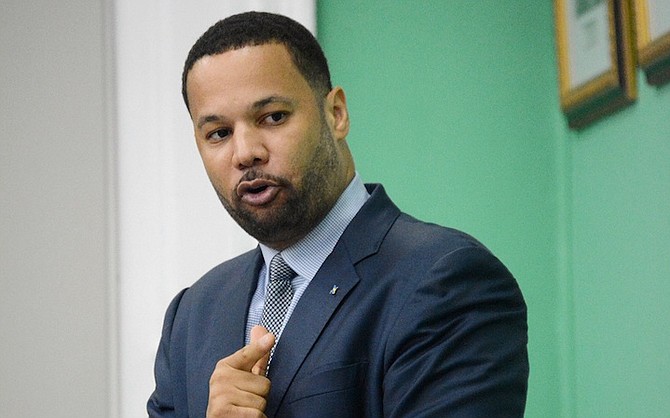
A fiery parliamentary clash erupted in the Bahamas’ House of Assembly yesterday, as Long Island Member of Parliament Dr Andre Rollins from the opposition Free National Movement (FNM) launched a scathing attack on the governing administration over its handling of two very different legal claims. The core of Dr Rollins’ accusation is a flagrant double standard: the government is actively fighting a grieving mother in court over the preventable death of her 2-hour-old newborn, while quietly doling out millions in taxpayer dollars to settle lawsuits brought by well-connected prominent figures.
The confrontation unfolded during debate on the 2026 Companies Amendment Bill, pitting Dr Rollins directly against Foreign Affairs and Immigration Minister Fred Mitchell. Dr Rollins argued that the administration has repeatedly bypassed full court proceedings to cut confidential settlement deals for high-status claimants, leveraging the Attorney General’s discretionary authority to approve payments before courts ever rule on the merit of the claims. He emphasized that the Bahamian public has a fundamental right to full transparency over how their tax money is being spent, he said, yet no details of these out-of-court settlements have ever been released to the public.
The case that sparked this heated exchange centers on the tragic 2022 death of newborn Elizabeth Lundy. Elizabeth was just over two hours old when she died on August 2, 2022, after medical staff at the public Princess Margaret Hospital left both mother and baby unmonitored for 27 minutes while waiting for COVID-19 test results ahead of an emergency caesarean section. Earlier this July, acting Justice Raynard Rigby KC ruled the lapse in monitoring directly caused the infant’s fatal injury, and found in favor of Elizabeth’s mother, Widline Guillaume.
In a move that contradicts a public assurance from the Public Hospitals Authority’s (PHA) then-managing director Aubynette Rolle that the agency would not challenge the ruling or prolong the grieving family’s suffering, both the PHA and the treating obstetrician Dr Agatha Foulkes-Mackey have filed separate appeals against the verdict. The PHA’s appeal is being handled by the Office of the Attorney General itself, which is disputing the court’s finding that the monitoring lapse caused the baby’s death. Dr Foulkes-Mackey is being represented by private legal counsel in her challenge of the finding that she bears personal liability for the death. Dr Rollins raised pointed questions about why the Attorney General’s office has stepped in to lead the appeal even though the doctor already has her own private legal representation.
Mitchell pushed back firmly against Dr Rollins’ accusations, rejecting any claim that the government is attempting to block Guillaume from receiving the compensation the court awarded her. He framed the appeal as a necessary defense of broader public interest, noting that the ruling of personal liability against the doctor raised systemic legal questions that warranted judicial review. He dismissed the suggestion that the administration is unfairly suppressing the mother’s legal rights as unfounded.
Dr Rollins acknowledged that the PHA holds a legitimate legal interest in the case, but countered that the government has never shown the same aggressive commitment to protecting public funds when handling claims from prominent individuals. “These matters were not ventilated in our courts. It was determined that it was in the best interest of our country to quietly deal with these matters,” he stated, demanding answers about the inconsistent criteria the government uses to decide whether to settle a claim out of court or fight it through costly litigation.
The Attorney General, Carlisle Munroe, told local newspaper The Tribune on Monday that he had no explanation for why health officials initially promised not to appeal the ruling. He clarified that the current official policy requires every claim referred to his office to undergo an individual review: if the government determines it has no viable legal standing in a case, the policy directs officials to pursue a settlement, but if the government believes it has a defendable case, it proceeds to litigation if no settlement can be reached. No hearing date has been scheduled yet for the pending appeals in the newborn death case.