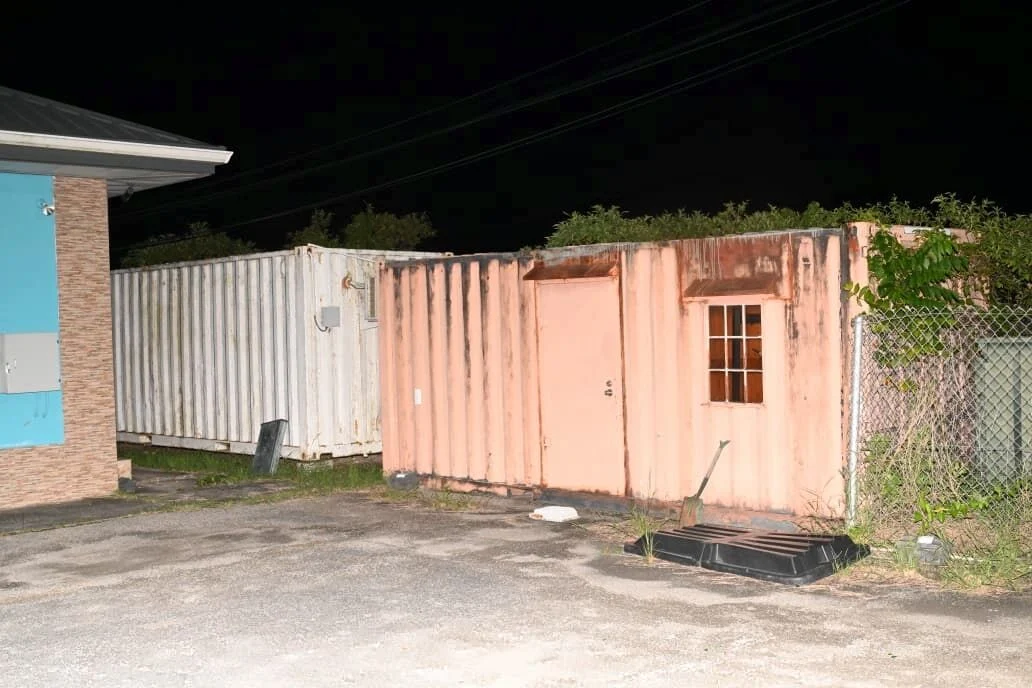
A explosive revelation of rampant public fund mismanagement has rocked Trinidad’s parliamentary budget hearings, as current Public Utilities Minister Barry Padarath has exposed exorbitant waste left behind by the former People’s National Movement (PNM) government, centered on a jaw-dropping $3 million annual rent payment for a 20-foot shipping container used to store On-the-Job Training (OJT) Programme application forms.
Padarath made the disclosure during a sitting of Parliament’s Standing Finance Committee (SFC), the body tasked with reviewing government budget allocations. The OJT programme, a national youth employment initiative that currently serves just over 4,000 trainees, was recently transferred to the Ministry of Public Utilities, which received a total $3.6 billion allocation up for review during the hearings. The minister told committee members the programme was handed over in complete disarray, with one of the most staggering irregularities being the ongoing container rental agreement.
According to Padarath, his ministry’s permanent secretary confirmed the annual $3 million rent cost for the small storage unit, located on the grounds of the OJT head office in Chaguanas. The minister declined to name the container’s owner during public proceedings, but emphasized that the wasteful arrangement would be terminated immediately as part of a full digitization overhaul of the OJT’s application system.
Padarath explained that the container is already filled to capacity with paper applications, some of which are more than five years old, creating an urgent need to modernize the entire registration process. Under the planned reforms, all future applications will move to a fully digital online system, and all applicants with forms older than five years will be required to complete a streamlined re-registration process to make the programme more accessible for young people accustomed to digital services. When queried by reporters from the Express following the SFC sitting, Padarath confirmed the $3 million figure and added that authorities are already in the process of scrapping the rental agreement, with an official announcement of the new digital system expected in the coming weeks.
The minister slammed the exorbitant rental cost as a clear example of the PNM administration’s brazen “squandermania” of public funds, noting that a brand new 20-foot container can be purchased outright for as little as $10,000, with a maximum market price of around $40,000. Independent checks by the Express confirmed this market range, finding more than a dozen 20-foot containers listed for private sale within that price bracket. During a visit to the Chaguanas OJT office, reporters also observed two shipping containers on-site, one of which was visibly in dilapidated condition. Padarath noted he would release further details on the rental agreement once he has completed a full review of records.
The container scandal is not the only example of waste Padarath has highlighted. He also called out an additional $1.2 million in unnecessary spending on a renovation of the ministry’s executive floor, carried out in 2025 by former PNM minister Colm Imbert solely because he disliked the existing carpet and teacup arrangements. An extra $90,000 is still required this year to cover the final costs of that vanity project, the minister added.
“This level of wastage and mismanagement by the PNM is not surprising but it has put the country in the position it is today,” Padarath stated, accusing the former administration of spending lavishly on frivolous, ego-driven projects while leaving critical public service priorities underfunded.
Beyond the financial irregularities, Padarath outlined sweeping planned reforms for the OJT programme, which will be realigned to match current staffing needs across government ministries and public sector departments. Currently, more than 4,000 trainees are enrolled in the initiative, all admitted under the previous administration’s intake policies. Padarath confirmed that all currently enrolled trainees will be allowed to complete their full tenures in the programme, but future intakes will be restructured to better align with public sector employment needs. A formal policy statement on new recruitment will be released in the near future, as the review process is already underway following the programme’s transfer to the Ministry of Public Utilities.
Padarath also detailed the depth of operational dysfunction inherited from the PNM, noting that multiple key staff vacancies remain unfilled and the programme has effectively been “running on autopilot.” He added that the condition of OJT facilities is so deplorable that many staff members leave work after just three hours on-site, with operations at the Chaguanas office currently only running from 8 a.m. to 11 a.m. before staff depart. The minister said his ministry is working alongside the MTS to rehabilitate facilities, fill critical staffing gaps, and overhaul operational efficiency. These changes, he emphasized, are necessary to modernize the OJT programme and ensure it delivers meaningful value for both trainees and the Trinidadian public sector.