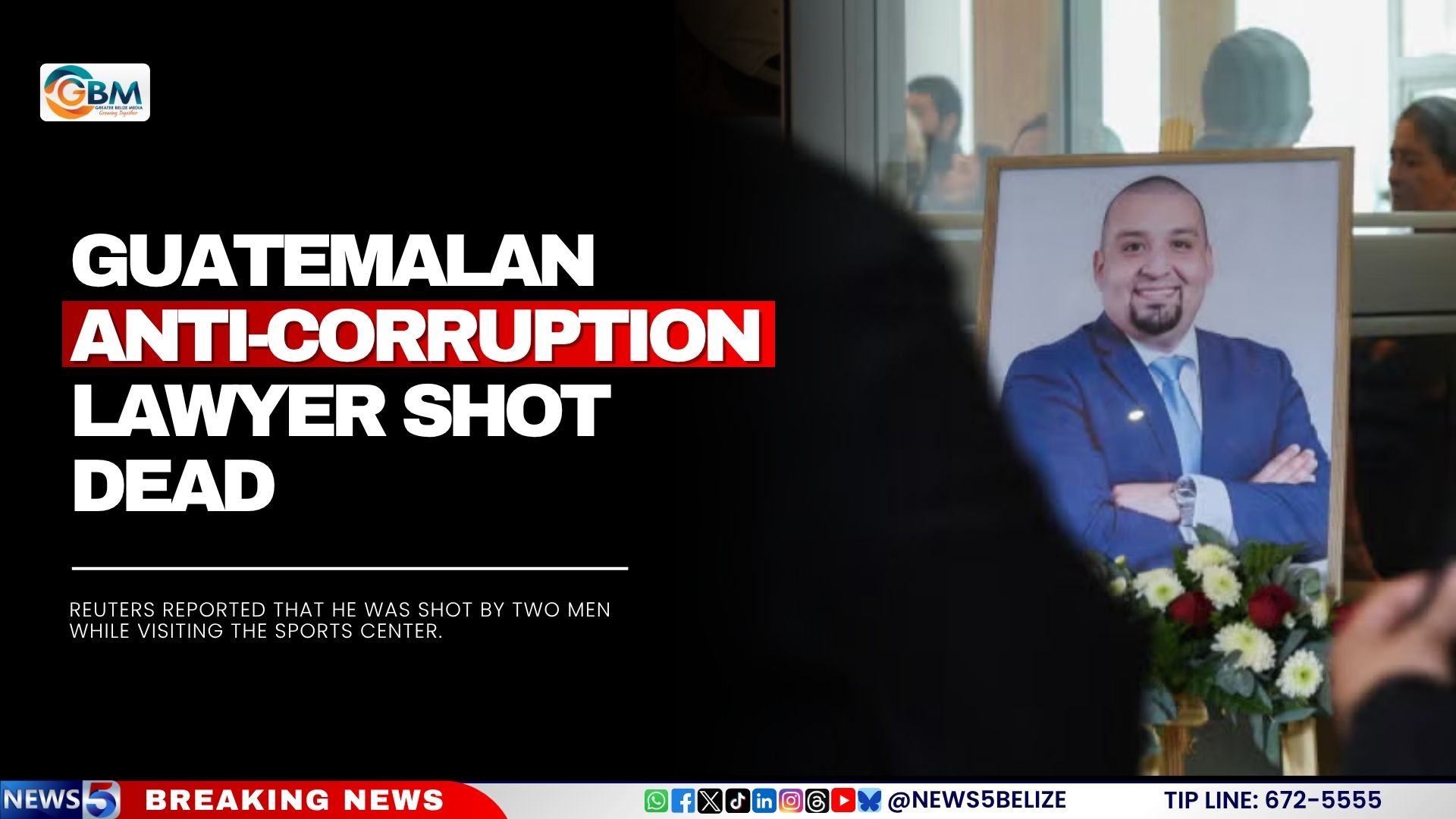
On October 17, 2026, Guatemala was rocked by a high-profile assassination that has raised deep concerns over the safety of anti-corruption advocates in the Central American nation. Juan Francisco Solórzano Foppa, a 43-year-old leading anti-corruption lawyer and former head of Guatemala’s national tax authority, was shot dead in a public attack while coaching a youth football team at Guatemala City’s Campo Marte sports complex.
Multiple international human rights and news organizations have confirmed details of the attack. According to Human Rights Watch (HRW), two armed gunmen carried out the shooting, which also claimed the life of a second man identified by local authorities as Gustavo Adolfo Aguilar Gamarro. In the immediate aftermath of the violence, Guatemalan police took two suspects into custody, seizing a carbine-style weapon and a motorcycle believed to be connected to the attack. However, prosecutors later confirmed that no credible evidence linking the two detained men to the killing could be found, and a judge ordered their release. As of October 21, no suspects have been publicly named as responsible for the double homicide, and no groups have claimed responsibility.
Guatemalan President Bernardo Arévalo publicly condemned the assassination in a post on the social platform X, calling the killing a cowardly act. “I strongly condemn the cowardly murder of former prosecutor Juan Francisco Solorzano Foppa. Both the direct perpetrators and those who ordered the crime must face the full weight of the law,” Arévalo stated. The president added that he had issued formal instructions to his administration to coordinate closely with law enforcement and prosecutorial authorities to conduct a full, transparent investigation and bring all parties involved to justice.
Long a key figure in Guatemala’s fight against systemic corruption, Solórzano Foppa built a decades-long career targeting high-level graft and elite tax evasion. A former public prosecutor, he first led the Criminal Investigations Directorate within Guatemala’s Public Prosecutor’s Office before being appointed to head the Superintendency of Tax Administration (SAT), the country’s top tax agency, a post he held from 2016 to 2018. During his tenure, he led successful prosecutions against dozens of influential Guatemalan business leaders and helped recover hundreds of millions in unpaid taxes owed to the state. His most high-profile contribution to anti-corruption efforts came in 2015, when he supported the landmark La Línea corruption case, which ultimately forced then-President Otto Pérez Molina to resign from office over bribery and embezzlement charges.