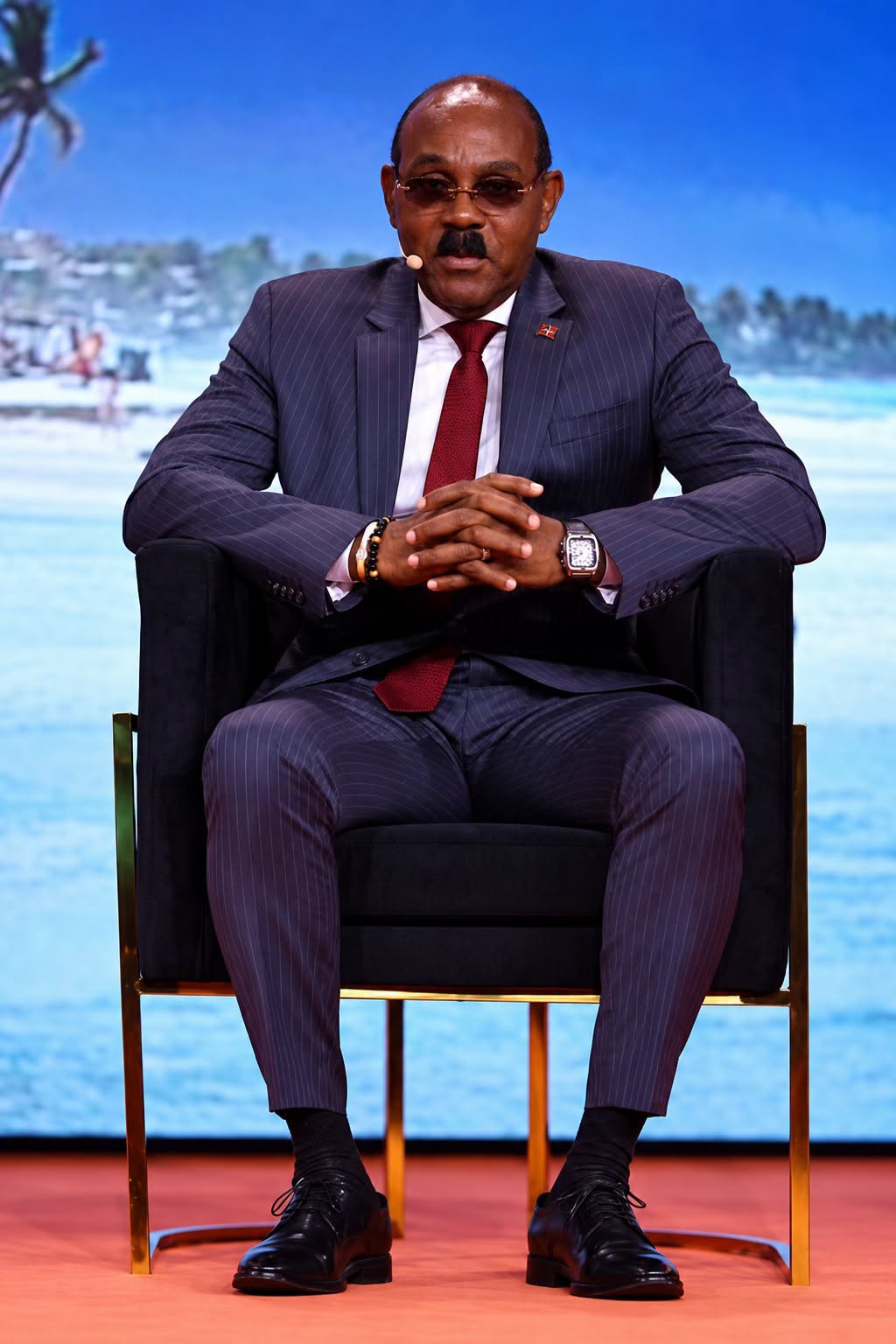
On October 20, 2026, at the Global Citizen NOW Summit hosted in Perth, Australia, Antigua and Barbuda Prime Minister Gaston Browne delivered a forceful renewed call for immediate collective global intervention to confront the catastrophic climate impacts that threaten the very existence of Small Island Developing States (SIDS).
Speaking during a high-level, off-the-record-style discussion themed “The Cost of Complacency” – moderated by Professor Gordon Flake, founding CEO of the University of Western Australia’s Perth USAsia Centre – Browne centered his remarks on the existential nature of the climate crisis for small island nations. He emphasized that rising sea levels, intensifying extreme weather events, and growing climate instability already undermine SIDS’ national sovereignty, disrupt long-term economic progress, and put entire populations at risk of displacement.
Drawing on first-hand experience from his own dual-island nation, Browne recalled the 2017 devastation of Hurricane Irma, which damaged or destroyed roughly 95% of all structures on Barbuda, forcing the complete evacuation of the island’s permanent population. The final price tag for recovery and reconstruction hit an estimated $222 million – a sum equal to nearly one-fifth of Antigua and Barbuda’s entire annual gross domestic product.
Browne highlighted the stark injustice at the heart of this crisis: Caribbean SIDS contribute a negligible share of global greenhouse gas emissions, yet they bear the brunt of the climate damage caused by decades of unregulated fossil fuel use by major industrialized economies. Financial aid to rebuild infrastructure after disasters, he argued, can never reverse the irreparable losses: lives cut short, communities permanently displaced, ancestral lands swallowed by rising seas, and centuries-old cultural heritage put at risk of erasure.
For real climate justice to be achieved, Browne argued that the world’s largest greenhouse gas emitters and leading international financial institutions must formally acknowledge their historical responsibility and deliver substantial, actionable support to the frontline nations already facing the worst climate consequences. He pushed for global commitments and legal frameworks to move beyond paper pledges and translate into tangible, on-the-ground assistance for vulnerable SIDS populations.
The Prime Minister highlighted Antigua and Barbuda’s recent leadership in global SIDS advocacy, noting the 2024 Fourth International Conference on Small Island Developing States hosted by the nation, which produced the Antigua and Barbuda Agenda for SIDS (ABAS), a 10-year strategic framework designed to build climate-resilient, shared prosperity across vulnerable island nations. He also underscored the critical role of the Multidimensional Vulnerability Index, a tool that recognizes national income alone cannot capture a country’s full exposure to climate disasters and volatile external economic shocks. Browne called for the index to be integrated into all decisions around concessional financing, debt relief, and development assistance, arguing that global financial bodies must adopt a far more equitable approach to supporting vulnerable economies.
He also referenced a landmark advisory opinion from the International Tribunal for the Law of the Sea, secured through an initiative led by Antigua and Barbuda and Tuvalu via the Commission of Small Island States on Climate Change and International Law. These diplomatic and legal wins, Browne stressed, must now translate into deeper global emissions cuts, scaled-up investment in renewable energy, and more accessible affordable financing for climate-resilient infrastructure across SIDS.
Crucially, Browne clarified that small island states are not seeking charity – they are demanding climate fairness. International support, he argued, must be proactive rather than limited to post-disaster recovery.
Looking ahead to the upcoming Commonwealth Heads of Government Meeting (CHOGM), set to be hosted by Antigua and Barbuda from November 1 to 4, Browne laid out his vision for a more impactful Commonwealth that can shape global policy on climate finance, sovereign debt, trade, and sustainable development. With 56 member states representing 2.7 billion people globally, the bloc holds significant collective influence that must be leveraged to advance the interests of its most vulnerable members, he said. Browne also acknowledged King Charles III’s long-standing climate advocacy, noting he plans to collaborate with the monarch, other Commonwealth leaders, and global partners to mobilize investment and strengthen cross-border climate cooperation. The upcoming CHOGM, he added, represents a critical opportunity to prove the bloc’s global relevance through actionable initiatives and measurable development outcomes.
Turning to the upcoming COP31 climate negotiations, Browne urged Australia, Türkiye, and the full international community to deliver tangible results from the talks. He called for a renewed global commitment to the Paris Agreement target of limiting global warming to 1.5 degrees Celsius, and for negotiators to center the unique, existential challenges facing Caribbean and Pacific island states in final agreements. The true measure of success for any global climate deal, he argued, is whether it protects vulnerable communities, mobilizes critical investment, and strengthens the resilience of nations facing ever-worsening climate threats.
In his closing appeal, Browne challenged the international community to move beyond empty statements of concern and turn existing climate commitments into immediate, measurable action. He called on developed nations, major emitters, global financial institutions, and private investors to speed up global emissions reductions, unlock affordable climate financing, and invest in the resilient infrastructure and renewable energy systems needed to protect vulnerable SIDS.
“The world can no longer relegate the survival of small island states to an afterthought in international negotiations,” Browne warned. “Further delay will not just bring economic losses – it will bring permanent displacement, destroyed communities, and irreversible loss of national heritage and livelihoods.”
Browne closed by urging global leaders to turn the 2026 CHOGM and COP31 into real turning points for global climate action, requiring all commitments to be backed by dedicated financing, clear implementation roadmaps, and robust accountability mechanisms. The future of small island nations, he emphasized, must not depend on the international community’s willingness to respond after disaster strikes – it depends on acting now to prevent avoidable catastrophe.
Browne’s participation at the Global Citizen NOW Summit reaffirmed Antigua and Barbuda’s long-standing commitment to championing the rights of vulnerable frontline nations and advancing a global climate agenda rooted in justice, shared responsibility, and urgent decisive action.