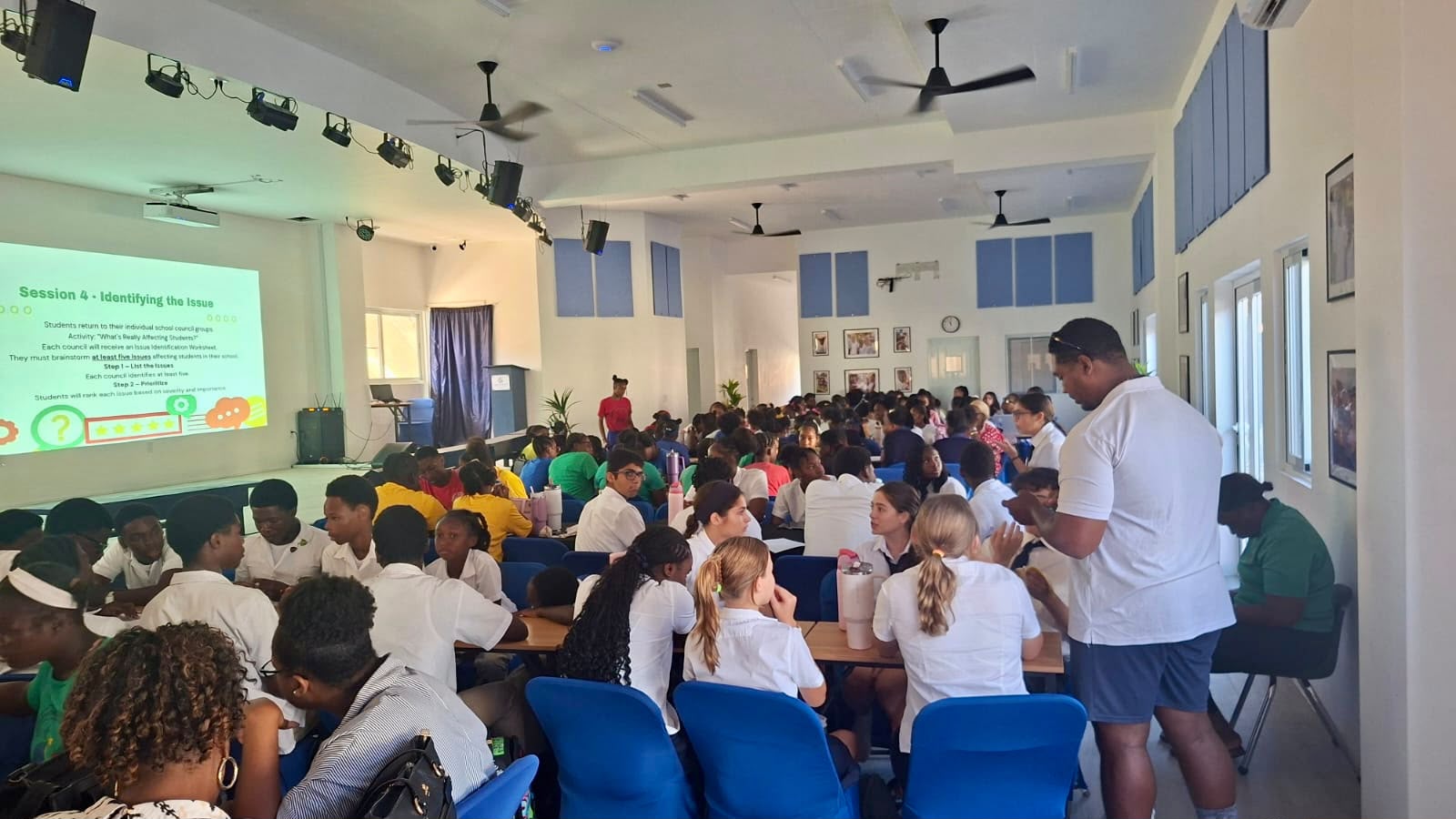
A transformative three-day national leadership workshop for student councillors has drawn to a successful close in Antigua and Barbuda, bringing together nearly 500 emerging leaders from more than 42 public and private educational institutions spanning primary, secondary and tertiary levels. Organized as a joint effort between the country’s Ministry of Education and the National Student Council (NSC), the program was designed to equip young participants with the core knowledge and hands-on skills needed to elevate student advocacy, peer representation, and intentional leadership across the nation’s education system.
Hosted on the campus of Island Academy International, the intensive workshop created a collaborative space for student leaders from all educational tiers to connect, learn, and build collective capacity. Unlike conventional informational sessions, the curriculum centered on empowering Student Councils to not only name challenges impacting their campuses and peer groups, but to unpack their root causes and build targeted solutions. Sessions covered the fundamental roles and responsibilities of formal student governance bodies, underscored the critical impact of authentic, meaningful student representation in school decision-making, and walked participants through frameworks for identifying campus-specific concerns.
A defining core of the workshop was its intentional shift away from problem-focused discussion toward actionable, student-owned problem-solving. Over the three days, each participating student council worked through a structured action-planning process, drafting concrete initiatives tailored to the highest-priority challenges their campuses face, laying early groundwork for projects that will improve learning and community environments across the country.
With training completed, councils across Antigua and Barbuda are now moving into the implementation phase, where they will launch student-led campaigns on their respective campuses. Kamalie Mannix, lead coordinator for the Student Council initiative, will continue providing ongoing guidance to schools as they roll out their plans, and will oversee tracking of student-led development projects across both islands. These campaigns will turn the workshop’s strategic plans into on-the-ground action, giving young leaders a tangible opportunity to drive positive change, address longstanding campus challenges, and strengthen their school communities from within.
Education sector leaders frame the workshop as a pivotal milestone in the ongoing effort to reposition Student Councils as robust, meaningful platforms for youth participation, leadership, and advocacy. By arming councillors with foundational governance knowledge and practical planning skills, the NSC aims to boost young people’s ability to effectively represent their peers, organize collective action, and contribute constructively to institutional decision-making at the school level. In the weeks ahead, the NSC will prepare for its national High Council gathering, where elected student representatives will vote to install a new national executive body.
Organizers also extended formal gratitude to Island Academy International, which donated use of its campus auditorium to host the three-day event. The institution’s partnership was instrumental to the workshop’s successful execution, highlighting how cross-institutional collaboration can advance youth leadership development across the education sector.
As the NSC continues to strengthen its national operations, the organization’s immediate focus has shifted to supporting local councils as they implement their action plans, track progress toward their goals, and sustain their student-led initiatives over time. The program’s ultimate goal is to reshape student engagement in education governance: rather than merely being consulted on issues that impact their learning experiences, young people will be empowered to lead tangible, meaningful action that shapes the future of their education.
The work of the National Student Council remains anchored in its three foundational core pillars: Representation, Mobilization, and Advocacy.