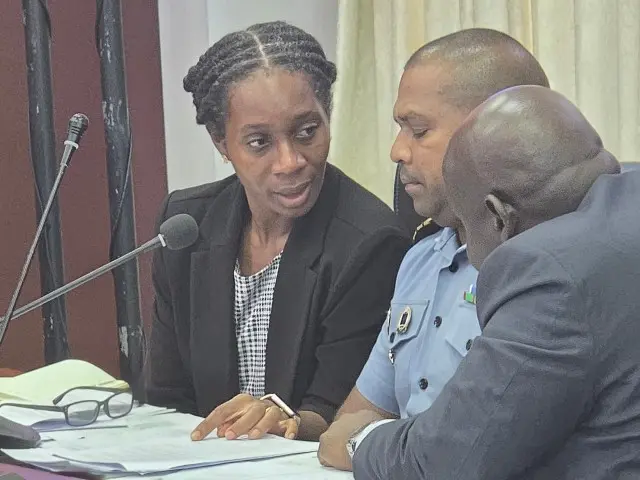
On Tuesday, October 20, 2026, the public Commission of Inquiry probing the deadly capsizing of the MV Barima, which left more than 100 people dead after the July 18 incident, saw a key witness deliver conflicting testimony about the fate of critical operational records. David Shamsudeen, Commander of the Guyana Defence Force (GDF) Coast Guard, initially told the commission that all digital communication recordings, vessel movement digital tracks, and operational logs from the Coast Guard’s response to the disaster had been compiled and submitted to GDF defence headquarters in keeping with standard post-operation protocols.
When pressed by commission member Dr. Andrzej Jasionowski, a Polish naval architect and forensic marine expert who noted that all such operational records are required to be securely archived for investigative and accountability purposes, Shamsudeen repeatedly confirmed that the materials had been sent to top defence officials. When asked if the commission could access the records for its review, Shamsudeen initially stated he had no authority to confirm their availability and would need to seek guidance on whether release was permitted.
It was only after Commission Chairman Justice Godfrey Smith pressed for clear clarification that Shamsudeen abruptly reversed his earlier statement, admitting that no such recordings or digital tracks were ever created in the first place. The commander went on to claim that the Coast Guard is not mandated to produce these records under existing regulations, adding that only basic operational logs and post-incident reports were submitted to headquarters per Standard Operating Procedures (SOPs).
Shamsudeen also refused to directly provide the commission with a copy of the Coast Guard’s full post-search and rescue report on the MV Barima incident, insisting he required formal approval from GDF senior leadership before releasing the document. Justice Smith emphasized that the document is a critical foundational record for the commission’s work, noting that the inquiry is required by President Irfaan Ali to deliver a comprehensive, thorough final report that can withstand national, regional, and international scrutiny. Even after Smith pressed Shamsudeen on whether he would cooperate with the commission’s mandate, as other witnesses have done previously, the commander maintained he lacked the authority to release the report without clearance from defence headquarters.
The testimony also revealed multiple gaps in Guyana’s coast guard operational framework. When questioned by retired Jamaican Rear Admiral Hayden Pritchard, another commission member, Shamsudeen declined to confirm whether the Marine Rescue Coordination Centre (MRCC) falls under the Maritime Administration (MARAD), contradicting the global standard that places MRCC operations under coast guard authority. Responding to questions from maritime lawyer and commission member Nyree Alfonso about whether the GDF Coast Guard conducts regular search and rescue training exercises for large, medium, and small-scale incidents that include foreign assets and fishing vessels, Shamsudeen said he would need to provide a response at a later date. When asked when the last joint full search and rescue operation (distinct from a training exercise) was conducted, Shamsudeen admitted he could not recall, adding that such joint operations have not occurred in an extended period because there “was no need for it.” Finally, when Pritchard noted that the Coast Guard’s current SOPs do not list a formal commencement date, Shamsudeen revealed that he inherited the guidelines from previous commanders when he took command three years prior, and no updates have been made to the procedures during his tenure.