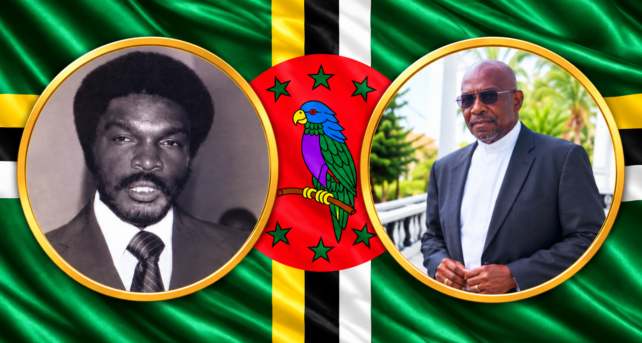
As Dominica marks the 48th year of its sovereign independence, the only surviving Cabinet minister who led the Caribbean nation to sovereignty from British rule has stepped forward with a heartfelt call to properly honor and remember the unsung architects of the country’s freedom movement.\n\nThe author, who has been closely tied to Dominica’s dominant pro-independence political movement since his youth, shares deep personal roots in the independence struggle: in his late teens, he became godfather to the children of EC Loblack and NAN Ducreay, two of the founding trailblazers of the Dominica Labour Party, the political force that spearheaded the push for self-rule.\n\nAgainst this personal backdrop, the author aims to formally name and memorialize all key figures who formed the core of the independence leadership, serving in the Cabinet of then-Premier Patrick John ahead of the 1978 transition to sovereignty. Following the 1975 general elections, the national executive of the Dominica Labour Party advanced the formal independence agenda, a core campaign promise made by the party that year. At that time, the author served as party president, while political leader Patrick John, in his role as Premier, issued the landmark Salisbury Declaration that formalized the nation’s demand for independence.\n\nThe independence movement also drew critical grassroots support from the Popular Independence Committee (PIC), a coalition of progressive activists that included Bernard Wiltshire, Pierre Charles, and Rosie Douglas, all of whom would go on to hold top leadership roles including Prime Minister and senior Cabinet positions in sovereign Dominica.\n\nIn 1976, John officially launched the independence vision through the Salisbury Declaration, a document formally endorsed by both the Dominica Cabinet and the Labour Party executive. The declaration outlined an official demand submitted to the British government for full sovereignty for the island nation.\n\nThe author also highlights surviving members of the 1975 Labour parliamentary delegation, including former Speaker Eden Bowers and former Minister Ferdinand Parillon, urging the nation to recognize their ongoing contributions to the independence project. All other members of the pre-independence Cabinet have since passed away, leaving the author as the last surviving member of that historic group. It is this status that he says compels him to ensure the legacies of the founding leaders are not erased from national memory.\n\nCriticizing what he calls the nation’s growing “selective amnesia” about its founding, echoing recent comments from civil rights leader Al Sharpton, and echoing former Premier EO LeBlanc’s famous description of the country as one with “memoire poule” (hen’s memory, referring to poor recollection of history), he calls for explicit remembrance of the deceased founding leaders: Premier Patrick John, and Cabinet ministers HL Christian, Victor Riverre, Attorney General Leo Austin, Randolph Bannis, Luke Corriete, and Osborne Theodore.\n\nHe recounts a key milestone in the independence journey: he joined John, Finance Minister Victor Rivierre, and Attorney General Leo Austin on a formal delegation to the United Kingdom to present Dominica’s independence demand to the British Crown’s government. Upon their return to the island, the delegation was met by a large mob of anti-independence opposition protesters at the EC Loblack Bridge, a moment of tension that marked the final stretch of the independence struggle.\n\nBeyond honoring political leaders, the author also clarifies the little-remembered history behind Dominica’s core national symbols. Within John’s pre-independence Cabinet, a subcommittee chaired by Permanent Secretary Ossie Symes reviewed flag submissions and recommended the design created by Alwyn Bully for official approval. While Bully has received public recognition for his work, the author notes that other designers, including prominent social scientist Simeon Joseph, also participated in the national competition. The Cabinet ultimately approved the subcommittee’s recommendation, a decision the author calls a continuing source of personal pride every time he sees the national flag displayed.\n\nHe also details the work behind other national symbols: the national anthem, with lyrics written by WOM Pond and music composed by Henckel Christian, was approved by the independence Cabinet, a process he was proud to take part in. The Cabinet also formally adopted the national pledge written by Peter Israel, another moment the author calls a profound privilege. Less frequently referenced today, but no less historically significant, is the national prayer composed by Sister Donatine Prince.\n\nDespite Bully’s widespread recognition for the flag, the author emphasizes that the creators of the national anthem have not received sufficient public acknowledgment, and their historical importance to the nation’s founding has been largely sidelined in modern public memory.\n\nClosing his reflection on the 48th independence anniversary, the author extends warm wishes to all Dominicans, both on the island and in the global diaspora, marking the historic occasion: Happy Independence to all.\n\n
COMMENTARY: The Commonwealth of Dominica’s political independence – Recollections by former PM, OJ Seraphin