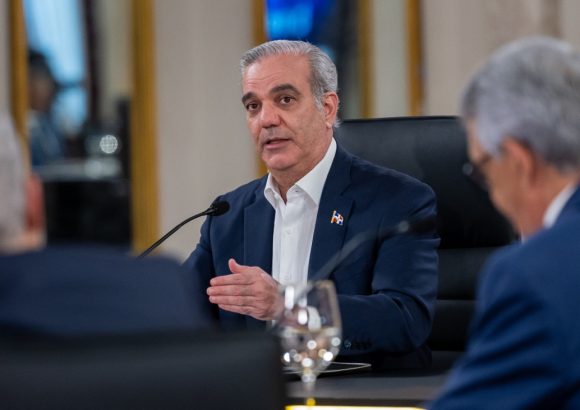
In a public address on the weekly current affairs program *LA Agenda Semanal*, Dominican Republic President Luis Abinader has stood firmly behind his administration’s strategy of targeted fuel subsidies, a policy crafted to shield the domestic economy from the volatility of global energy markets. The president was joined by Industry, Commerce and MSMEs Minister Eduardo Sanz Lovatón, who broke down the tiered structure of the subsidies, highlighting that the policy prioritizes critical sectors that underpin daily economic activity: public transportation, agricultural production, electricity generation and other core productive industries.
Sanz Lovatón detailed the specific subsidy amounts allocated to different fuel types, noting that mass transit diesel receives the largest subsidy at roughly 200 Dominican pesos (RD$) per gallon. For regular diesel, the government provides a RD$120 per gallon subsidy, which holds the retail price at RD$270.80 – a marked reduction from the unsubsidized price of RD$390 per gallon. Premium diesel follows a similar framework, with subsidies bringing its retail price down to RD$318 from an unsubsidized RD$438 per gallon. Lower, targeted subsidies are also applied to consumer and commercial energy sources: premium gasoline receives a RD$26 per gallon subsidy, while liquefied petroleum gas (LPG) – widely used for residential cooking and heating – gets a RD$52 per gallon subsidy.
The minister explained that the government updates subsidy amounts on a weekly basis, and these adjustments are tied directly to international prices for refined petroleum products, rather than being based solely on crude oil market shifts. This nuanced approach is particularly important for the Dominican Republic, which imports nearly all of its fuel supply in already refined form. As Sanz Lovatón clarified, price movements for refined petroleum products do not always align directly with changes in global crude oil prices, so a refined-product-based adjustment system ensures subsidy levels accurately reflect actual import costs.
President Abinader framed the subsidy policy as a direct response to current global energy pressures, pointing out that ongoing geopolitical tensions have created significant strain on global refining capacity and driven sharp increases in global diesel prices. He emphasized that the government has deliberately chosen to absorb the majority of these external price hikes to prevent excessive cost burdens from reaching domestic consumers and businesses.
Beyond global market factors, the president also noted growing domestic demand for energy, citing that annual vehicle imports in the country have jumped 48% between 2019 and 2025, rising from roughly 177,000 units to 280,000 units per year. To accommodate the rising cost of the subsidy program amid growing demand, the administration is reallocating existing budget savings and resources. These reallocated funds not only support the fuel subsidy initiative but also extend support to micro, small and medium-sized enterprises (MSMEs) through targeted technical assistance and expanded access to credit.
Abinader concluded by outlining the dual goals of the policy: to address immediate inflationary and economic pressures facing Dominican households, while simultaneously preserving planned public investment projects and sustaining long-term economic growth across the country.