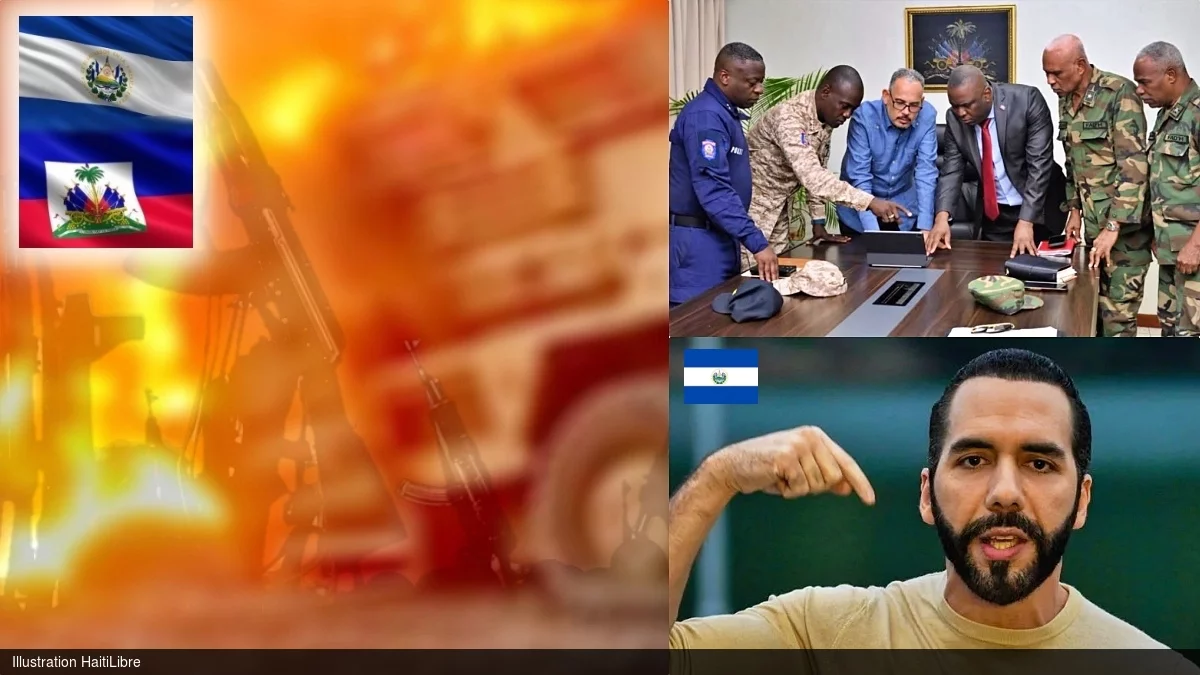
On October 18, 2026, a brazen attack on an armored convoy in Haiti left four Salvadoran military aeronautical technicians abducted by armed gang groups, triggering a coordinated response from both Haitian and Salvadoran authorities just days after the incident. The abduction occurred as the technical team was returning from a routine trip to purchase supplies at a local supermarket, leaving their damaged vehicle burned out and the whereabouts of the four personnel the subject of urgent international attention.
Haiti’s interim government has labeled the safe release of the four hostages as its top immediate national priority. On October 21, three days after the abduction, Prime Minister Alix Didier Fils-Aimé led a high-level emergency gathering at his official office, bringing together senior security and government officials to review ongoing search and rescue operations. The meeting focused on aligning new intervention strategies with Haiti’s domestic Gang Suppression Force (GSF), with the government reiterating its unwavering commitment to restoring state control over territory held by armed groups. Haitian security forces have been fully mobilized, with all required resources deployed to secure the hostages’ release and protect civilian lives across affected regions.
As search efforts progress, Salvadoran President Nayib Bukele has issued a direct, uncompromising message to the gang leaders holding his country’s citizens. Bukele emphasized that the abducted men are not frontline combatants, but specialized technical staff deployed as part of an international humanitarian mission to Haiti. “Their core work is medical evacuations and saving lives, not engaging in conflict,” Bukele noted, condemning the abduction as a cowardly attack on unarmed personnel supporting a critical mission.
The Salvadoran president confirmed that a dedicated military rescue operation has already been launched, with the sole goal of bringing the four compatriots home unharmed. He issued a clear warning to the holding group: “The attack you carried out will be nothing compared to the consequences you will face if you do not release our citizens safe and sound. Do not mistake this for an empty threat. We defeated powerful criminal gangs at home, and we are fully capable of taking the same action here.”
Bukele added that a peaceful resolution remains on the table. “There is still time to step back. Return our four compatriots unharmed, and everything can go back to how it was before this abduction. The choice is entirely yours,” he said.
The ultimatum carries heavy weight given Bukele’s well-documented track record of dismantling gang activity in El Salvador. In 2022, after a sharp surge in gang-related violence, Bukele declared a national state of exception that suspended several constitutional protections, allowing security forces to carry out mass arrests of suspected gang members without requiring prior judicial warrants. Aggressive new sentencing laws boosted maximum penalties for gang affiliation and leadership, with convicted members facing decades-long prison terms or life imprisonment. To accommodate the influx of incarcerated suspects, the administration built the Terrorism Confinement Center (CECOT), a massive high-security facility with capacity for 40,000 inmates. Since the state of exception was implemented, more than 92,000 suspected gang members have been taken into custody.
The policy has delivered dramatic results: El Salvador’s national homicide rate plummeted from more than 100 per 100,000 residents in 2015 to roughly 1.3 per 100,000 in recent years, ranking the country among the safest in Latin America. Neighborhoods once violently controlled by major gangs including MS-13 and Barrio 18 have regained normal civilian activity, granting Bukele massive domestic popularity that led to his landslide re-election in 2024, when he won roughly 85% of the national vote.