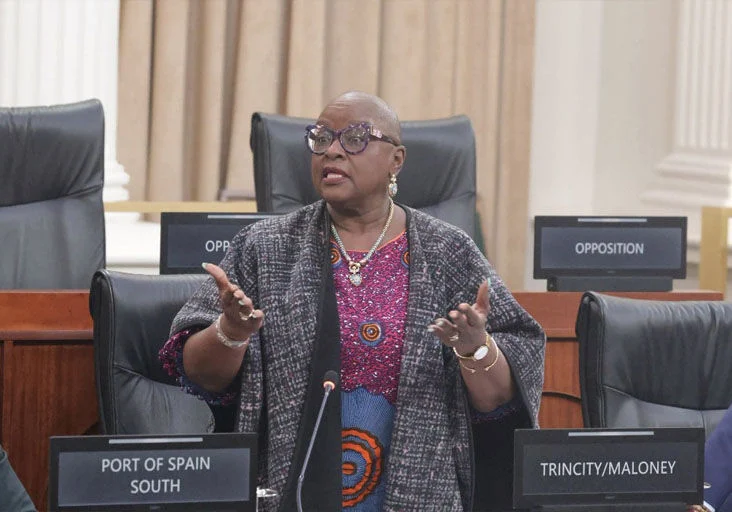
During parliamentary debate on the 2026-2027 national budget, a senior former Trinidad and Tobago government minister has blown the whistle on grave allegations of sexual abuse, racial discrimination and systemic failure plaguing the country’s network of state-supported residential children’s homes. Camille Robinson-Regis, Member of Parliament for Trincity/Maloney and a former housing minister and attorney general, leveled serious accusations that top officials, including current Social Development Minister Vandana Mohit, have long been aware of the harmful practices taking place at these facilities but have failed to intervene to protect vulnerable children in state care.
At the core of Robinson-Regis’ critique is the severe funding crisis facing the Children’s Authority of Trinidad and Tobago (CATT), the government body mandated to safeguard children from abuse, neglect and harm. She told parliament that CATT’s annual state subvention has been cut from $14.7 million in the previous budget to just $8.1 million, a $6.6 million reduction that has gutted the agency’s ability to carry out its core duties. This underfunding, she argues, has left caseworkers overloaded with unmanageable caseloads, forced staff to operate out of offices plagued by dangerous mould and structural leaks, and left critical child protection initiatives stalled.
Beyond funding shortfalls, Robinson-Regis highlighted a complete breakdown in communication and strategic direction between CATT and the Ministry of Social Development. She noted the current CATT board, which was appointed by the previous People’s National Movement (PNM) administration and will remain in office until October 2026, has been frozen out by the ruling United National Congress (UNC) government. The agency has received no formal guidance from the line minister as required under the Children’s Act, Robinson-Regis said, creating a crippling “lack of synergy” that leaves CATT board members unable to make critical decisions without ministerial approval. This power vacuum, she argued, has put children directly at risk.
The most explosive allegations center on explicit claims of racial discrimination and sexual abuse covered up by senior officials. Robinson-Regis told parliament that Minister Mohit was personally present at a meeting held at one residential children’s home, where the facility’s manager made openly racist remarks about Afro-Trinidadian children in the home’s care. According to accounts shared with Robinson-Regis, the manager complained that “too many [N-word] children” were being placed at the facility, which the manager claimed was reserved for a different group of children. Shockingly, Robinson-Regis said Mohit did not challenge or condemn the racist comments at the time. She added that the facility’s operators are personal friends of the minister, and its staff is majority Afro-Trinidadian.
Robinson-Regis also confirmed that credible allegations of sexual abuse at multiple state-supported residential homes have been raised to the minister, and formal recommendations to relocate at-risk children to safer facilities have been ignored. She went on to reveal that some vulnerable children have been improperly relocated from closed residential children’s homes into state-run senior citizen facilities—a practice she described as unacceptable and harmful to vulnerable youth.
The former minister further noted that the current UNC administration has failed to follow through on the 43 child welfare policy recommendations outlined in the landmark Judith Jones report. Under the previous PNM government, 80% of these recommendations—which covered key reforms including appropriate caregiver-to-child ratios, critical incident reporting protocols, delegated financial authority for child protection bodies, dedicated recreational spaces for children and families, and a formal whistleblower and child justice system—were already implemented. Robinson-Regis said the current administration has abandoned these ongoing reforms, cut allocated funding, and allowed progress to stall. This lack of follow-through, she added, has even led international funding partners including UNICEF to reduce their financial support for Trinidad and Tobago’s child welfare programs.
Framing the crisis as a moral failure of the current administration, Robinson-Regis called on Minister Mohit to immediately take action to protect the nation’s most vulnerable children. “It is children we are speaking about,” she emphasized, noting that as a mother, the allegations are deeply painful. “This should never be happening to the children of T&T, especially vulnerable children,” she said, describing the current state of state-supported child care as a “sad state of affairs” that cannot be allowed to continue. She added that the current administration “failed to understand the true cost of child protection,” warning that severe consequences for vulnerable children are already unavoidable ahead of the April 2025 general election.