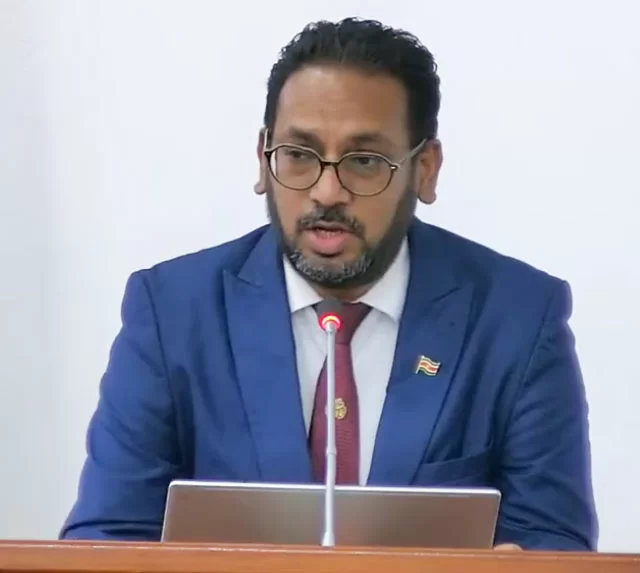
PARAMARIBO, Suriname – A Surinamese parliamentarian has ignited a critical debate over law enforcement access to locked mobile devices, calling for explicit new legal guidelines that clarify when and how police can use biometric data such as fingerprints and facial recognition to unlock suspects’ phones.
Kishan Ramsukul, a member of parliament from the Progressive People’s Party (VHP), raised the question during parliamentary debate on amendments to Suriname’s Code of Criminal Procedure this Friday. His intervention comes after VHP parliamentary leader Asis Gajadien pushed for stronger safeguards for criminal suspects against forced disclosure of device passwords and access codes. The current draft proposal distinguishes between individuals with technical knowledge of secured systems and suspects who cannot be compelled to hand over specific access information.
Ramsukul argues that the rise of modern smartphone security creates an urgent new legal gap that requires immediate legislative attention. He points out a key distinction that existing draft language fails to address: the difference between forcing a suspect to share a password they know, versus compelling them to use a physical biometric trait – such as a fingerprint or facial structure – to unlock a device. Ramsukul notes that Dutch jurisprudence already draws a clear legal line between information stored in a person’s memory and physical characteristics that exist independent of a suspect’s will, and says Suriname must now formalize its own stance on this issue.
Without explicit legal guidance, Ramsukul warns, future disputes over the legality of biometric unlocking and the admissibility of evidence obtained through these methods are inevitable. He is calling for the amended law to explicitly outline when the use of fingerprints or facial recognition by law enforcement is permitted, and under what conditions these practices can be carried out. The clarification, he says, would prevent inconsistent interpretation of legal rules by both investigation agencies and the judiciary, protecting both the integrity of criminal investigations and the rights of suspects.