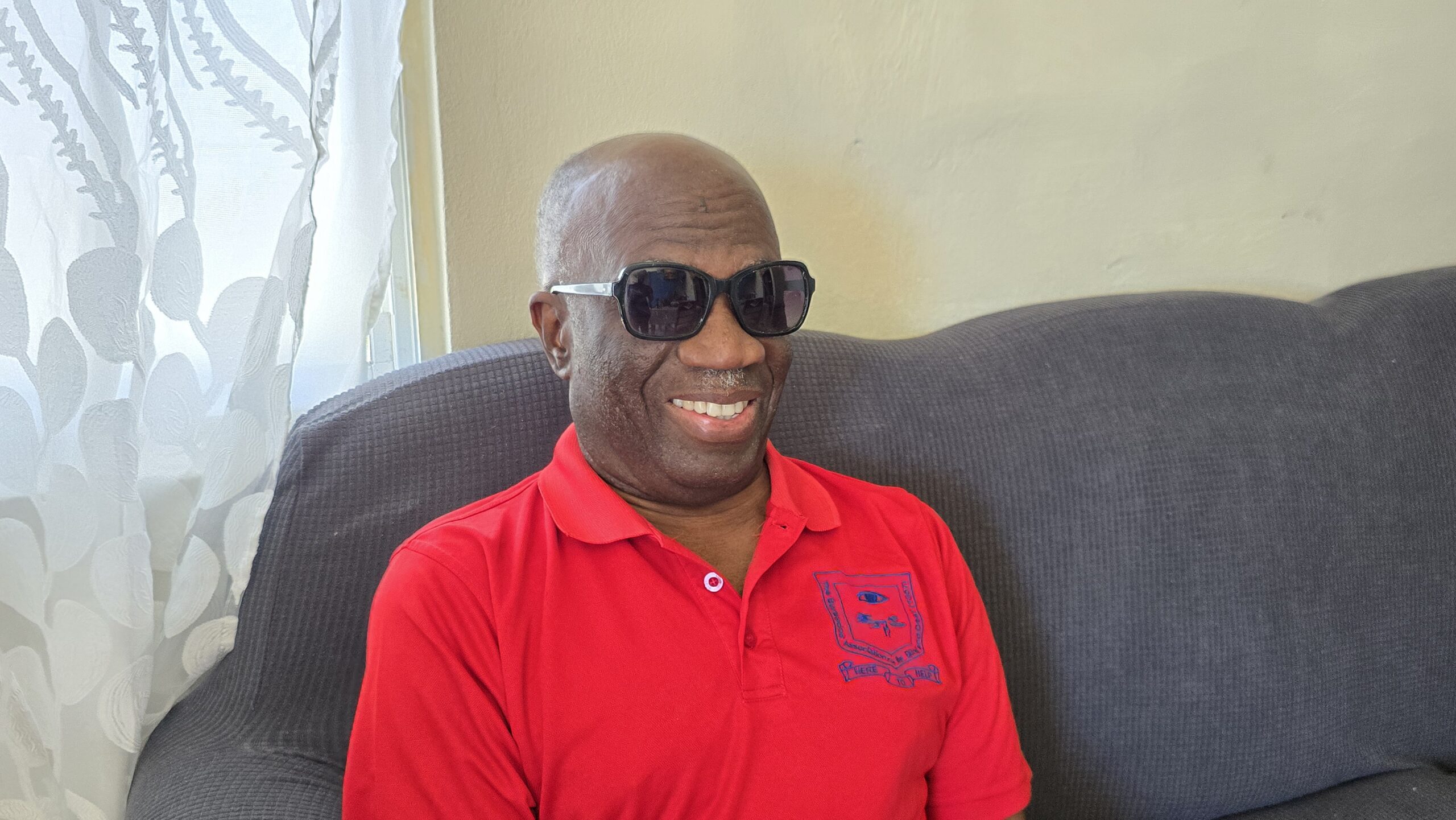
At 68 years old, Elviston Maloney is set to make history this Saturday when he walks across the graduation stage at the University of the West Indies (UWI) Cave Hill Campus to collect his combined bachelor’s degree in psychology and management, capping off seven years of determined study. But beyond his personal milestone, this blind disability rights advocate is using his moment in the spotlight to push for critical systemic change: accessible infrastructure and accommodations for disabled students must start in primary school, not be left as an afterthought for tertiary institutions to address.
Maloney’s journey through higher education has shed light on longstanding gaps in Barbados’ education system. When he enrolled in 2019, he was part of a cohort of seven disabled students on campus, including another blind student, a student with hearing impairment, a student with dyslexia, two wheelchair users, and a student who used a walker. Maloney explained that the Cave Hill campus was never designed to accommodate this diverse range of accessibility needs. While he credits the university and its faculty for making sincere efforts to welcome disabled students, he says gaps in access created unnecessary barriers to learning.
One of the most persistent daily challenges Maloney and his fellow blind peers faced was accessing course materials. Even when lecture slides were available for download, converting them to a screen-reader compatible format was a time-consuming, tedious process that added extra burden to already rigorous coursework. “You’re dealing with something like 50 slides, 52 slides, depending on the topic area and the lecturer. So that in itself had its own challenge in terms of accessing the information,” Maloney explained, though he noted most lecturers went out of their way to be accommodating.
Maloney argues that fixing these accessibility gaps at the tertiary level is too little, too late. Instead, he says basic accessible equipment – including computers, printers, and large-print tools – should be standard fixtures in every primary school classroom, not special requests for individual students. Building accessible infrastructure early creates a pipeline that allows disabled students to build skills and confidence before moving on to secondary and then tertiary education. Without this early foundation, Maloney says disabled students arrive at university already facing overwhelming barriers that even the most well-meaning institutions struggle to address.
“The challenge can be that if nothing happens at the primary and secondary levels, but then you suddenly find yourself into a tertiary institution, which is not prepared for you, which knows very little about how to accommodate you, in the true sense of the word. They too are going to struggle,” he said.
Beyond infrastructure, Maloney also called for reform of how disability education policies are created. He criticized the common practice of designing policies for disabled people without including disabled people in the decision-making process. Most policies are drafted at upper levels of government bureaucracy, he said, and the few disabled advocates who are invited to the table often lack the grassroots connection to represent ordinary disabled people, who frequently do not have the financial or family support to participate in high-level policy discussions.
Financial barriers also persist beyond primary school. Maloney noted that scholarships earmarked for disabled students are extremely limited and often come with age restrictions, forcing older disabled students like himself to fund their education independently. This barrier has already put his planned master’s degree on hold, he said.
Kerry-Ann Ifill, a blind Human Rights Commissioner, echoed Maloney’s calls for change, noting that the country’s current draft inclusive education policy signals a coming shift toward integrating disabled students into mainstream schooling, rather than segregating them. But she also acknowledged that achieving this goal will require sustained effort, increased public education, and systemic investment to make it a reality.
For Maloney, the core of the issue is changing public perception. “It really takes very little for a person to acquire a disability. Absolutely very little. A sickness, a fall, things like that. And your whole life can change without even thinking about it,” he said. “If people can only begin to recognise that disability does not mean inability.”
UWI Cave Hill Student Services Manager Dr. Khaleid Holder acknowledged that accessibility needs vary widely between individuals, and the university tailors accommodations to each student’s specific requirements. For Maloney, this included adjusting physical and virtual learning spaces to work with his screen reader software. Holder stressed that accessibility is a core strategic priority for the university, and the institution works hard to meet the needs of all enrolled disabled students. He also agreed with Maloney that improving accessibility needs to start early in the education pipeline, rather than waiting until students reach university, and said the university’s ultimate goal is to create an environment where students of all abilities can thrive.
For other disabled people considering pursuing a university degree, Maloney says systemic change is important, but personal grit matters too. “You have to have a desire in your mind to overcome the hurdles and move to the next level,” he said.