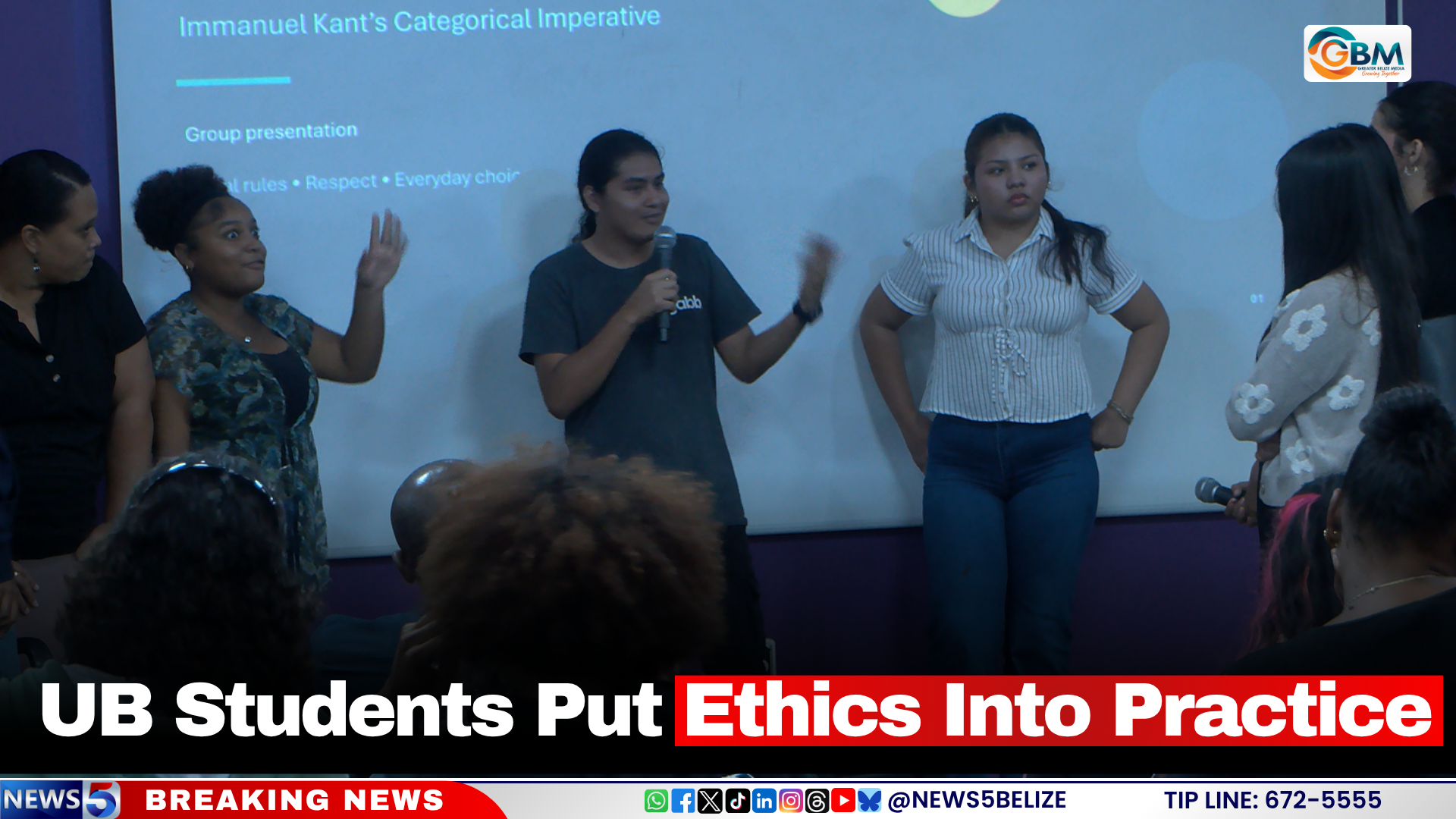
In a unique hands-on learning initiative taking place in Belmopan on October 16, 2026, University of Belize (UB) students have bridged the gap between classroom ethical theory and real-world decision-making through an interactive symposium focused on leadership, governance, and active citizenship.
Unlike traditional lecture-based courses that leave abstract ethical concepts untouched by practical context, this event invited students to test their understanding of moral frameworks through immersive dramatic role-play, bringing complex ethical dilemmas to life. According to UB President Dr. Vincent Palacio, the symposium was designed to give learners a rare chance to see how academic ethics translate to on-the-ground challenges across professional and public life, while also learning from seasoned practitioners who work with ethical decision-making daily.
“Here we have a seminar, a workshop of sorts, where the students come together to look at various theorists and see how these ethics theories apply in real life,” Palacio explained in an interview during the event.
One of the most striking exercises of the day saw students perform a scripted scenario centered on one of Belize’s most pressing public policy tensions: land redistribution. The role-play forced participants to navigate competing interests, including fair compensation for existing property owners, the government’s obligation to advance equity for historically disadvantaged communities, and the tricky balance of protecting individual property rights while advancing collective public good. Each student stepped into the shoes of different stakeholders, from government officials to displaced community members, forcing them to confront the moral trade-offs that define real governance work.
A core institutional priority at UB, ethics is a mandatory requirement for every undergraduate student, regardless of their field of study. Palacio emphasized that this requirement stems from the universal relevance of ethical reasoning to every part of daily life and civic responsibility. “It’s in everything we do. Ethics is important… you could imagine everybody needs to be ethical, and why we have rules and laws, and why should we follow these rules and laws, and what is our role as citizens in the country. So it’s an important course,” he said.
Beyond the student-led dramatic exercises, the symposium also hosted a cross-sector panel of expert practitioners, bringing together representatives from Belize’s national government, national labor unions, and the Belize Police Department. The panel offered students firsthand insights into how ethical decision-making plays out in different public-facing roles, highlighting how the principles they learn in the classroom shape daily work across key institutions that serve Belizean communities.