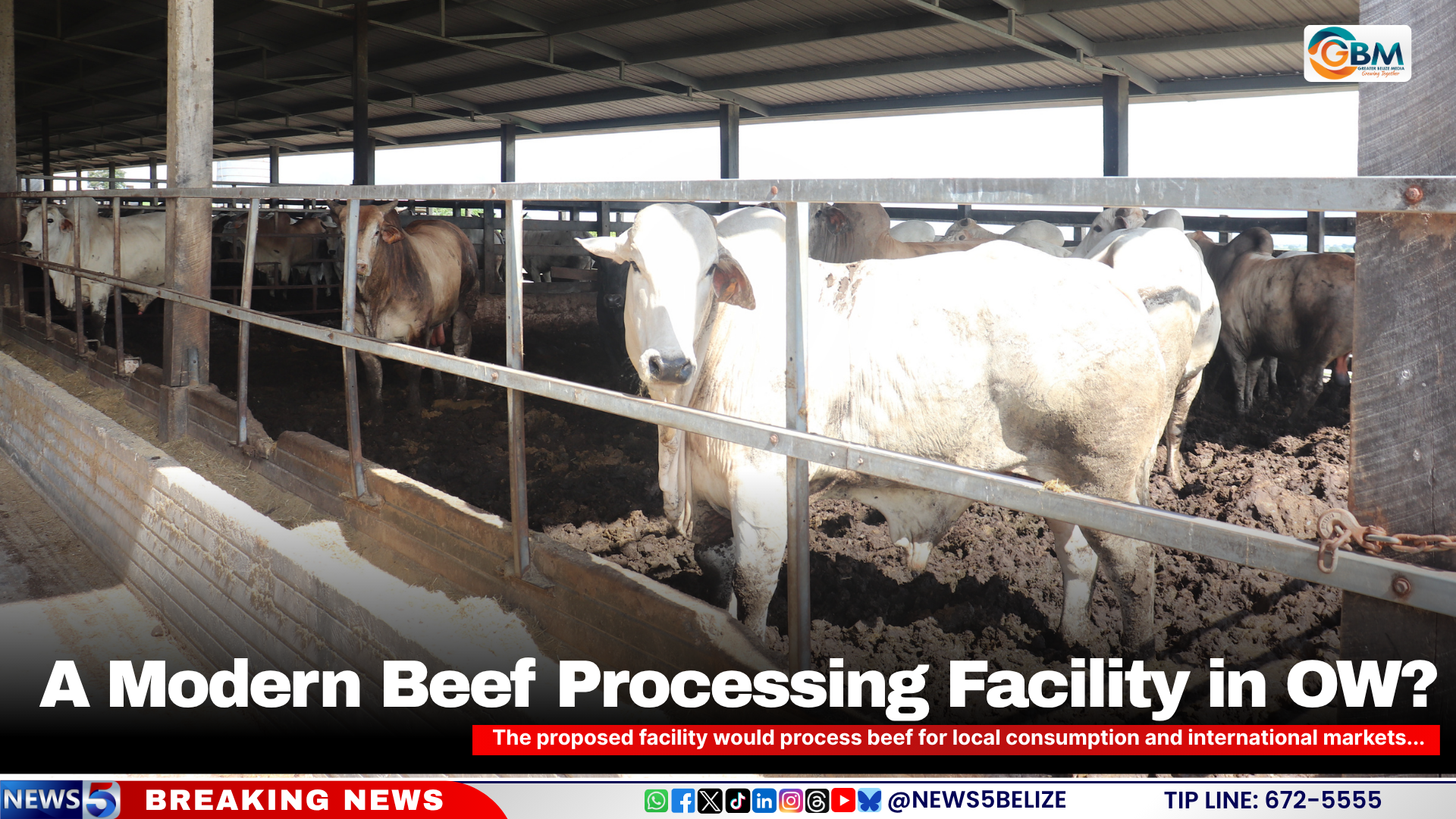
October 16, 2026 – Belize is moving forward with plans for a modern, privately funded beef processing facility that could reshape the nation’s livestock sector and unlock access to high-value international markets, the Ministry of Agriculture has announced.
Agriculture Minister Rodwell Ferguson revealed that government officials held a stakeholder consultation on the project on October 15 at the ministry’s Belmopan headquarters, where private investors Richard Caines, Susie Caines and Tanner Queen shared their preliminary development plans with relevant industry and community partners. If approved, the facility is targeted for completion within three years at the Fireburn site in Orange Walk, a location selected for its pre-existing supporting infrastructure that cuts down on development time and costs.
“Everything they need is already in place – the holding corrals, prepared land, all the basic groundwork,” Ferguson explained of the site selection. Unlike many large agricultural infrastructure projects that rely on public funding, this development will be 100% privately financed by the investor group. Currently, the developers are negotiating with the Belizean government for targeted incentives and tariff exemptions that will allow them to import specialized construction materials required to build the facility to global standards.
The proposed plant will serve a dual purpose: meeting ongoing domestic demand for beef in Belize while also producing processed product for export. Crucially, the entire operation has been designed from the ground up to align with strict international benchmarks for food safety, animal health protocols and end-product quality assurance. The investors’ immediate regulatory goal is to achieve full certification from the United States Department of Agriculture (USDA), a designation that is widely recognized as a global gold standard for meat processing.
Ferguson emphasized that USDA certification would be a game-changing milestone for Belize’s livestock industry. “Once we meet USDA standards, we can practically export our beef to any market in the world,” he said. Right now, market conditions are particularly favorable, he added, noting strong unmet demand for beef in the United States, where domestic beef prices remain elevated.
Beyond the direct investment from the project, the Ministry of Agriculture projects that expanded national processing capacity and new export access will generate cascading economic benefits across multiple connected sectors. Local cattle farmers will gain new opportunities to sell their product at higher international prices, while transport companies, input suppliers and other small businesses linked to the livestock industry will see increased demand for their services as the sector grows. The project is now moving through the consultation and approval phase, with no major objections raised during the initial stakeholder meeting.