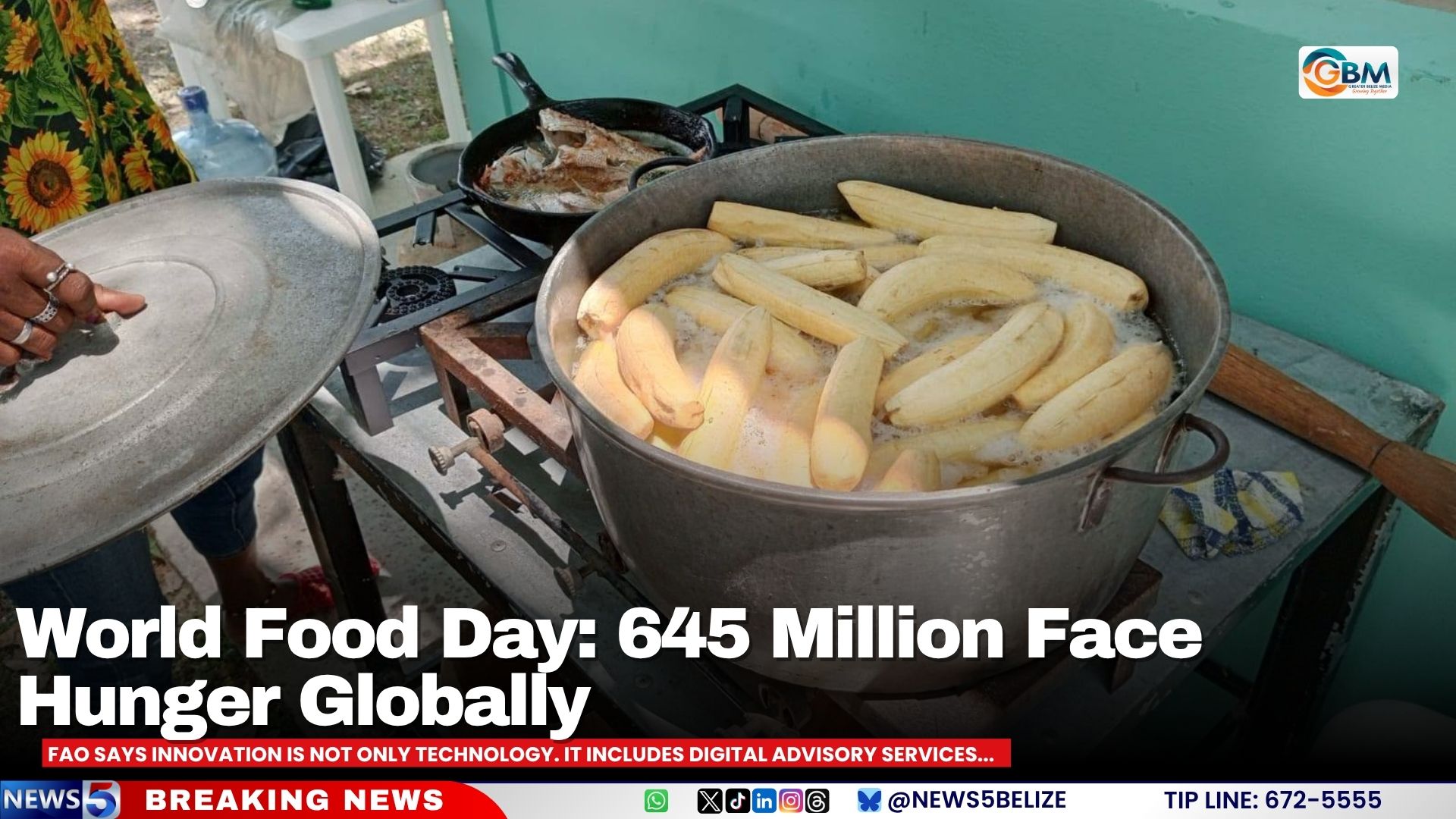
October 16, 2026 marks the annual observation of World Food Day, themed this year “Innovate today. Nourish tomorrow.” On this occasion, the Food and Agriculture Organization of the United Nations (FAO) has released a comprehensive assessment of global food security, delivering a sobering portrait of ongoing hunger while holding out a grounded optimism: ending widespread food deprivation is achievable, as the world currently produces enough food to feed every person on the planet.
Despite this overall food sufficiency, stark inequities leave hundreds of millions facing chronic hunger. FAO data shows that in 2025 alone, 645 million people globally experienced insufficient access to food. Even more staggering, nearly one-third of the global population — 2.69 billion people — cannot afford the cost of a nutritionally adequate diet. The organization identifies three interconnected, persistent drivers that are straining global agrifood systems: protracted conflict across multiple regions, widespread economic instability, and accelerating climate shocks that disrupt production and distribution.
To counter these pressures, FAO emphasizes that innovation extends far beyond cutting-edge digital technology. It encompasses a broad spectrum of solutions, from accessible digital agricultural advisory services for smallholders and climate-resilient improved seed varieties to community-focused farmer field schools, collective farmer cooperatives, and regenerative traditional land and water management practices that have sustained food production for generations. A core part of this strategy, the organization notes, is proactive crisis prevention that builds long-term resilience among vulnerable food-producing communities, rather than just responding to emergencies after they emerge.
Waste and loss throughout the food supply chain further exacerbate global food shortages, the report finds. Roughly 13 percent of all food produced globally is lost in the post-harvest period, before it ever reaches retail markets. An additional 19 percent of food is wasted at the retail and consumer levels, in stores and household kitchens. Combined, this accounts for more than one-third of all produced food being lost or wasted annually, a avoidable drain on global food supplies that could otherwise feed millions of food-insecure people.
FAO also highlights deep gender gaps that hold back agricultural productivity: even when women manage farm plots of the same size as their male counterparts, their land productivity lags by 24 percent. Closing this gap requires expanding women farmers’ access to critical resources including technical skills training, affordable financing, and modern agricultural technology. Looking ahead, the organization points to the critical role of young people in transforming global agrifood systems: roughly 1.3 billion people between the ages of 15 and 24 currently work across the agrifood sector, representing a powerful force for innovation, job creation, and systemic change.
One worrying trend the organization calls out is the slowing pace of investment in agricultural innovation. Global annual growth in investment for agrifood research and development averaged 2.7 percent between 1980 and 2015, but that growth rate dropped to just 1.9 percent annually between 2015 and 2021, leaving critical research underfunded at a time when it is most needed.
Beyond equity and access challenges, the agrifood sector itself creates measurable pressure on global natural resources, the report acknowledges. The sector accounts for approximately 70 percent of all global freshwater withdrawals, and more than 60 percent of all human-degraded land worldwide is used for agricultural production. Additionally, inadequate food safety measures have severe public health consequences: contaminated food causes an estimated 420,000 preventable deaths annually, and sickens roughly 600 million people each year.
In closing, FAO stresses that ending global hunger requires collective action across all sectors of society. Governments bear the primary responsibility of investing in public agricultural research and expanding rural infrastructure to connect small producers to markets, while private businesses can bring targeted investment, resilient supply chains, and formal job opportunities to underserved rural and low-income communities. Partnerships across researchers, civil society organizations, producer groups, and the United Nations system, the organization says, can turn the goal of zero hunger for all into a tangible reality.