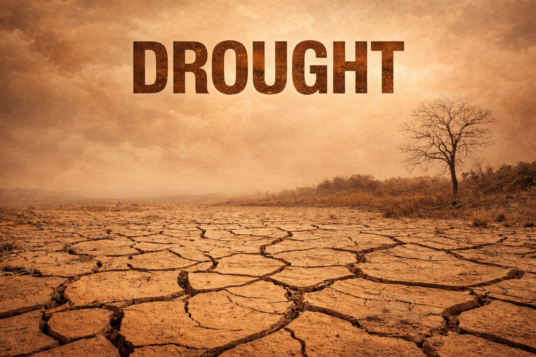
A new monthly climate assessment from the Antigua and Barbuda Meteorological Service confirms that the twin-island nation continues to grapple with sustained drought conditions, after Antigua recorded well below average precipitation in September 2026.
Official data pegs the island-wide average rainfall for Antigua at 88.1 millimeters, or 3.47 inches, a figure that falls firmly into the below-normal classification. The dry trend was even more pronounced at V.C. Bird International Airport, where only 68.8 millimeters (2.68 inches) of rain were measured across the month.
This underwhelming rainfall extends a months-long dry spell that has shaped the islands’ climate through 2026. Meteorological records show that from April to September 2026, Antigua faced severely dry conditions, with a 12-month period ending in September 2025 classified as moderately dry overall — a clear indicator of how long the rainfall deficit has persisted.
Rainfall across Antigua was also unevenly distributed last month. The southern part of the island received the highest totals, with Cobbs Cross in St. Paul Parish logging the island’s maximum monthly accumulation at 112.5 millimeters (4.43 inches). The same community also recorded September’s single biggest 24-hour downpour, with 62 millimeters (2.44 inches) falling on September 16.
Despite these scattered heavy rain events, Antigua still endured an 11-day continuous dry period through September, alongside one separate five-day wet spell, bringing the total number of wet days for the month to 10.
Analysis via the Standardized Precipitation Index, a leading metric for measuring long- and short-term rainfall deficits, confirms the escalating dry trend: conditions were slightly dry over the 30 days leading up to the end of September, moderately dry across the three months from July to September, and severely dry over the full six-month April-to-September period. The September rainfall, officials noted, was far too little to reverse the cumulative moisture deficit that has built up over half a year.
In neighboring Barbuda, 73.2 millimeters (2.88 inches) of rain were recorded at Sir McChesney George Secondary School, with only four wet days counted across the month. Barbuda faced three separate dry spells, including one 10-day period and one seven-day period of no rain. The Meteorological Service cautioned that limited on-the-ground monitoring data makes a definitive long- and short-term drought assessment for Barbuda difficult, but satellite precipitation estimates indicate conditions mirror the severe dryness seen across Antigua.
The September 2026 findings, published in the October 2026 edition of the Meteorological Service’s Monthly Climate Summary, highlight that despite scattered pockets of heavy rain across individual communities, sustained dry conditions remain the dominant climate trend across both Antigua and Barbuda.