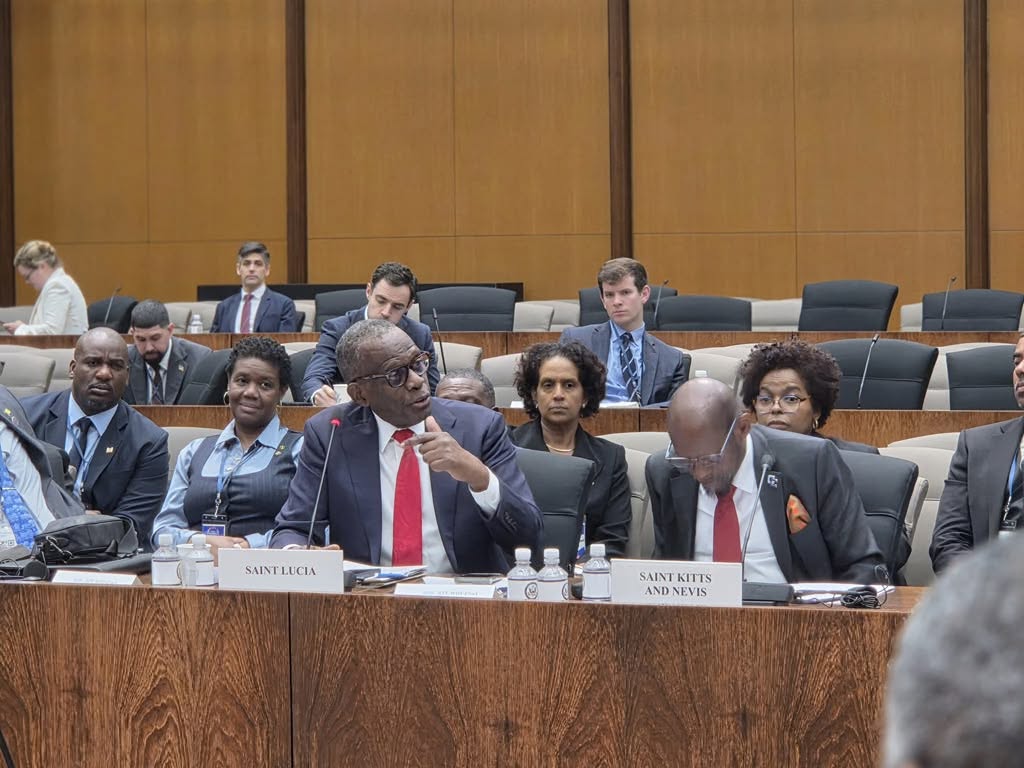
The first high-level U.S.-Caribbean Dialogue, hosted in Washington D.C. on Thursday, brought together regional leaders from across the Caribbean to reframe long-standing bilateral cooperation around tangible, community-focused progress, with CARICOM chairman and Saint Lucia Prime Minister Philip J. Pierre laying out clear priorities for a reimagined partnership.
Speaking in his dual role as head of the 15-nation Caribbean Community and leader of Saint Lucia, Pierre argued that any successful collaboration between the United States and Caribbean nations must translate directly into improved daily life for ordinary regional residents. He broke down what key policy areas mean for Caribbean households, noting that energy security translates to affordable monthly electricity bills, economic cooperation creates stable local jobs and attracts much-needed investment, security cooperation builds safer neighborhoods for families, and disaster preparedness guarantees rapid help when hurricanes and other climate-fueled disasters strike.
Pierre outlined a clear roadmap for actionable cooperation, identifying eight core priority areas for joint work: affordable and resilient renewable energy system financing, predictable and fair trade rules, expanded cross-border commercial partnerships, protection of critical digital and physical infrastructure, strengthened public health systems, more coordinated and rapid disaster response, and joint action to dismantle transnational organized crime and stem the flow of illegal firearms into the region.
Emphasizing that the value of the dialogue would not be measured by talks alone, Pierre called for regular high-level political dialogue to be paired with ongoing technical collaboration, shared agreed-upon development priorities, and formalized follow-up mechanisms to ensure commitments do not stall. He confirmed that the CARICOM Secretariat would take on a coordinating role to align regional technical working groups with national governments and regional development institutions, streamlining implementation of any agreed initiatives.
In response to the regional priorities laid out, U.S. Deputy Secretary of State Christopher Landau announced new U.S. financial commitments across four key areas: public health capacity building, regional security, law enforcement cooperation, and expanded digital connectivity for underserved Caribbean communities. Landau also shared plans for a dedicated U.S.-Caribbean Investment Dialogue scheduled for 2027, designed to connect regional governments with American private sector investors. He encouraged Caribbean leaders to map out specific, high-impact investment opportunities that align with their national development goals to match with interested U.S. business partners. The deputy secretary also emphasized that mutual respect, recognition of full national sovereignty, and alignment with Caribbean-led development priorities would remain the core foundations of the bilateral relationship.
U.S. Assistant Secretary for Western Hemisphere Affairs Juan Pablo Segura added that a key near-term priority is ensuring all regional governments have clear, accessible information about the full range of U.S. financial and technical tools available to support their domestic development targets, reducing barriers to accessing existing support.
Pierre thanked the U.S. government for convening the high-level dialogue, noting the gathering came in direct response to a request from CARICOM leaders during a February meeting with U.S. Secretary of State Marco Rubio held in Saint Kitts and Nevis. In addition to discussions on broad bilateral cooperation, Pierre addressed two pressing regional crises: the ongoing political and humanitarian instability in Haiti, and the growing impacts of irregular migration on Caribbean communities.
On Haiti, Pierre called for sustained, coordinated international assistance to support the Haitian people, alongside credible, inclusive elections with maximum voter participation to rebuild public trust in democratic institutions and pave the way for a full return to national stability. He also urged participants to prioritize long-term attention to migration dynamics, highlighting the far-reaching social and economic impacts shifting migration patterns have on Caribbean communities and cross-border family ties.
The dialogue brought together sitting heads of government from Saint Kitts and Nevis, Dominica, and Haiti alongside senior delegation leaders from across CARICOM, marking the first formal high-level political consultation of its kind between the U.S. and the regional bloc under the new dialogue framework.