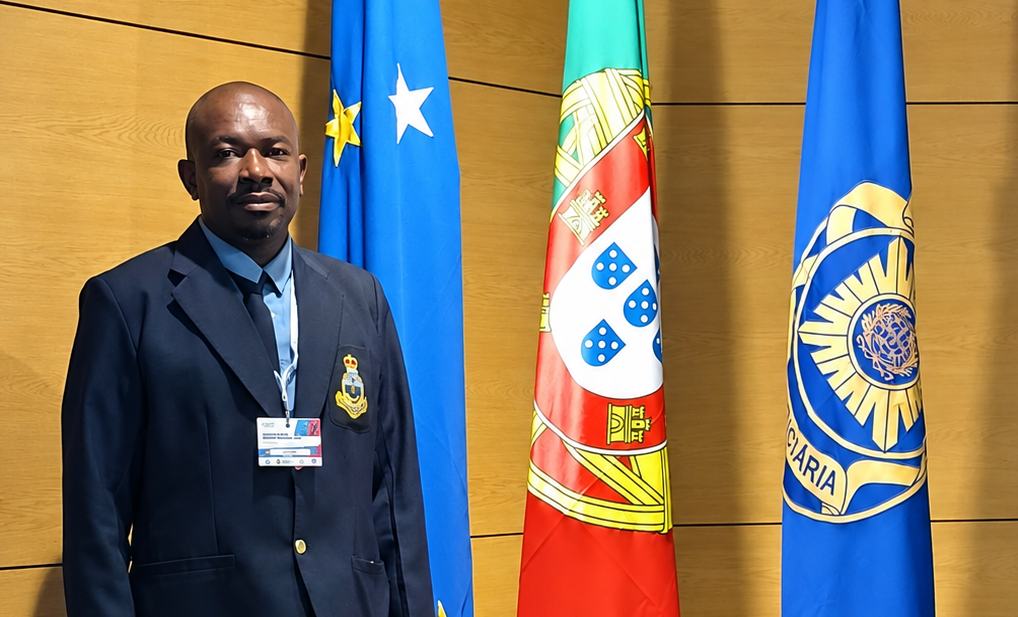
Against a backdrop of growing transnational threats to global maritime security, a senior law enforcement official from the Royal Grenada Police Force has represented the Caribbean island nation at a high-level international symposium focused on combating maritime crime in Lisbon, Portugal. Hosted at the Portuguese Judicial Police headquarters, the second Symposium for Public Prosecutors on Maritime Crimes ran from October 7 to 8, 2026, gathering legal and law enforcement delegates from 20 Atlantic-region nations with the shared goal of strengthening cross-border collaboration against illegal maritime activity.
The event centered on unpacking the most pressing legal and operational challenges posed by a wide spectrum of transnational maritime offenses, ranging from drug and human trafficking and piracy to illegal, unreported and unregulated (IUU) fishing — a pervasive threat that undermines both coastal ecosystems and economic stability for small island nations. The core training curriculum emphasized a critical, often overlooked, principle: integrating specialized legal expertise at every stage of the maritime law enforcement process, from initial surveillance and threat detection, through operational planning, evidence collection and preservation, criminal investigation, and final prosecution.
For Grenada, a small island developing state whose economy and national security are deeply tied to its surrounding maritime waters, this focus holds exceptional strategic importance. The country’s ability to enforce maritime rules effectively depends not only on successful interception of illegal activity at sea, but on building robust, legally sound cases that can withstand judicial scrutiny and result in successful prosecution.
Inspector Borris George, Grenada’s representative at the symposium, joined a dedicated working session titled “Maritime Crime: Bridging Legal and Operational Perspectives” alongside counterparts from Côte d’Ivoire, Belgium, and São Tomé and Príncipe. The session offered delegates a hands-on platform to exchange practical insights on shared operational and legal hurdles, as well as collaborative strategies to strengthen coordination between frontline law enforcement agencies and public prosecution authorities.
Randy Connaught, Commissioner of Police for Grenada, highlighted the tangible value of the training for the island nation. “This training strengthens our ability to investigate and prosecute maritime crime and reinforces the importance of coordination between our operational officers, investigators and prosecutors. Building this specialised capacity is essential as Grenada responds to increasingly complex transnational threats within our maritime space,” Connaught noted.
The symposium was a collaborative effort organized by the Atlantic Centre in partnership with the Maritime Analysis and Operations Centre Narcotics (MAOC-N), EnMAR+, the Portuguese Judicial Police, and the Portuguese Public Prosecution Service. Caricom IMPACS served as one of the key supporting institutional partners, and it was through coordination between Caricom IMPACS and the Atlantic Centre that Grenada was able to participate in the event.
Grenada is currently in the final stages of formalizing its membership in the Atlantic Centre, a process that builds on years of ongoing engagement coordinated by Special Envoy for Oceans Ambassador Jerry Enoe, in collaboration with Grenada’s Permanent Representative to the United Nations. Once finalized, full membership will give Grenada access to a structured, long-term platform for sustained maritime security cooperation, ongoing specialized professional training, and targeted technical exchange with other Atlantic nations.
The insights and capacity built through the symposium extend far beyond individual law enforcement efforts, contributing to the strengthening of Grenada’s entire national maritime security architecture. Enhanced investigative and prosecutorial capabilities benefit all of Grenada’s agencies operating in the maritime domain, including the Royal Grenada Police Force, Coast Guard, Fisheries Division, Customs, and Immigration. By boosting national capacity to crack down on IUU fishing, trafficking networks, and transnational organized crime, Grenada is better positioned to protect the maritime spaces that underpin its critical economic sectors: commercial fisheries, tourism, international trade, and the country’s growing blue economy as a whole.
Ambassador Enoe emphasized that this type of cross-border partnership addresses a specific gap for small island states like Grenada. “For Grenada, partnerships such as this provide practical opportunities to build the specialised capacity that small island states require to govern and protect increasingly important ocean spaces. As Grenada moves to formalise its membership in the Atlantic Centre, we see significant value in deeper cooperation, knowledge exchange and access to training that can strengthen our broader maritime security and blue economy agenda,” Enoe stated.
This report was issued via the Prime Minister’s Office of Grenada.