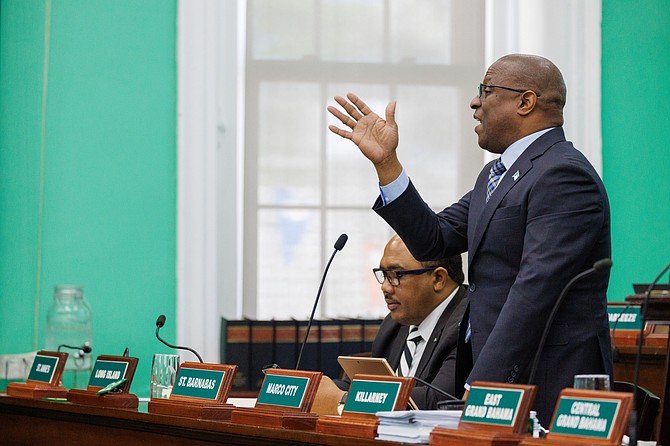
A fiery parliamentary debate has erupted in the Bahamas over a striking disconnect between the country’s first post-independence fiscal surplus and long-simmering crises in the public healthcare system, leaving the governing Davis administration and opposition locked in a heated clash over policy priorities.
During Wednesday’s parliamentary sitting, the Davis administration touted a landmark $39.3 million fiscal surplus for the 2025/2026 fiscal year, a milestone never achieved since the Bahamas gained full sovereignty. But Michael Pintard, leader of the opposition Free National Movement (FNM), used the occasion to level blistering criticism at the government, arguing that celebrating the fiscal win while Bahamian patients suffer deadly consequences from widespread supply shortages at public medical facilities was unacceptable.
Pintard claimed that it would be a profound moral tragedy for the ruling government to boast of its fiscal prudence while residents of the Bahamas die in public hospitals because critical essential supplies are unavailable. He went on to detail the scope of systemic failures in public healthcare, from broken air conditioning units and insufficient resources for routine diagnostic testing to repeated postponements of necessary surgeries due to inadequate facility preparation and early patient discharges driven by extreme bed shortages. Pintard added that he had personally heard tearful accounts from constituents of life-altering struggles accessing basic care, even noting that he had lost relatives to outcomes tied to these systemic gaps. He emphasized that the healthcare system’s decades-long decline stretches across multiple successive administrations, but questioned why the newly achieved fiscal surplus has not been redirected to address the life-or-death needs of ordinary Bahamians.
Michael Darville, the country’s Minister of Health and Wellness, pushed back forcefully on Pintard’s allegations, labeling the claims of patient deaths from supply shortages misleading and factually inaccurate. He urged the opposition leader to exercise greater care when making unsubstantiated public claims that damage public confidence in the national healthcare system, noting that while it is reasonable to acknowledge that some shortages exist, claiming shortages are causing patient deaths goes far beyond what evidence supports. Darville reaffirmed his commitment to upholding and defending the country’s public healthcare system, which serves thousands of low-income Bahamian residents who cannot afford private medical care.
Longstanding public grievances over conditions at the country’s two major public hospitals, Princess Margaret Hospital (PMH) and Rand Memorial Hospital, predate this current parliamentary clash. For years, patients have shared accounts of extreme wait times stretching from hours to days to see a physician, and reports of patients receiving care in hospital corridors after inpatient wards reached full capacity.
Earlier this year, senior clinical leaders echoed these widespread public complaints. In February, Dr. Charelle Lockhart, president of the Consultant Physicians Staff Association and a 22-year veteran of public pediatric practice, stated that PMH was in the worst condition she had observed across her entire career. Lockhart explained that the public healthcare system faces chronic understaffing alongside persistent shortages of essential equipment and medical supplies, even after major capital investments including the construction of a new pediatric unit and renovated Accident and Emergency department. She added that these new facilities remain understaffed and poorly equipped, blunting any potential benefit to patient care. In March, Muriel Lightbourn, president of the Bahamas Nurses Union with more than 40 years of nursing experience, similarly confirmed that PMH’s current state is the worst she has seen in her decades-long career.