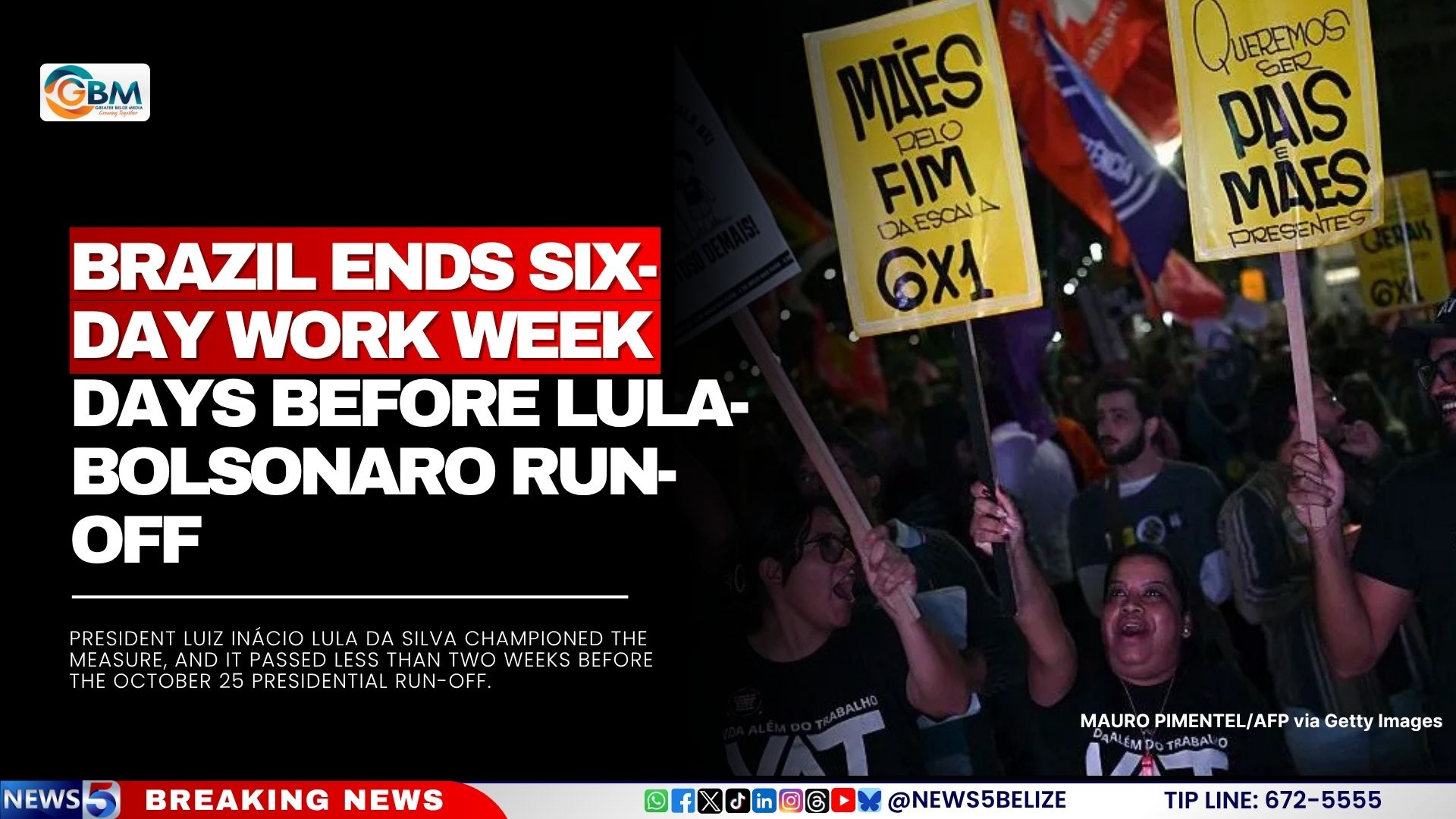
In a historic overhaul of Brazilian labor policy that arrives just two weeks ahead of a tightly contested presidential run-off, the country’s Congress has given final approval to a constitutional amendment that reduces the standard working week from 44 hours to 40, enshrining a guaranteed two-day weekend for workers without any corresponding cut to salaries. This reform, which will benefit more than 30 million Brazilian workers, marks the most significant expansion of workplace protections since the country restored democratic rule in 1988, according to analysis from the BBC.
The final vote in the Federal Senate passed on Wednesday with an overwhelming majority of 75 votes in favor to just one opposing. The lower Chamber of Deputies had already greenlit the measure back in May, clearing the way for the final upper house vote ahead of the October 25 run-off between incumbent President Luiz Inácio Lula da Silva and his right-wing challenger Flávio Bolsonaro, son of former Brazilian president Jair Bolsonaro.
Lula, who has spearheaded the labor reform throughout his term, positioned the policy as a core promise to working-class voters ahead of the close election. After the first round of voting held earlier this month, Bolsonaro held a narrow lead: he secured 47% of valid votes, while Lula garnered 45.2%. Neither candidate crossed the 50% threshold required to win outright, forcing the head-to-head run-off. Lula’s political allies have expressed confidence that the popular work week reform will help shift undecided working-class voters into their camp, closing the narrow gap between the two candidates.
The shift in the race has brought a notable political reversal from Bolsonaro. The senator had initially publicly opposed the amendment, dismissing it as naked electoral opportunism by Lula aimed at courting working-class support ahead of the vote. Just one day before the final Senate vote on Tuesday, however, Bolsonaro announced he would flip his position and vote in favor of the bill, arguing that he could not go against the clear popular will of Brazilian workers. “Most Brazilian workers want to see the end of the six-day workweek, so I’m going to vote in favour of ending it,” Bolsonaro stated in his public reversal. Prior to this shift, Bolsonaro had argued that working schedule arrangements should be negotiated directly between employers and employees, rather than mandated through a constitutional amendment.
Lula was quick to call out Bolsonaro’s last-minute change of heart as its own form of electoral opportunism, while still celebrating the bill’s passage in posts on social media. For his part, the president framed the reform as a long-overdue win for Brazil’s working class, fulfilling a campaign promise he made when he took office.
The rollout of the new 40-hour work week will not take effect immediately. The reform will be phased in gradually over a period of more than a year. Following an initial two-month grace period, the standard work week will first be reduced to 42 hours, before dropping to the final 40-hour standard at a subsequent date yet to be formally set by regulatory bodies.