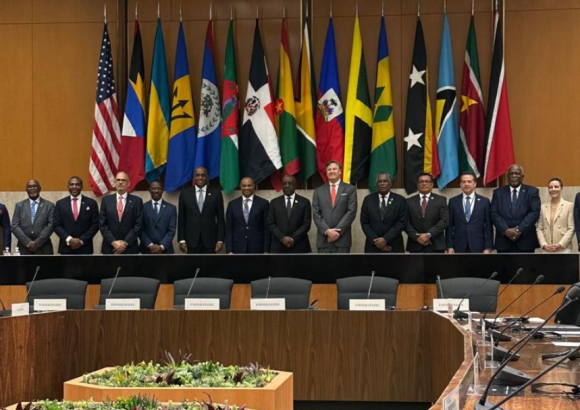
The U.S. Department of State in Washington, D.C. played host to the inaugural U.S.-Caribbean Dialogue this Thursday, where Dominican Foreign Minister Víctor “Ito” Bisonó laid out a comprehensive five-pillar framework to deepen collaborative ties between the United States and Caribbean nations. Against a backdrop of growing shared regional challenges, from shifting energy markets to transnational criminal networks, Bisonó’s proposal lays out a clear roadmap for targeted cooperation across priority areas.
First, the framework calls for accelerated development of cross-border regional energy security initiatives, aimed at reducing regional vulnerability to supply disruptions and accelerating the transition to stable, affordable energy supplies. Second, it urges both sides to leverage economic diplomacy as a tool to unlock new foreign direct investment flows and build mutually beneficial productive partnerships that drive inclusive economic growth across the Caribbean basin. Third, Bisonó emphasized the urgent need to shore up protection for strategic regional infrastructure, with a focus on upgrading cybersecurity defenses, improving end-to-end cargo traceability systems, and boosting security protocols at major regional ports. Fourth, the plan pushes for stronger coordinated response frameworks to address the increasing frequency and severity of natural disasters, as well as emerging public health emergencies that have repeatedly tested regional capacity in recent years. Finally, it calls for intensified joint action to combat cross-border threats including drug trafficking, narco-linked terrorism, transnational organized crime, and the illegal smuggling of weapons across regional borders.
Convened by the U.S. State Department, the high-level dialogue brought together senior government representatives from across Caribbean nations and top U.S. federal officials to deliberate on core shared priorities: regional security, energy stability, sustainable economic expansion, and the protection of critical strategic infrastructure. Bisonó was joined in the talks by two senior Dominican officials: Defense Minister Lieutenant General Carlos Antonio Fernández Onofre, and María Isabel Castillo, the Dominican Republic’s Ambassador to the United States.
Bisonó’s participation in the dialogue forms a core part of his official four-day visit to Washington, running from October 14 to 17. Beyond the U.S.-Caribbean Dialogue, the trip includes a full schedule of diplomatic engagements, including scheduled meetings with U.S. Secretary of State Marco Rubio and Albert Ramdin, Secretary General of the Organization of American States. This report draws on updated reporting from DominicanScope.