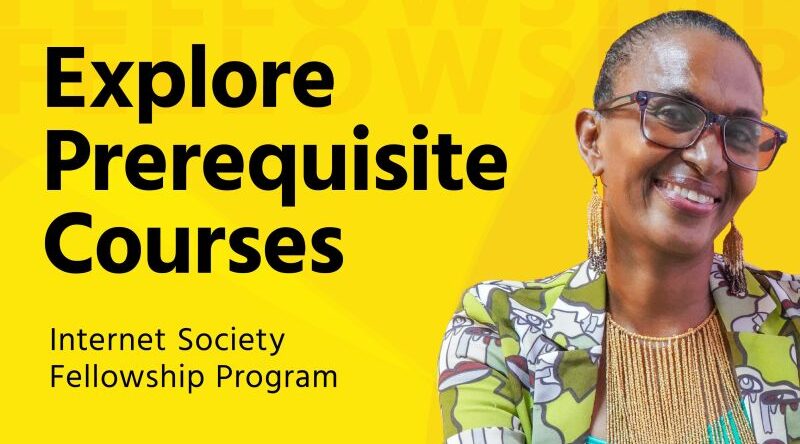
When global digital advocacy leaders gathered in Brussels, Belgium, for the Internet Society Community Advocacy Workshop from October 13 to 15, 2026, one voice stood out among participants drawn from Europe and Africa: that of Beverly Leblanc, a veteran Dominican educator and disability inclusion advocate, and the sole representative from the entire English-speaking Caribbean.
Selected for the prestigious Internet Society Community Advocacy Fellowship, Leblanc turned her invitation to the international event into multiple opportunities: to elevate underrepresented Caribbean perspectives on digital equity, to put her small island nation on the global map, and to gain critical insights to advance her pioneering work expanding accessible internet access for people with disabilities across Dominica.
Leblanc’s time at the workshop included an unexpected moment of public education for fellow attendees: when she introduced herself as representing Dominica, many in the room confused the Caribbean nation with its larger neighbor the Dominican Republic. She seized the teachable moment to clarify the distinction between the two countries, sharing details of Dominica’s progress in inclusive education and disability rights work that earned broad interest from fellow participants and workshop organizers alike. That warm reception reinforced her commitment to serving as a bridge between her homeland and the global digital advocacy community.
Beyond diplomatic outreach, the fellowship is the launching pad for Leblanc’s flagship initiative: *Bridging the Digital Divide: Advancing Accessible, Inclusive, and Meaningful Internet Access for Persons with Disabilities in Dominica*. Unlike common narratives that frame digital inclusion as simply expanding internet connectivity, Leblanc’s project centers on the unaddressed gap of accessibility: even when a connection is available, people with disabilities often cannot navigate government websites, access public information, or complete critical online transactions independently.
Through Circle of Friends Inc., the nonprofit organization she leads, Leblanc is working to build cross-sector collaboration between government agencies, local disability advocacy groups, civil society organizations, and technology professionals to dismantle these systemic barriers. Her core priorities include raising public awareness of universal accessible digital design, pushing for widespread adoption of global recognized accessibility standards, auditing existing public online services to map unaddressed obstacles, and centering the voices of people with disabilities in shaping the digital policies and services that impact their daily lives.
As Dominica accelerates its national digital transformation, Leblanc warns that a failure to prioritize accessibility risks deepening exclusion for a community that already faces disproportionate barriers to critical information and services. Her work is rooted in a simple, urgent principle: digital progress must benefit every member of society, regardless of ability.
A key highlight of the Brussels workshop program was a scheduled visit to the European Parliament, where participants engaged in discussions with Member of the European Parliament Kristian Vigenin on three landmark digital policy initiatives: the Digital Services Act, the proposed Digital Fairness Act, and the EU KIDS Act, which is focused on strengthening online protections for children. The conversations covered pressing topics including online safety, equity in digital service provision, and child protection in an increasingly connected world—issues that align closely with Leblanc’s professional work spanning education, child protection, and disability inclusion. The exchanges gave her valuable new perspectives on how regulatory frameworks and public policy can be leveraged to build safer, more accessible digital spaces for all.
Back home, Leblanc has already begun expanding public conversation around digital accessibility through an opinion piece published by Dominica News Online, titled *The open door that not everyone can get through*. In the article, she pushes back against the widespread misconception that moving services online automatically makes them accessible to everyone. She details the frequent barriers that screen reader users and people with other accessibility needs encounter, from unlabeled images to poor site navigation that blocks access to basic services. Her core argument: accessibility must be integrated into digital platform development from the earliest design stages, rather than added as an afterthought once a platform is already built. The piece complements her fellowship work by sparking broader public dialogue about the hidden barriers people with disabilities face in the digital sphere.
With more than 30 years of experience in education and nonprofit leadership, Leblanc brings a lifetime of on-the-ground expertise to her advocacy. She currently serves as Executive Director of Circle of Friends Inc. and is the founder of the Achievement Learning Centre, working across roles as an educator, inclusive education consultant, mentor, and disability rights advocate to expand opportunities for children, young people, and adults with disabilities across Dominica.
Her participation in the Brussels workshop has created lasting value, allowing her to build new international partnerships, exchange best practices with global advocates, and strengthen her local advocacy work with new knowledge and connections. As Dominica continues its digital transition, Leblanc is calling for a fundamental shift in approach: one that positions people with disabilities not just as passive users of new technology, but as active contributors to the policies and systems that will define the country’s digital future.