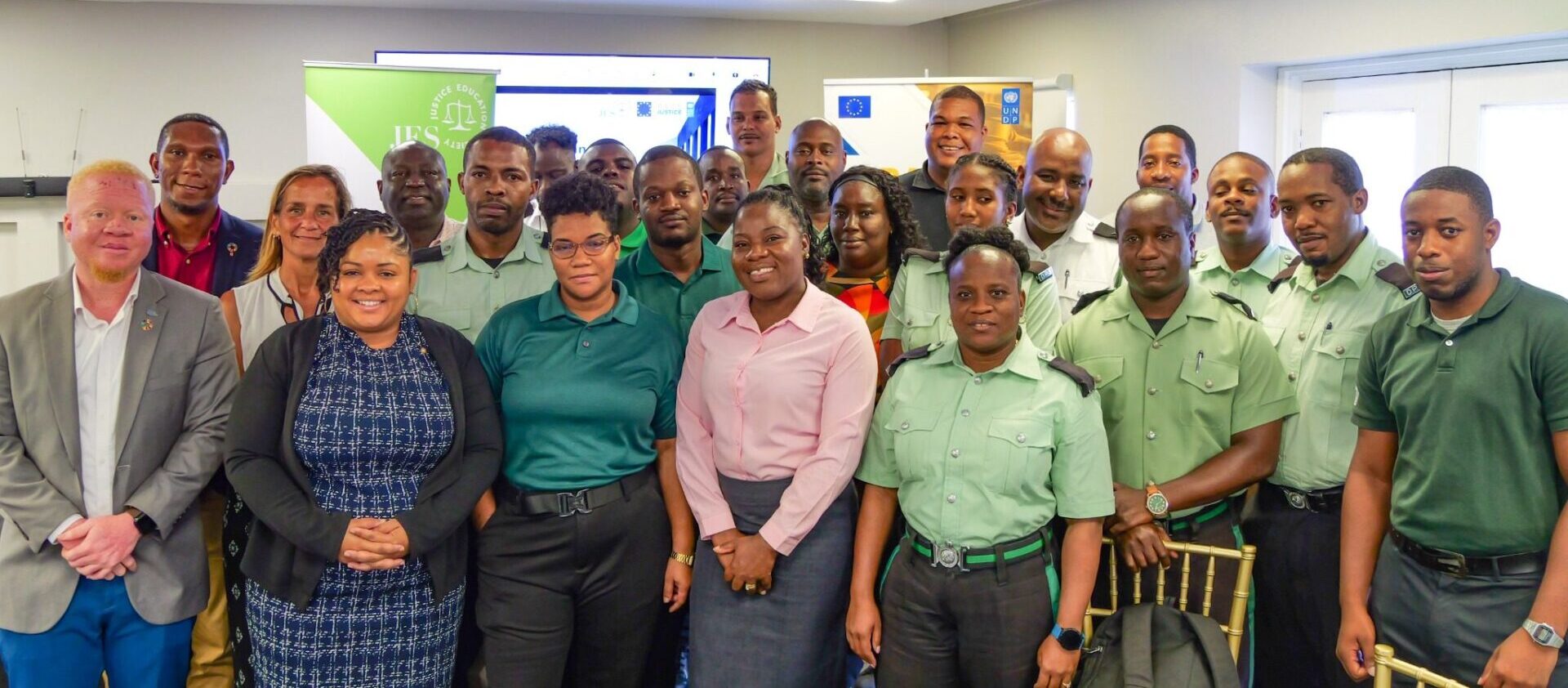
Correctional and probation officers from the Commonwealth of Dominica have wrapped up a targeted, multi-day training program focused on modernizing prison administration, expanding rehabilitation programming, and equipping officers to successfully support incarcerated individuals transitioning back into local communities after completing their sentences.
This training forms a core component of a 10-country regional initiative spanning the Caribbean, designed to improve cross-agency collaboration between correctional and probation services and streamline case management across every stage of the criminal justice process. Per an official statement from the United Nations Development Programme (UNDP) Barbados and the Eastern Caribbean office, Dominica is the fourth nation to complete this program phase, following earlier completions by St. Lucia, St. Vincent and the Grenadines, and Grenada.
The cross-agency initiative is delivered through two complementary projects: the Partnership of the Caribbean and European Union on Justice (PACE Justice), which receives funding from the European Union and is implemented by UNDP, and the Judicial Strengthening for the Eastern Caribbean (JES-EC) Project, funded by the Government of Canada and executed by the Justice Education Society of British Columbia.
Prior to launching the training in each participating country, regional organizers conducted consultations with national correctional and probation services to identify priority training needs. This needs-based approach allowed participating officers to review existing operational practices, exchange on-the-ground insights with peer professionals from across the region, and adapt program content to align with the unique legal and social contexts of their home countries.
The curriculum is structured around four key focus areas: improving secure custodial management, strengthening person-centered rehabilitation services, streamlining coordinated case management across agencies, and building durable collaborative working relationships between correctional and probation institutions.
Vanessa Untiedt, UNDP PACE Justice Project Specialist, emphasized that the program centers the critical role correctional and probation services play in maintaining a fully functional justice system. “It is important that we look at the justice system as a whole,” Untiedt explained. “Prison and probation are an essential part of the justice chain, and the people working in these services face very practical challenges every day. Through this regional training, we want to bring them together, share experiences, and provide practical tools that support their daily work, while strengthening rehabilitation and reintegration across the region.”
A foundational principle of the initiative is that support for justice-involved individuals does not end when they are released from custody. The program trains officers to conduct individualized risk and needs assessments, deliver tailored rehabilitation support, and coordinate closely with probation services to create structured pathways for former inmates to reintegrate successfully into their home communities.
Jennifer Cooper, Head of Cooperation for the Eastern Caribbean at Global Affairs Canada, underscored the connection between robust, effective justice institutions and broader regional security and sustainable development. “Regional peace and security is a priority for Canada, and we are proud to support partners working to strengthen justice institutions across the Eastern Caribbean,” Cooper noted. “Effective justice systems uphold the rule of law, protect citizens’ rights, build public confidence and contribute to safer communities. By bringing practitioners together to share expertise and practical solutions, we expect that this initiative will strengthen institutional capacity and support more responsive and effective justice services across the region.”
Lyndel Archibald, Project Director for JES-EC, echoed these remarks, highlighting the collective benefits of cross-jurisdictional knowledge sharing and collaboration among justice professionals. “Bringing practitioners together fosters a collaborative approach to justice and rehabilitation,” Archibald said. “This collaboration enhances the capacity of practitioners to work together seamlessly to improve outcomes for individuals and communities, ultimately strengthening opportunities for rehabilitation, successful reintegration and reduced recidivism.”
While the Dominican training session marks the completion of the fourth phase of the joint PACE Justice-JES-EC partnership, the broader regional correctional training program will continue rolling out across Caribbean nations through November 2026. The initiative launched with an initial training session in Barbados, and upcoming program sessions are scheduled for Belize, Antigua and Barbuda, Guyana, St. Kitts and Nevis, and Trinidad and Tobago.
Regional implementing partners anticipate that these coordinated training activities will strengthen evidence-based correctional practices across the Caribbean, improve cross-service coordination between custody, rehabilitation, probation, parole, and community reintegration agencies. The overarching goal of the initiative is to build more responsive, effective justice systems and reduce rates of repeat offending across the region.