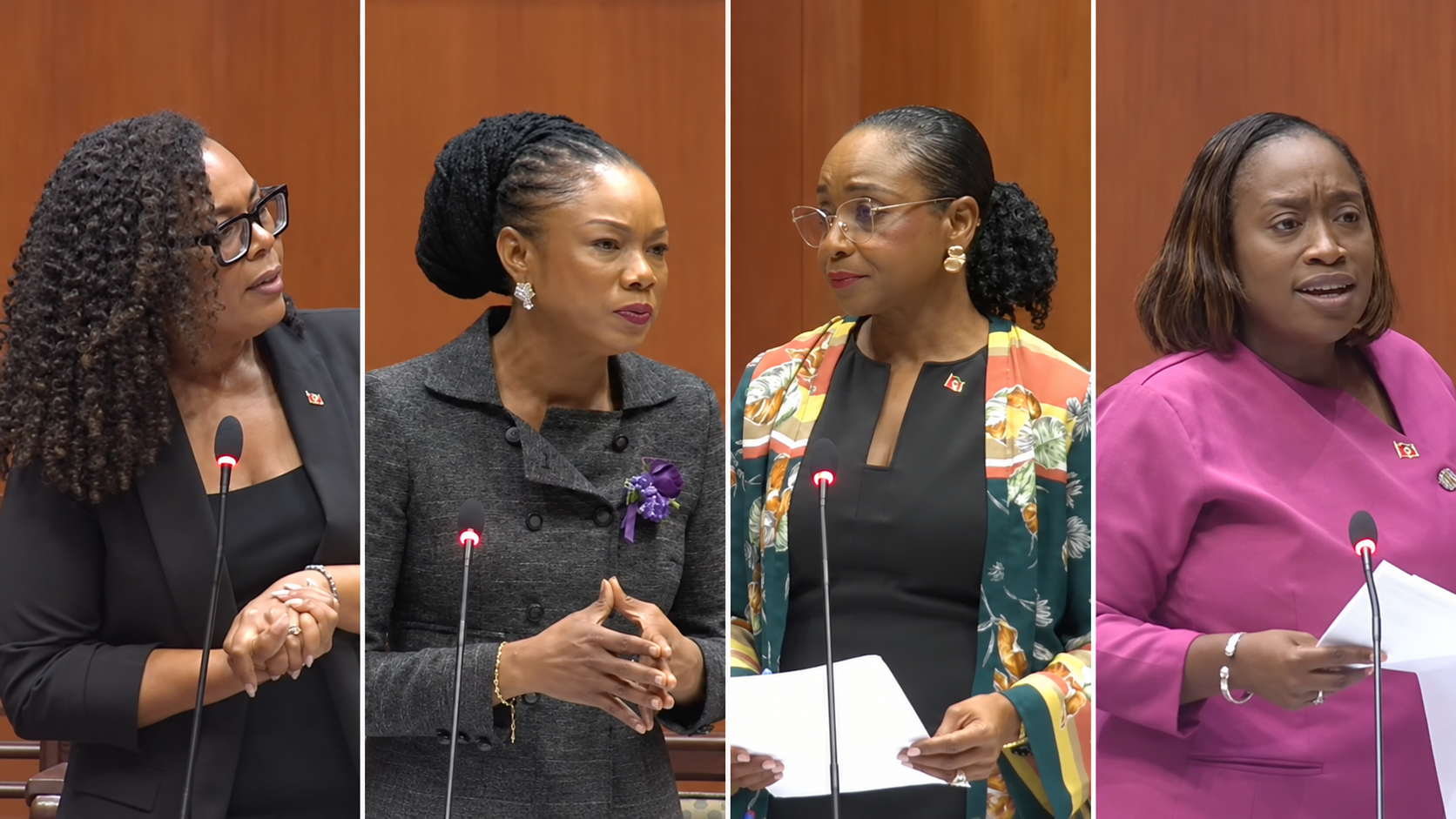
In an unprecedented show of cross-ideological unity during recent upper house proceedings, government, opposition and independent senators in Antigua and Barbuda have collectively pushed to raise the country’s age of sexual consent from 16 to 18, arguing that all national legislation should uniformly classify anyone under 18 as a child requiring full legal protection.
The bipartisan call emerged during Senate debate on the 2026 Sexual Offences Amendment Bill, a piece of legislation that strengthens penalties for multiple sexual offenses and retains the general ban on sexual intercourse with minors under 16, but stops short of adjusting the age of consent threshold. Every participating senator from across the political spectrum backed the reform, from Leader of Government Business Shenella Govia and government Senator Abena St. Luce to Independent Senator Jamilla Kirwan and opposition Senators Malaka Parker and Jonathan Wehner.
Govia highlighted the fundamental legal inconsistency created by the current framework: 16-year-olds are legally permitted to consent to sexual activity, yet they are barred from core adult responsibilities including voting and driving that are reserved exclusively for those 18 and older. “You can have sex, but you can’t drive,” Govia noted. “You can have sex, but you can not vote.” She called on the government to standardize the legal threshold of adulthood across all statutes, announcing her intention to table separate standalone legislation to address the age of consent before parliament. “I believe in us really standardizing the overall age of adulthood,” she said. “And then adulthood, including the age of consent to sex, the age of driving and the age of voting.”
Opposition Senator Parker pressed for immediate action, stressing that Antigua and Barbuda’s existing child protection statutes already uniformly define children as individuals under 18. She argued that the age threshold in sexual offenses law must align with the existing Child Care and Protection Act and Child Justice Act. “We need in this country to make the age of consent 18,” Parker stated. “Every other piece of legislation where children are addressed and where we’re talking about child care and protection, the age is 18.”
Parker added that stronger protections are particularly critical because some girls experience early physical maturation and may appear older than their chronological age, a circumstance that should never excuse adults who pursue sexual relationships with underage individuals or shift blame to the minor. She called on parliament to move forward with the same urgency it demonstrated when advancing recent criminal justice amendment packages, saying, “Let us raise the age of consent and stop talking about it.”
Independent Senator Kirwan, who opened up about her own experience of childhood sexual abuse and the lifelong psychological, emotional, and relational harm it caused, praised the bill’s gender-neutral approach to addressing child sexual abuse but argued that existing protections for minors under 16 should be expanded to cover all individuals under 18. “Eighteen should be the age of consent,” she affirmed. Kirwan also welcomed the bill’s elimination of the legal defense that allows accused offenders to claim they reasonably believed a minor was at least 16, stressing that full responsibility for sexual contact with underage individuals must rest with the adult, rather than forcing children to prove they appeared or acted younger than their age.
Government Senator St. Luce, drawing on her experience as a parent of two teenagers, reinforced the argument that 16-year-olds remain developmentally children incapable of making the high-stakes, life-altering decisions associated with sexual activity. She pointed to her own 15-year-old son, who is preparing for secondary school leaving examinations and remains fully dependent on his parents, as an example: a 16-year-old cannot reasonably be classified as an adult mature enough to consent to sexual relationships. “He can’t consent to anything. Not because there’s anything wrong with him, but he’s a child at the end of the day,” St. Luce said. She similarly questioned how a 16-year-old girl who still relies on her parent for food, transportation, and school supplies could ever be considered mature enough to consent to sex with an adult. “It is 2026,” she said. “We all have dealt with children enough to know the age of consent cannot be 16. It needs to be 18. Put it up, please.” St. Luce also commended the bill for removing gender-based distinctions between victims and offenders, noting that boys deserve equal protection to girls, and female perpetrators of child sexual abuse must be held fully accountable, saying “A child is a child is a child. It doesn’t matter the gender.”
Opposition Senator Wehner went further, arguing that the Senate should not be satisfied with merely calling for the change, as sitting legislators have the authority to enact the reform through legislation. “The age of consent must — not we calling for or whatever — we are the lawmakers,” Wehner said. “Even if it has to originate from the Senate, it must be raised to 18.”
While the 2026 Sexual Offences Amendment Bill itself received broad, overwhelming support from the chamber, the unified call for an age of consent adjustment makes clear that the national debate over this policy remains unresolved. The existing bill retains a close-in-age exemption for consensual sexual activity between teenage partners: under the provision, no offense will be committed if the younger partner is at least 14, the age gap between the pair is no more than three years, and the court finds the older party is not substantially at fault. Senators explicitly emphasized they do not seek to criminalize close-in-age teenage relationships or equate them with adult predation; their core demand centers on barring adults from legally engaging in sexual relationships with 16- and 17-year-olds, who are already classified as children under all other national laws.
Notably, the unified position on raising the age of consent came even as senators disagreed sharply on other provisions of the bill, including sentencing guidelines, court system performance, and the government’s broader response to sexual violence. Despite those divides, the debate revealed a broad, cross-chamber consensus that the current 16-year threshold no longer delivers adequate protection for Antigua and Barbuda’s young people. The debate was recorded in official transcripts from the upper house’s second day of sitting on Tuesday, October 13, 2026.