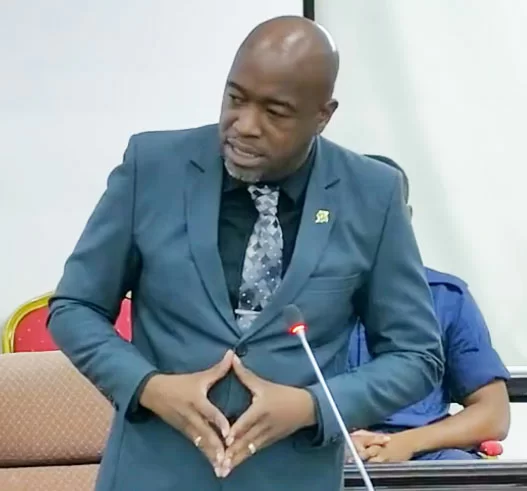
Two members of Suriname’s National Assembly, Cedric van Samson representing the VHP party and Ronny Asabina from the BEP party, are pressing the Surinamese government to deliver greater transparency around the nation’s involvement in global and regional reparations efforts addressing the legacy of historical slavery. The pair is pushing for guarantees that descendants of enslaved people and local grassroots organizations will be able to access and benefit directly from the funding and development projects allocated to this work.
During a recent plenary sitting of the National Assembly, van Samson drew lawmakers’ attention to an upcoming debate scheduled for October 15 in the Dutch House of Representatives, where Dutch legislators will continue deliberations on the legacy of Dutch slavery and the design of national reparations and recovery measures. Van Samson has posed two key questions to the Surinamese government: to what degree has Suriname’s official position on reparations been incorporated into the Dutch policy-making process, and what concrete steps has the Surinamese administration taken to defend the interests of Surinamese communities affected by the transatlantic slave trade?
A core priority for van Samson is preventing the common pitfall of reparations funding failing to reach the marginalized communities it is intended to support. He has called for explicit, prioritized inclusion of grassroots groups and direct descendant representatives in the implementation of all recovery projects, and has also asked for clarification on proposed national memorial and museum initiatives focused on Suriname’s slavery history, including details on how much input Surinamese stakeholders have in developing these projects.
Van Samson also referenced the 10-point plan for reparatory justice adopted by the Caribbean Community (CARICOM), asking the government to outline how Suriname will integrate the framework into its national policy. This question carries particular urgency as Suriname’s President Jennifer Simons is set to assume the rotating CARICOM presidency in the near term.
Asabina echoed van Samson’s concerns, adding that while multiple funding streams have already been established to support slavery recovery efforts globally, Suriname has not yet taken sufficient advantage of these available opportunities. Asabina is calling on Suriname’s Minister of Foreign Affairs to provide parliament with a full, detailed update on all progress the government has made on reparations engagement to date.
Like van Samson, Asabina emphasized that grassroots organizations must be guaranteed full, active participation in all initiatives emerging from the national slavery recovery process. He added that the government has a responsibility to improve public communication not only with the legislature, but with all of Surinamese society, to share clear information about available funding opportunities and ongoing government actions. Both lawmakers agree that Suriname must take a more proactive leadership role in regional and global reparations processes, ensuring that all allocated resources directly contribute to the development and empowerment of the communities that continue to bear the impacts of the transatlantic slave trade centuries later.