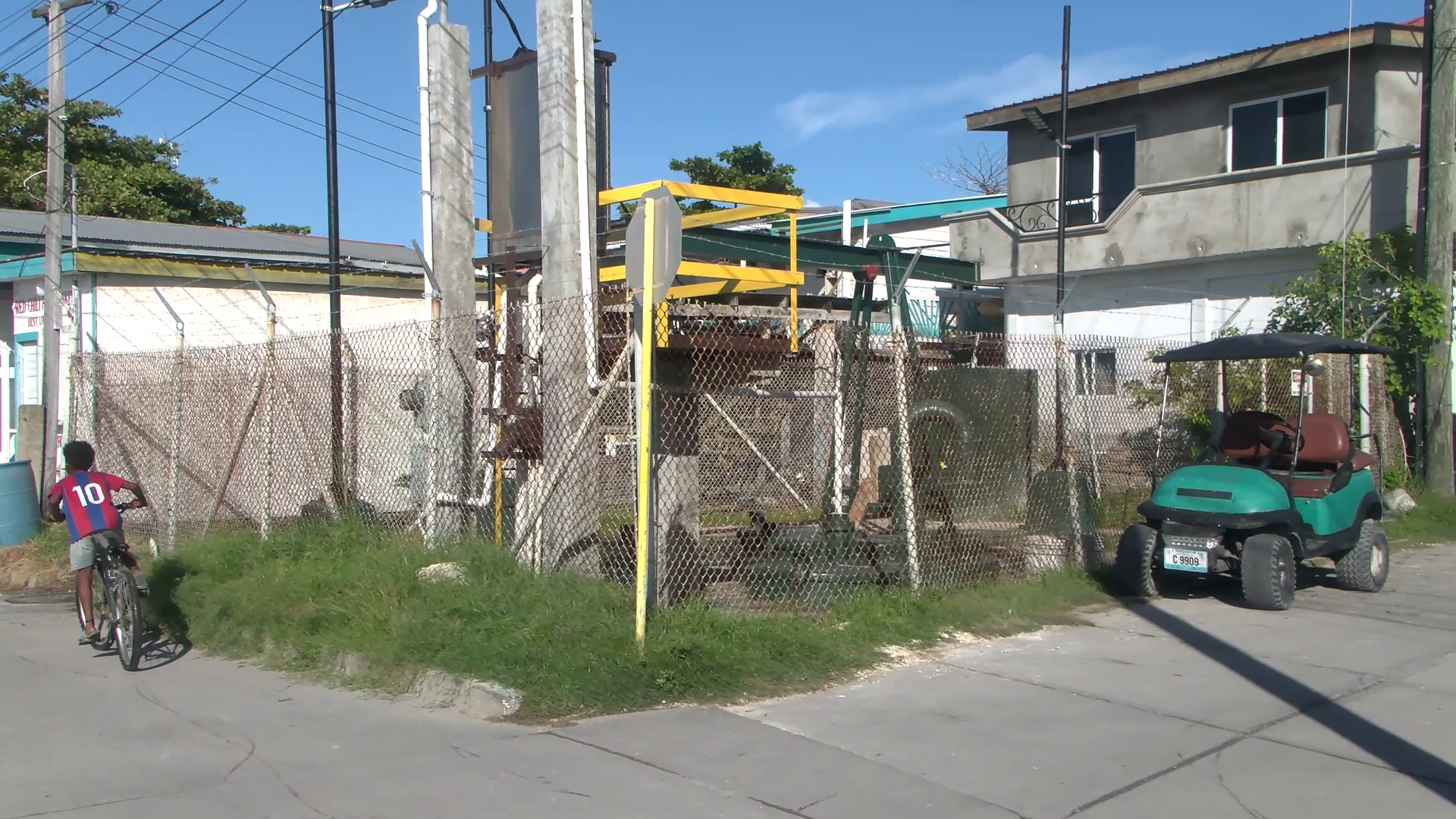
Nestled along the coastline of Belize’s San Pedro, the Embarcaderos area is a bustling mixed-use neighborhood that supports daily life for dozens of people: residential blocks where local families make their homes, two popular restaurants, a neighborhood grocery store, a local artisan market, and a preschool that young children travel through every single day. Local fishermen also rely on the area’s waterfront to unload their daily catch at the end of their shifts. But what local residents and business owners describe as raw, untreated wastewater flowing openly through the community has triggered urgent public health and environmental alarms, pushing local political leaders to demand immediate intervention from authorities.
Over the recent weekend, the growing crisis boiled over as community members reported a thick, unbearable foul odor hanging over the entire neighborhood, drawing attention to the ongoing discharge near the waterfront lagoon. Gabriel Zetina, the United Democratic Party (UDP) caretaker for Belize Rural South, has become a leading voice for affected residents, calling on regulators to move quickly to conduct formal water quality testing and identify exactly what contaminants local people are being exposed to on a daily basis.
In an on-the-ground interview with local reporters, Zetina outlined the scope of the risks facing the community: “The suspected sewer line running behind this neighborhood is discharging directly into the lagoon. This creates clear potential for both public health hazards and widespread environmental contamination of the coastal ecosystem. This area isn’t just a tourist spot – it’s home to people who live, work, and raise their children here. We have a preschool right in this stretch, young kids are walking past this discharge every single day.”
Zetina laid out two immediate, actionable steps he says authorities must implement without delay: first, conduct comprehensive water testing to confirm the presence and level of contamination, regardless of initial assumptions; second, the local municipal government should immediately dispatch waste removal trucks to clear all standing contaminated water from the area. He emphasized that the priority is resolving the hazard for residents, not assigning political blame.
When asked about the potential impact on San Pedro’s critical tourism industry – which the local Tourism Board (BTB) had targeted for development in the Embarcaderos area earlier this year – Zetina pushed back against framing the issue as solely a tourism concern, noting that the health and safety of local San Pedranos must come first. “Promises of thousands of tourist visits to this area have yet to materialize, months after the BTB inaugurated the development project,” he said. “But even if tourism were booming, that doesn’t change the fact that the people who live here every day are being exposed to this risk. We need action now.”
In response to the growing outcry, Belize Water Services (BWS) released an official statement disputing claims of a broken sewer system or untreated discharge. According to BWS, a routine inspection confirmed that the local wastewater pumping station is operating as designed. The utility explained that the visible standing water around the area’s manholes stems from unusually high recent tidal levels that completely submerged the pumping station structure. This allowed large volumes of seawater to infiltrate the wastewater system, creating hydraulic overloading that pushed water back out to the surface, according to BWS’s explanation.
This report is a transcribed version of an evening television newscast covering the on-going controversy, with local Kriol language dialogue adapted to a standardized English spelling system for publication.