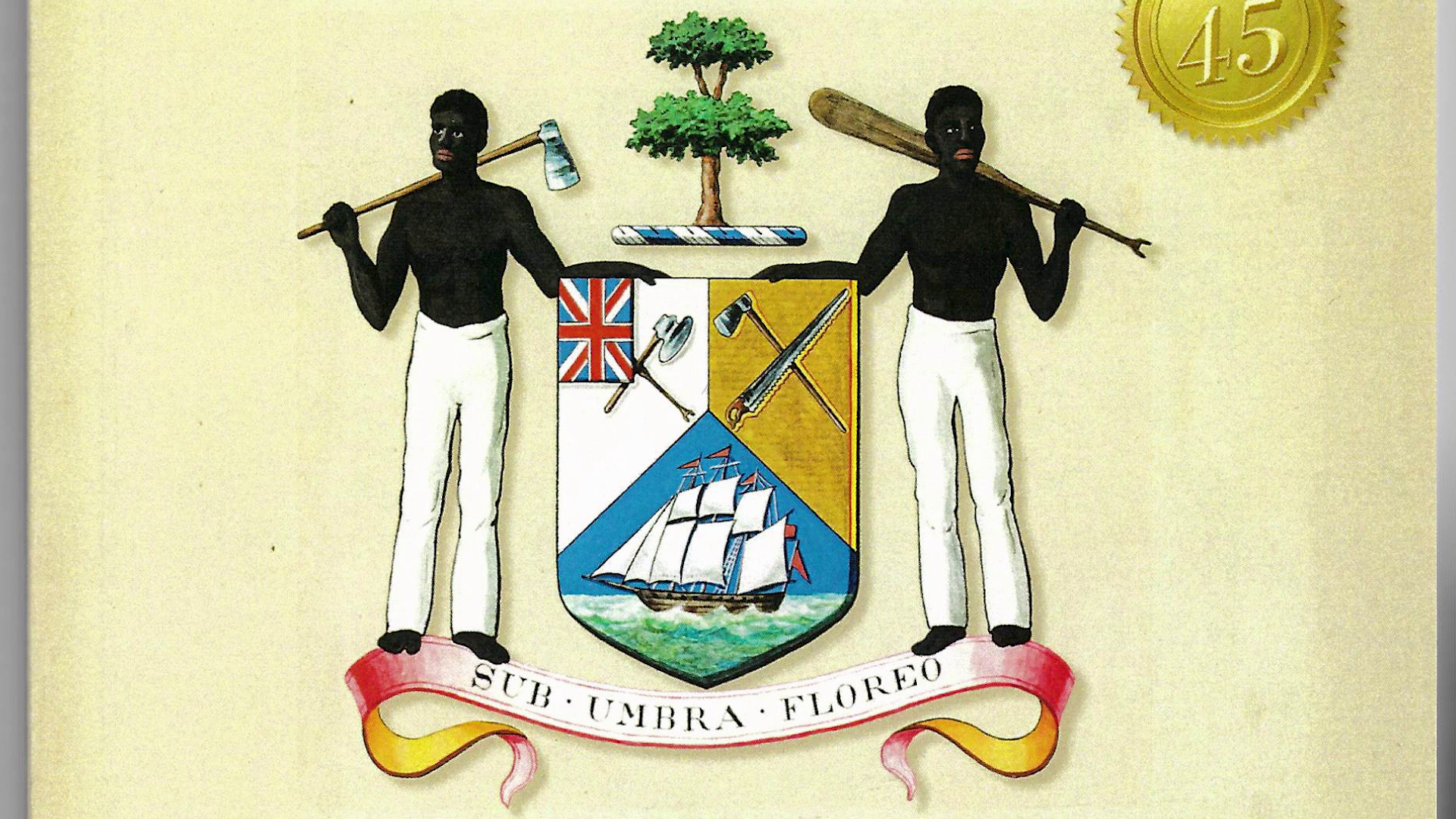
A growing public debate over a book cover featuring a colonial-era iteration of Belize’s Coat of Arms has prompted official comment from the country’s Minister of Culture, Francis Fonseca, marking a key development in a conversation that pits historical reckoning against concerns of harmful racial portrayal. The debate centers on the 45th anniversary reissue of prominent Belizean author Assad Shoman’s foundational work *A History of Belize in Thirteen Chapters*. The National Kriol Council, the leading organization voicing objection to the cover design, argues that the 1907 colonial Coat of Arms relies on a degrading, outdated depiction of Black Belizeans that reinforces harmful stereotypes rooted in the era of slavery and colonial oppression. For the council, placing the unmodified image on a new edition of the widely read text gives new life to an old, offensive racial insult rather than contributing to meaningful public memory. Shoman, a well-respected historian and former diplomat, has pushed back on these criticisms to clarify his intentional choice: he selected the colonial-era image specifically to confront, not celebrate, Belize’s painful history of colonial subjugation, rather than erase or soften the country’s difficult past. In his first public remarks on the ongoing controversy, Fonseca has offered a measured response that acknowledges the validity of both sides of the debate. Speaking in a televised interview, a full transcript of which was released online by the outlet, Fonseca emphasized that he is deeply sensitive to the concerns raised by the National Kriol Council, recognizing the harm that the offensive portrayal can cause to Black communities in Belize. At the same time, he made clear that he understands Shoman’s core intent, noting that the author has long aimed to spark open, necessary public dialogue about Belize’s colonial history — a history defined by systemic oppression, chattel slavery, and the extraction of Belize’s natural resources by colonial powers. “He has made the point that the cover [image] is really the 1907 coat of arms, the colonial coat of arms, and his thinking was that he would put that on the cover of the book to remind Belizeans and provoke discussions about that colonial history and heritage of oppression,” Fonseca explained, affirming that Shoman’s goal has consistently centered on encouraging critical engagement with the country’s past, not promoting offensive imagery. The debate underscores a broader global tension over how to memorialize and represent colonial histories in contemporary public life and cultural production, with competing visions over whether centering harmful historical imagery facilitates reckoning or re-inflicts harm on marginalized communities.