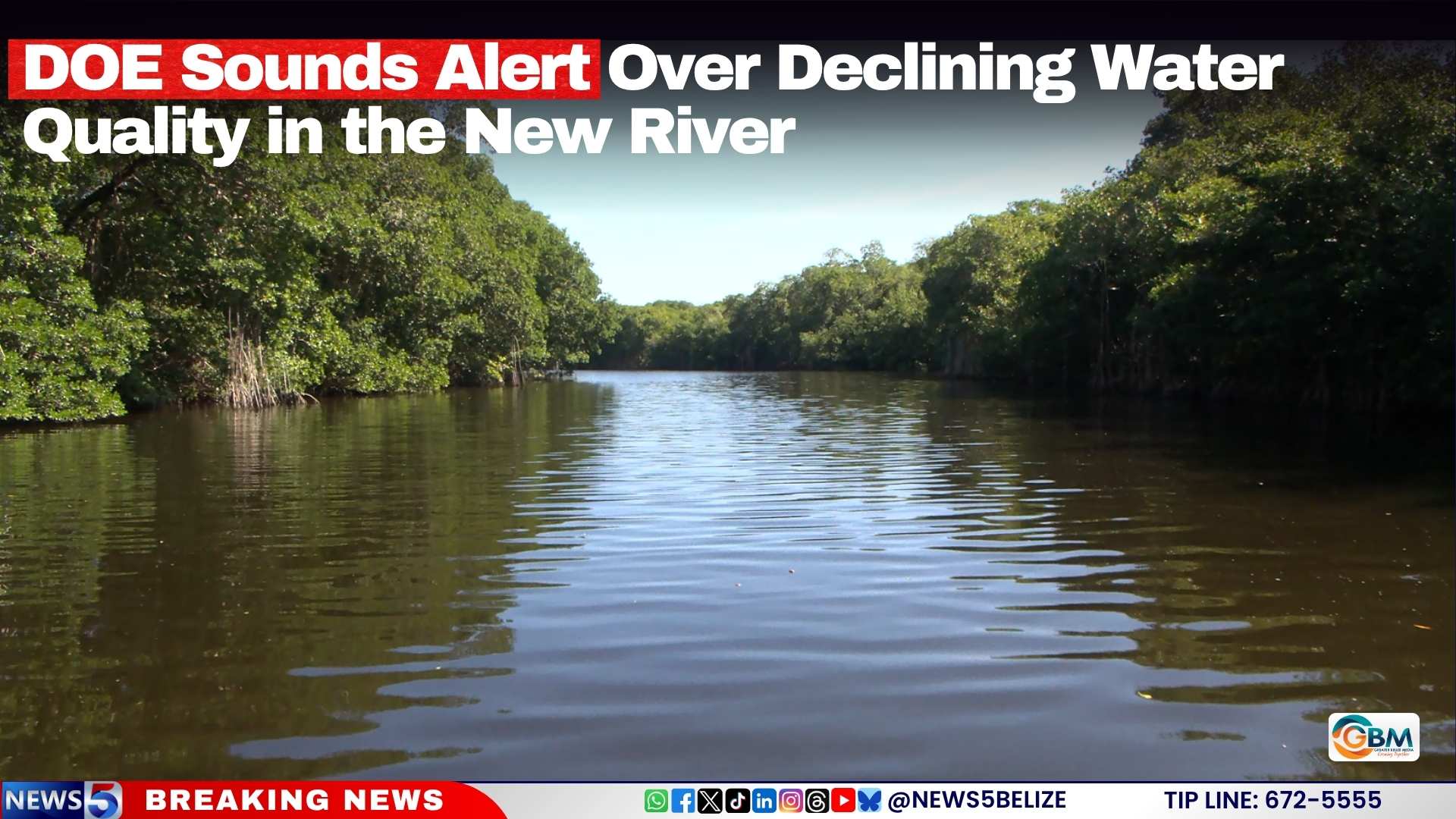
As unusually dry weather continues to impact Belize, the country’s Department of the Environment (DOE) has issued a public alert and launched an official investigation into a steady decline in water quality along the New River. The agency warns that ongoing shifts in key water metrics could put the river’s entire aquatic ecosystem at serious risk if left unaddressed.
In an official statement released Friday, the DOE reported that its continuous monitoring station on the New River had tracked a consistent downward trend in critical water quality indicators over the three days prior to the announcement. These impacted measurements include Dissolved Oxygen (DO), Oxidation-Reduction Potential (ORP), conductivity, salinity, and chlorophyll-a levels. Each of these metrics plays a core role in supporting healthy aquatic life, and the documented shifts could have cascading negative effects on native organisms and the long-term stability of the New River ecosystem, the agency explained.
In response to the alarming readings, the DOE has deployed specialist field teams to conduct on-site surveys of the river and collect water samples for comprehensive laboratory analysis. The primary objectives of this field work are to verify the initial monitoring data, identify any potential anthropogenic or natural sources of the water quality decline, and determine whether targeted remedial interventions are required to reverse the damage.
Department officials linked the emerging water quality issue to the extreme dry conditions currently affecting Belize, noting that reduced rainfall and the corresponding slowdown in river flow alters natural water chemistry and contributes to destabilized conditions in waterways across the nation. “Lower water volumes concentrate pollutants and organic matter, creating conditions that throw aquatic ecosystems out of balance,” the DOE contextually noted.
This alert comes just weeks after the department publicly released its findings from a previous major ecological incident: a large-scale fish kill that stretched across 17.5 miles of the nearby Belize River. Speaking at a September 11 public information session held in Double Head Cabbage, Chief Environmental Officer Anthony Mai explained that the 2026 Belize River fish kill was triggered by a sudden large input of organic matter into the waterway. That input sparked uncontrolled algae blooms, which in turn depleted dissolved oxygen levels in the water to the point that they could no longer support fish life.
To strengthen its monitoring and response efforts, the DOE is calling on all local residents, recreational users, and commercial operators that access the New River to report any visible signs of ecological distress immediately. These signs include unexpected changes in water color, unusual foul odors coming from the water, fish showing visible signs of distress, or any new fish kill events. Early reporting, the agency emphasizes, will allow teams to respond faster and limit the scale of potential ecological damage.