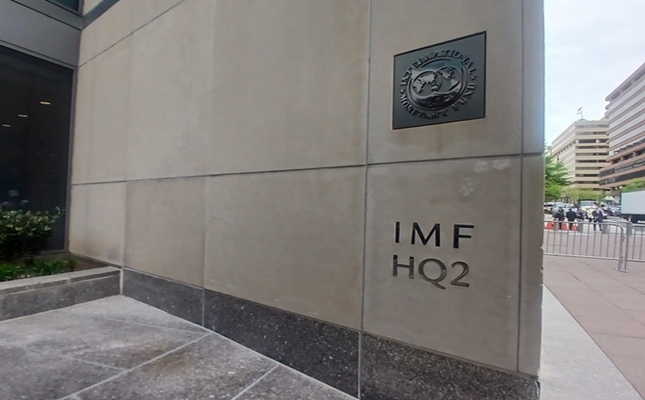
Amidst growing pressure from Caribbean small island developing states to reform how international lending institutions evaluate financing eligibility, the International Monetary Fund (IMF) confirms that discussions around the proposed Multidimensional Vulnerability Index (MVI) remain ongoing.
At the recent United Nations General Assembly, regional leaders from across the Caribbean renewed their longstanding demand to abandon Gross National Income (GNI) as the primary metric for determining access to low-interest concessional financing. Instead, they are urging global financial bodies to center the MVI, a framework designed to account for the unique overlapping economic, environmental, and social vulnerabilities that plague small island nations.
Leaders from several Caribbean countries, including St Kitts and Nevis, Grenada, St Lucia, and Barbados, have underscored the disproportionate threat that climate change and frequent natural disasters pose to their fiscal stability and capacity to repay debt. Unlike large nations, a single major hurricane or flooding event can upend government revenues and halt core economic activity for months, while existing loan obligations remain unchanged. Caribbean leaders argue that GNI alone fails to capture this persistent, systemic risk, leaving many creditworthy vulnerable states locked out of affordable financing they desperately need.
During a media briefing ahead of the IMF’s upcoming Fall Meetings in Thailand, SKNVibes News raised the issue with IMF leadership. Julie Kozack, Director of Communications at the IMF, explained that while development work on the MVI is continuing, there is still no widespread consensus on the index’s structure, core components, or eventual application.
Kozack recalled that a UN General Assembly resolution laying out governance frameworks for advancing the MVI was adopted back in August 2024. “Some work has started, but there has not been a broad consensus on what the index would look like, what would be the components of the index. And so those discussions are underway. And so far, no development finance has been tied to this particular index,” she said.
The debate over the MVI carries outsized importance for Caribbean small economies, which face repeated climate-driven shocks ranging from rising sea levels to extreme hurricanes. For these nations, the outcome of the debate will shape not just how they are classified by international institutions, but also whether global financing systems can adequately account for the unique risks they navigate.
In response to regional concerns, Kozack noted that the IMF already incorporates vulnerability assessments for small and developing states into its core financing decisions. She pointed to existing adjustments to the IMF’s concessional financing rules, which allow small states to qualify for low-interest funding even when their per capita GNI exceeds the threshold set for larger member nations. “For example, at the IMF, small and developing states can qualify for concessional financing even though their per-capita income is at a higher threshold than other larger members,” Kozack explained. She added that the Fund has already updated its policies to reflect the unique circumstances of small developing states, but will continue to monitor and participate in the global conversation around the MVI going forward.