On October 8, 2026, the United States escalated its long-running economic pressure campaign against Iran, announcing a fresh round of sanctions through the Treasury Department targeting 17 vessels linked to Tehran’s covert international shadow oil network. This new action forms part of Operation Economic Outcast, an expanded initiative designed to cut off the revenue streams that Washington says Iran uses to fund its regional military operations and destabilizing activities across the Middle East.
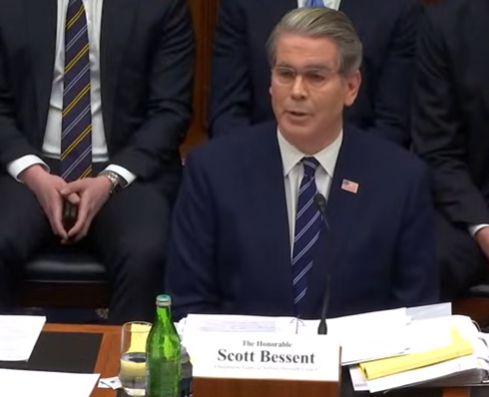
According to U.S. officials, the targeted 17 vessels are part of an aging, sprawling network of tankers that has moved billions of dollars worth of Iranian crude, refined petroleum products and petrochemicals to markets across South and East Asia. Operators of these ships have relied on a complex web of front companies spread across more than a dozen global jurisdictions and convoluted shipping arrangements to disguise the origin of Iranian energy exports and evade existing American sanctions, the Treasury Department claims. In a statement following the announcement, Treasury Secretary Scott Bessent emphasized that the action is intended to cut off funding for what he called the “tyrannical regime in Tehran,” adding that any entity enabling Iran’s sanctions evasion will not escape the full scope of U.S. regulatory authority.
The new sanctions are enacted under Executive Order 13902, which grants the U.S. government broad authority to target Iran’s petroleum sector and other core pillars of the country’s economy. This move marks a continuation of a years-long U.S. campaign that has already targeted Iranian banks, national oil companies, shipping operators and intermediaries that facilitate trade with Tehran. In recent months, the administration has expanded the scope of these measures to target even the most peripheral parts of the network that keeps Iranian oil flowing despite restrictions. The Treasury has also issued a clear warning to foreign companies, global financial institutions and Iran’s regional allies: any party that knowingly facilitates transactions with sanctioned Iranian entities will be vulnerable to secondary U.S. penalties.
This latest escalation comes against a tense backdrop of ongoing confrontation over the Strait of Hormuz, the world’s most critical energy chokepoint. Located between Iran and Oman, the strait normally carries roughly 20% of global oil and liquefied natural gas trade, making its stability central to energy security worldwide. In recent weeks, the ongoing conflict has severely disrupted shipping through the waterway, with traffic plummeting to multi-month lows. Reuters data from Thursday confirms that just seven commodity vessels transited the strait on Tuesday, the lowest count in over two months. Crude oil movements through the route have fallen to around 10.1 million barrels per day, only 74% of pre-conflict levels. Weekly attacks on commercial shipping have also hit their highest point since the conflict began, pushing benchmark global oil prices above $100 per barrel on Thursday and reigniting volatility across international energy markets.
U.S. officials argue that the pressure campaign is intended in large part to force Tehran to reopen the strait to unimpeded international shipping. The Treasury noted that the new sanctions come as Iranian oil shipments moving outside the U.S. blockade continue to dwindle, with the department claiming that the combination of U.S. military pressure, falling exports and broad economic pressure from Operation Economic Outcast has left Iran’s struggling economy with fewer and fewer options to stabilize. The Office of Foreign Assets Control (OFAC), the Treasury division responsible for enforcing sanctions, added that dismantling these maritime nodes severs key channels Iran has used for decades to evade sanctions, support its petrochemical industry, and direct funding to actors Washington labels as destabilizing. Officials also acknowledged that Iran’s sanctions evasion network remains adaptive, with ships and companies constantly shifting to avoid detection, and committed that the U.S. would continue to identify and disrupt remaining nodes of the network.
Thursday’s announcement is the latest in a series of escalatory steps the Trump administration has taken this year to ratchet up both economic and military pressure on Tehran. The campaign now extends far beyond individual oil shipments to cover financial institutions, support networks, and intermediaries that grant Iran access to global markets. Even as informal diplomatic contacts continue through U.S. Middle East envoy Steve Witkoff, the new sanctions underscore that cutting Iran’s oil revenue remains the central pillar of U.S. strategy. Speaking Thursday, President Donald Trump confirmed that the U.S. would not launch new military strikes against Iran before the November 3 midterm elections, but noted that talks remain ongoing. Despite these diplomatic contacts, the two sides remain far apart on core terms for a broader settlement that would resolve the standoff over the Strait of Hormuz and normalize relations. For Tehran, retaining control over the strait and the ability to export its oil remains both a critical economic lifeline and a core strategic priority, ensuring the confrontation will remain tense in the coming weeks.