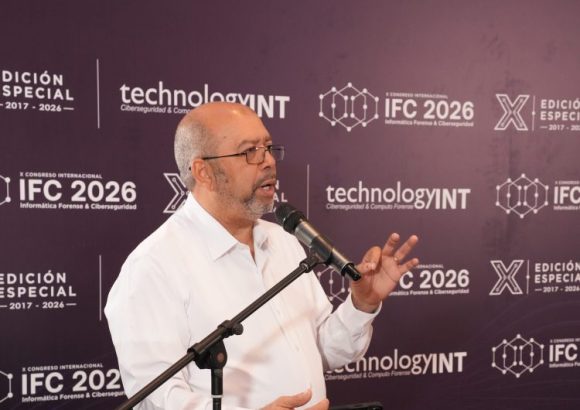
Leading cybersecurity and digital forensics specialists from across the Americas and Europe have gathered in Punta Cana for the 10th International Congress of Computer Forensics & Cybersecurity (IFC 2026), where delegates are confronting the rapidly evolving landscape of modern cybercrime and mapping out collaborative strategies to counter new threats.
This year’s conference has drawn practitioners and policymakers from five nations, including the Dominican Republic, Mexico, Colombia, Spain, and the United States, alongside official representatives from the Organization of American States, creating a multilateral platform to share insights on emerging criminal tactics and forensic investigation best practices.
A core focus of this year’s discussions is the accelerating proliferation of high-impact cyber threats: from large-scale electronic fraud and identity theft to malicious exploitation of cutting-edge artificial intelligence tools. Experts in attendance agree that traditional cybersecurity frameworks that prioritize only prevention are no longer sufficient to defend against modern attacks. Instead, organizations of all sizes must invest in robust capabilities to detect breaches early, mount rapid response efforts, and conduct thorough, legally sound investigations after an incident occurs. Delegates emphasized that rigorous handling of digital evidence—from proper identification and secure preservation to methodical forensic analysis—forms the backbone of successful incident reconstruction and criminal prosecution.
Discussions around artificial intelligence highlighted the technology’s dual nature in modern cybersecurity. On one hand, AI offers powerful new tools to strengthen defensive systems, accelerate threat detection, and streamline large-scale data analysis for investigations. On the other, bad actors are increasingly leveraging AI to automate fraudulent schemes, refine social engineering attacks, and generate hyper-realistic synthetic content such as deepfakes that make deception far more convincing and harder to detect.
Pedro Castillo, CEO of conference organizer TechnologyInt, underscored three critical priorities for the global cybersecurity community moving forward: expanded specialized training for practitioners, investment in advanced digital forensics infrastructure, and deeper cross-sector collaboration between government agencies and private industry. Castillo stressed that 21st-century cybersecurity strategies cannot rely on prevention alone. Effective frameworks must integrate proactive prevention with rapid incident detection, coordinated response, and systematic evidence preservation to support thorough investigations and deliver accountability to victims of cybercrime.
In closing, Castillo called for sustained regional cooperation and targeted investment in specialized cybersecurity capabilities to keep pace with increasingly sophisticated criminal operations, from digital fraud and identity theft to complex transnational cyberattacks that threaten public and private sector security globally.