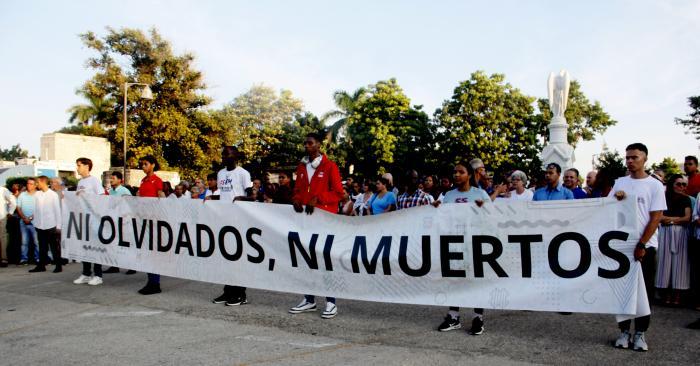
Half a century after one of the deadliest terrorist attacks in Cuban modern history, the island nation paused on October 7, 2026, to honor the 73 lives lost in the 1976 bombing of a Cubana de Aviación passenger plane off the coast of Barbados, in a solemn ceremony held at Havana’s historic Colón Cemetery.
The commemoration, which falls on Cuba’s national Day of Victims of State Terrorism, was led by Miguel Díaz-Canel Bermúdez, First Secretary of the Central Committee of the Communist Party of Cuba and President of the Republic, alongside senior members of the country’s political leadership. Floral tributes were laid at the memorial by retired Army General Raúl Castro Ruz, leader of the Cuban Revolution, by Díaz-Canel himself, and by mourning family members of the victims as well as ordinary Cuban citizens.
For many Cubans, the pain of the October 1976 attack remains a raw, defining memory. Ricardo Miguel González, now 59 and a veteran pilot for Cubana de Aviación, was just a child when the sabotage took place. He recalled the widespread shock that gripped the nation after news broke that all on board had been killed, despite the experienced flight crew’s desperate efforts to save the aircraft. “I saw my parents devastated; it was a crushing blow for the people,” González shared in an interview with Granma, Cuba’s official newspaper, following the ceremony. Today, he said, aviation workers across the country carry the memory of the attack with them always. While Cuba remains at risk of large-scale attacks at the hands of foreign imperialism, he added, the sector responds not with fear, but by strengthening safety protocols and continuing to carry out its mission.
Among those in attendance at the tribute were generations of Cuban fencers, gathered to remember the 24 members of the national fencing team who were killed in the blast. Thaila Martínez Pentón, a 25-year-old national team épée fencer from Villa Clara, said that honoring the fallen is a non-negotiable duty for all current athletes. “We share the families’ grief; it is painful to hear their stories, to hear their voices break. Many of the victims were children, pregnant wives,” she said.
Cuban officials used the 50th anniversary to once again call out the origins of the attack and the decades-long impunity enjoyed by its perpetrators. Yudí Mercedes Rodríguez, a member of the Central Committee Secretariat, emphasized that the bombing was orchestrated by self-confessed terrorists Luis Posada Carriles and Orlando Bosch, who operated on behalf of the U.S. Central Intelligence Agency. Both killers lived out their lives freely and died without facing legal consequences in the United States, a fact that remains a source of deep anger for the Cuban people.
Rodríguez also drew a broader connection between the 1976 attack and ongoing harms facing Cuba at the hands of foreign powers. To date, 3,478 Cubans have been killed and another 2,099 disabled by terrorist acts targeting the island, she said, and the Cuban people will never stop demanding justice for these lives. She went on to condemn what Cuban leaders have long identified as two ongoing forms of state terrorism against the island: the decades-long U.S. economic embargo, described as “silent yet lethal,” and Cuba’s baseless inclusion on the U.S. list of state sponsors of terrorism. “Cuba does not sponsor it; Cuba is its victim,” Rodríguez stressed.
For the families of those killed in the Barbados bombing, the memory of their loved ones remains permanently woven into Cuba’s national identity. Yadelis Valencia Palomino, granddaughter of one of the flight crew members killed aboard the Cubana flight CUT-1201, said that every victim’s name, face and story is etched into the collective consciousness of the nation as a symbol of sacrifice and steadfast resistance. “Terrorism sought to shatter the hope of a small country—yet one great in spirit. It tried to silence Cuba’s voice, but what emerged from that pain was an eternal commitment to memory and to the defense of the homeland,” she said.
Her remarks echoed the words of former Cuban Commander-in-Chief Fidel Castro Ruz, who shortly after the attack said that the crime, which perpetrators hoped would break the spirit of the Cuban people, had instead transformed into a source of collective strength and multiplied the courage of the nation.
Following the cemetery tribute, President Díaz-Canel met privately with family members of the victims of the Barbados bombing and other terrorist attacks against Cuba. In a post on his X social media account after the ceremony, Díaz-Canel wrote: “Together with our people, we pay tribute at the Colón Cemetery to the martyrs of the Barbados crime, marking 50 years since that abominable act. On the Day of Victims of State Terrorism, we honor their memory and reaffirm our firm condemnation of terrorism in all its forms.” In a separate post after the meeting with families, he added: “We denounce impunity, demand justice, and reaffirm that our entire people stands with you. Cuba embraces you.”
Across Havana, ordinary Cuban citizens joined the commemoration, turning out to honor the martyrs and ensure their sacrifice would never be forgotten, 50 years after the attack that shook the nation.