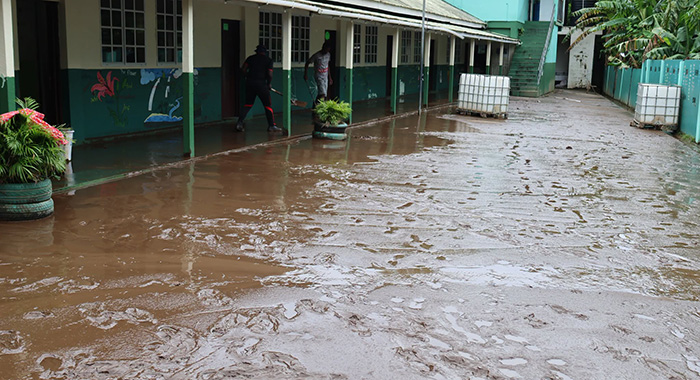
After severe flooding and landslides triggered by an intense tropical wave hit St. Vincent and the Grenadines this week, the Caribbean nation has moved to resume normal on-campus learning for the vast majority of its pre-tertiary education institutions starting Wednesday. The return to in-person instruction comes just two days after the heavy weather event that battered communities and disrupted critical services across the country.
In a public announcement released shortly before 5 a.m. local time on Wednesday, the country’s Ministry of Education confirmed that most schools escaped major infrastructural harm from the storm and completed preparations to welcome students and staff back to campus. However, 11 schools across affected regions will stay closed for the day, as ongoing flood damage, compromised infrastructure, and a persistent lack of reliable potable water access create unacceptable health and safety risks for anyone on site. The closed institutions include Belmont Government School, Brighton Methodist School, Calder Government School, Cane End Government School, Dorsetshire Hill Government School, Emmanuel High School Mesopotamia, Evesham Methodist School, Gomea Methodist School, Marriaqua Government School, New Prospect Primary School, and St. Joseph’s Convent Marriaqua.
The early Wednesday announcement came after the St. Vincent and the Grenadines Teachers’ Union (SVGTU) issued a formal appeal on Tuesday, urging education and emergency management authorities to complete full safety assessments before clearing schools to reopen. The union’s call centered on three core ongoing hazards: the widespread national water crisis, unaddressed landslide and road safety risks, and general threats to the well-being of students and staff.
SVGTU President Fiona Charles-Williams emphasized that while the union fully recognizes the critical value of maintaining consistent instructional time for students, it could not in good conscience support a premature reopening before risks are mitigated. “Many schools and homes across the country remain without a reliable supply of pipe-borne water, making it impossible to maintain basic sanitary conditions and proper hygiene in our learning institutions,” Charles-Williams noted. She added that saturated soil from the 24-hour rainfall event means landslide risks remain elevated, rather than disappearing once the rain stopped. “This poses a significant risk to students, teachers, and parents who must commute, particularly those in rural and hillside communities and those who walk to school,” she added.
Charles-Williams reiterated that protecting the safety of all education stakeholders must be the government’s top priority, calling for full inspections of both school sites and all access routes before any reopening, as well as confirmation that safe drinking water access has been fully restored. “We cannot in good conscience encourage our members and our nation’s children to traverse dangerous terrain or to occupy facilities that are not hygienically safe,” she said, adding that the union stands ready to partner with the Ministry of Education to facilitate a safe return to campus as soon as conditions allow.
The union leader also shared that the organization mourns the disruption and loss caused by the extreme weather for affected families across the country, and expressed gratitude that no lives were lost in the event. She also commended emergency authorities for their ongoing work to restore normal services amid challenging conditions.
Meteorological data shows that the tropical wave dumped 130.2 millimeters (5.2 inches) of rain across the country in the 24 hours ending at 6 a.m. Tuesday, triggering widespread flooding and landslides that impacted even the capital city of Kingstown. The National Emergency Management Organisation (NEMO) confirmed Tuesday that dozens of people have been displaced by the weather event: 36 people across 8 families, with 23 staying in public emergency shelters and 13 accommodated through private arrangements.
Multiple school sites recorded significant damage from the storm: severe flooding hit Leeward District SDA Primary in Buccament Bay and South Rivers Methodist School after nearby rivers overflowed their banks, while Greiggs Government and Early Childhood School reported structural damage and roof leaks. The country’s Central Water and Sewerage Authority also confirmed that the critical Majorca water intake has sustained severe damage, which is the root cause of the widespread ongoing water supply disruptions affecting communities and schools across the nation.