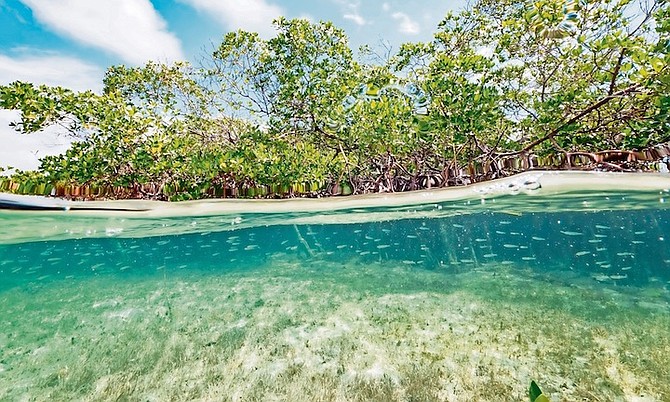
A landmark new study led by researchers from the University of The Bahamas has uncovered alarming levels of the toxic, cancer-linked heavy metal cadmium in mangrove sediment along East Grand Bahama, with some concentrations exceeding international reference benchmarks by more than 700 times. The findings, set for official publication October 20 in the *International Journal of Bahamian Studies*, have prompted urgent calls for targeted public health precautions at the most contaminated sites and exposed that heavy metal pollution in Bahamian coastal mangrove ecosystems may be far more widespread and severe than scientific communities previously recognized.
To conduct their investigation, the research team – led by lead author Antonio Cadet and including Veronica Toppin, Tamia Hamilton, Carlton Watson, and Williamson Gustave – collected 48 sediment core samples from 12 sampling sites across two distinct study zones: East Grand Bahama and Dover Sound. Dover Sound was chosen for its proximity to existing industrial operations and waste management facilities, while East Grand Bahama was selected as a comparative less-industrialized control site. Samples were extracted from the top 20 centimeters of sediment and processed for heavy metal analysis at the university’s on-campus Soil and Complex Matrix Laboratory.
The results defied initial research expectations. Across East Grand Bahama, the average cadmium concentration reached 442.58 milligrams per kilogram of sediment, dwarfing the study’s reference benchmark of just 0.6 milligrams per kilogram. At the most polluted locations, cadmium levels hit more than 700 times the reference value. In Dover Sound, by contrast, the average concentration was 25.64 milligrams per kilogram, and cadmium was undetectable at three of the site’s five sampling points. Beyond cadmium, the team also found elevated levels of antimony above reference thresholds at both study sites, while copper concentrations exceeded safe benchmarks in Dover Sound.
When compared to similar coastal and mangrove heavy metal studies conducted around the world, the cadmium concentrations recorded in East Grand Bahama were substantially higher than almost all previously documented cases. To assess potential human health risks, researchers applied the standardized risk screening framework developed by the United States Environmental Protection Agency (EPA), which models exposure through three common pathways: accidental ingestion of contaminated sediment, inhalation of fine sediment particles, and direct dermal contact.
Under this assessment, every calculated cancer risk estimate linked to the observed cadmium concentrations surpassed the EPA’s threshold for potential concern for both adults and children. For non-cancer adverse health effects, the average estimated risk exceeded the EPA’s safety threshold for children, and the highest recorded concentrations also crossed the threshold for adult risk. Children are identified as a particularly vulnerable population because their smaller body mass translates to higher proportional exposure to toxic substances relative to their size.
The research team emphasized that these risk estimates are based on standardized exposure assumptions, and the study does not confirm that any local resident has already developed cancer or other illness as a result of the contamination. Additionally, the analysis focused exclusively on mangrove sediment, not on fish, shellfish, or other local seafood, leaving critical unanswered questions about potential cadmium exposure through the coastal food chain.
Ecological risk assessments found that most sampling sites qualified as “very high risk,” a classification driven almost entirely by the extreme cadmium concentrations. Interestingly, a combined pollution index averaging concentrations of all tested heavy metals did not classify either study area as universally polluted. Researchers warned that this aggregate measurement is deeply misleading, as it can hide extreme localized contamination of individual toxic metals, making it unreliable as a standalone indicator of environmental danger.
The study also notes that the true scale of cadmium enrichment may be even greater than reported. Because The Bahamas currently lacks locally established baseline reference values for heavy metals in mangrove sediment, the research team relied on reference data from Cuban soils. Cuban soils are primarily clay-based, which naturally retain heavy metals more effectively than the carbonate-based sediments that are characteristic of Bahamian coastlines. This means local baseline cadmium levels in The Bahamas are almost certainly lower than the reference values used, so the gap between natural background levels and the recorded contamination is larger than the study’s current calculations indicate.
To date, the exact source of the cadmium contamination remains unconfirmed. Researchers have outlined multiple plausible anthropogenic (human-caused) contributors, including untreated industrial discharge, improper municipal and commercial waste disposal, and stormwater runoff that carries contaminated material into coastal ecosystems. Local public concerns about widespread illegal dumping around Freepont were also noted, with electronic waste flagged as a potential source of cadmium, arsenic, and other heavy metals. Another possible contributing factor is Hurricane Dorian, the catastrophic storm that devastated Grand Bahama in 2019. Researchers hypothesize that widespread flooding and storm surge could have redistributed existing contaminated material across the coastline, but without pre-hurricane baseline sediment data, they cannot confirm Dorian’s role in the current contamination levels.
This study is the first peer-reviewed, published investigation of heavy metal contamination and its associated ecological and human health risks in Bahamian mangrove sediment. Prior Bahamian environmental research has examined heavy metal levels in cave sediments, coastal shark populations, seagrass beds, and Abaco marinas, and a recent comprehensive review of Caribbean heavy metal pollution did not include data from The Bahamas. The research team stresses that their findings underscore an urgent need for long-term, sustained monitoring of heavy metal contamination – particularly for cadmium and antimony – and the urgent development of local reference baselines tailored to The Bahamas’ unique carbonate sediment ecosystems. They also recommend expanding similar pollution surveys to other Bahamian islands and conducting detailed follow-up assessments at the three most contaminated East Grand Bahama sites to clarify the actual extent of human exposure.
The research is published amid growing global concern over the rapid decline of mangrove ecosystems, which provide critical coastal storm protection, habitat for commercial and endangered species, and carbon sequestration services, but face growing pressure from unregulated development and pollution. Global data indicates that approximately 35 percent of all the world’s mangrove ecosystems have been lost since the mid-20th century. Researchers say their findings will provide critical data to inform local environmental management and national policy development, including the country’s long-term Vision 2040 development framework.
The study was funded by the Wilson Grant and The Nature Conservancy, and will officially launch to the public on October 20, with a presentation of findings at the Harry C Moore Library auditorium on the University of The Bahamas campus. The event is open to all members of the public.