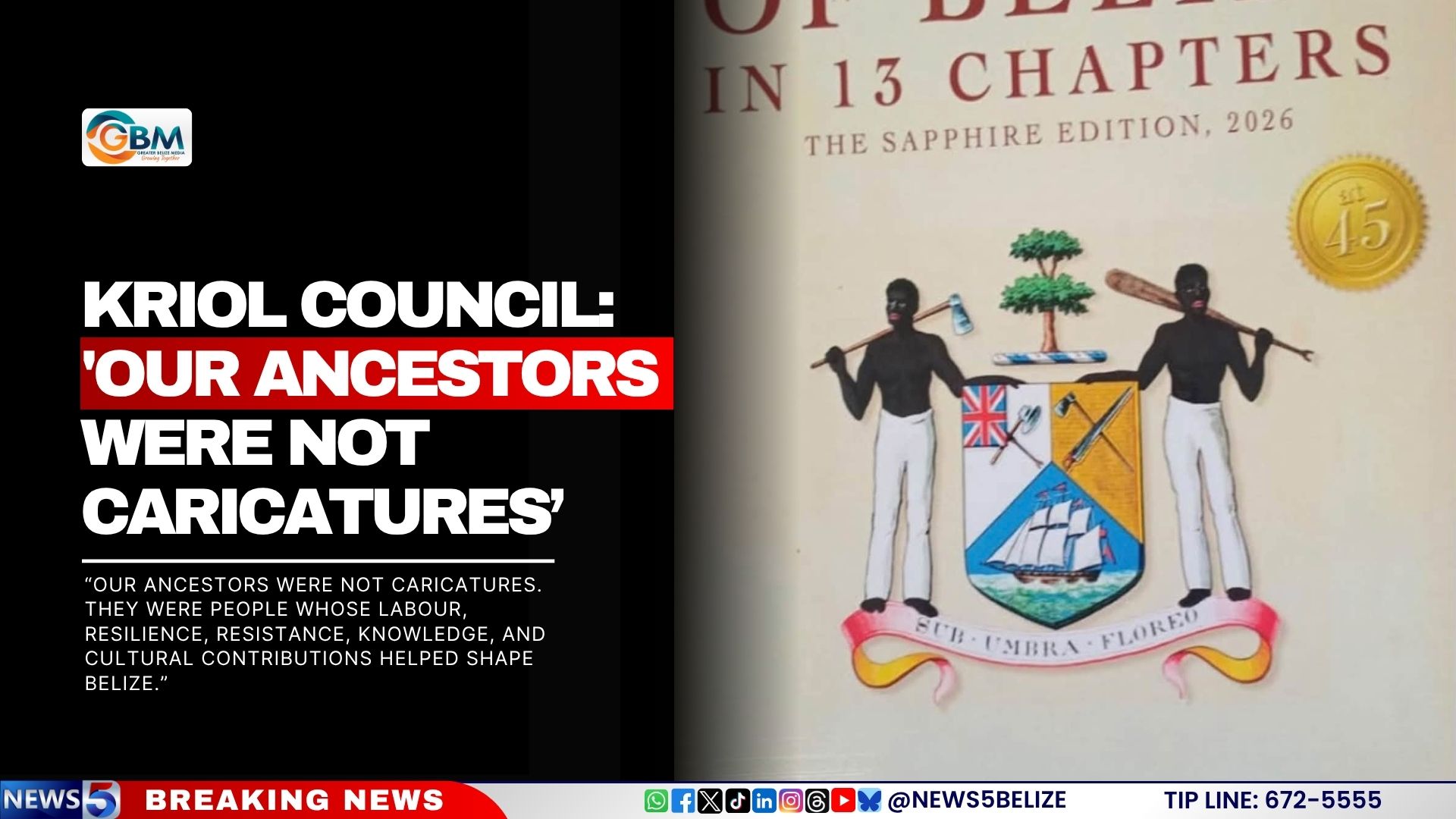
In a public statement released on October 12, 2026, Belize’s National Kriol Council (NKC) has launched a formal objection to the recently published book *A History of Belize in Thirteen Chapters* by author Assad Shoman, calling out what the organization describes as harmful, exaggerated racial imagery on the text’s front cover. The council is demanding a full explanation from both Shoman and the book’s publishing house over the problematic design choice.
According to the NKC, the cover’s depiction of over-exaggerated Black figures directly echoes the degrading racial caricatures that were historically weaponized to mock, dehumanize, and erode the inherent dignity of people of African descent across the globe. The organization emphasized that this type of representation has no place in modern scholarly or public discourse, particularly in a work that purports to document the full history of Belize.
The council was careful to draw a clear distinction between the book’s cover imagery and national symbols, noting that it fully recognizes the historical importance of Belize’s Coat of Arms and its central role in the development of the nation’s shared identity. Even so, the group stated that it “unequivocally condemns the disrespectful portrayal of our ancestors,” and rejects any artistic or historical representation that reduces the humanity of Black and Kriol people, distorts their lived experiences, or perpetuates long-standing harmful racial stereotypes.
“Our ancestors were not caricatures,” the NKC statement read. “They were people whose labour, resilience, resistance, knowledge, and cultural contributions helped shape Belize.” This framing, the council argues, is central to addressing the ongoing erasure of Kriol people from national historical narratives.
The NKC reaffirmed its commitment to opposing the deliberate erasure of Kriol history, as well as any effort to diminish, redefine, or outright exclude Kriol people from the broader story of Belize’s development. The organization pointed out that historical erasure is not limited to offensive imagery or misleading publications: it also takes the form of omitting key Kriol contributions to national development, misrepresenting Kriol cultural identity, and failing to give proper credit to the individuals and communities that have worked for generations to preserve Kriol traditions.
Crucially, the council stressed that no publication, academic institution, or individual is immune from public scrutiny when questions of cultural respect and historical accuracy are raised. “Respect for scholarship does not require silence in the face of concerns about the dignity and legacy of our ancestors,” the statement noted.
To address the controversy, the NKC has formally called on Shoman and his publisher to respond directly to the community’s concerns, provide a transparent explanation for why the cover image was selected and presented in its current form, and re-evaluate whether the existing design upholds the basic dignity of the people it depicts. As of the statement’s release, local outlet News 5 has confirmed that it reached out to Shoman to request his comment on the controversy, with no response published as of yet.