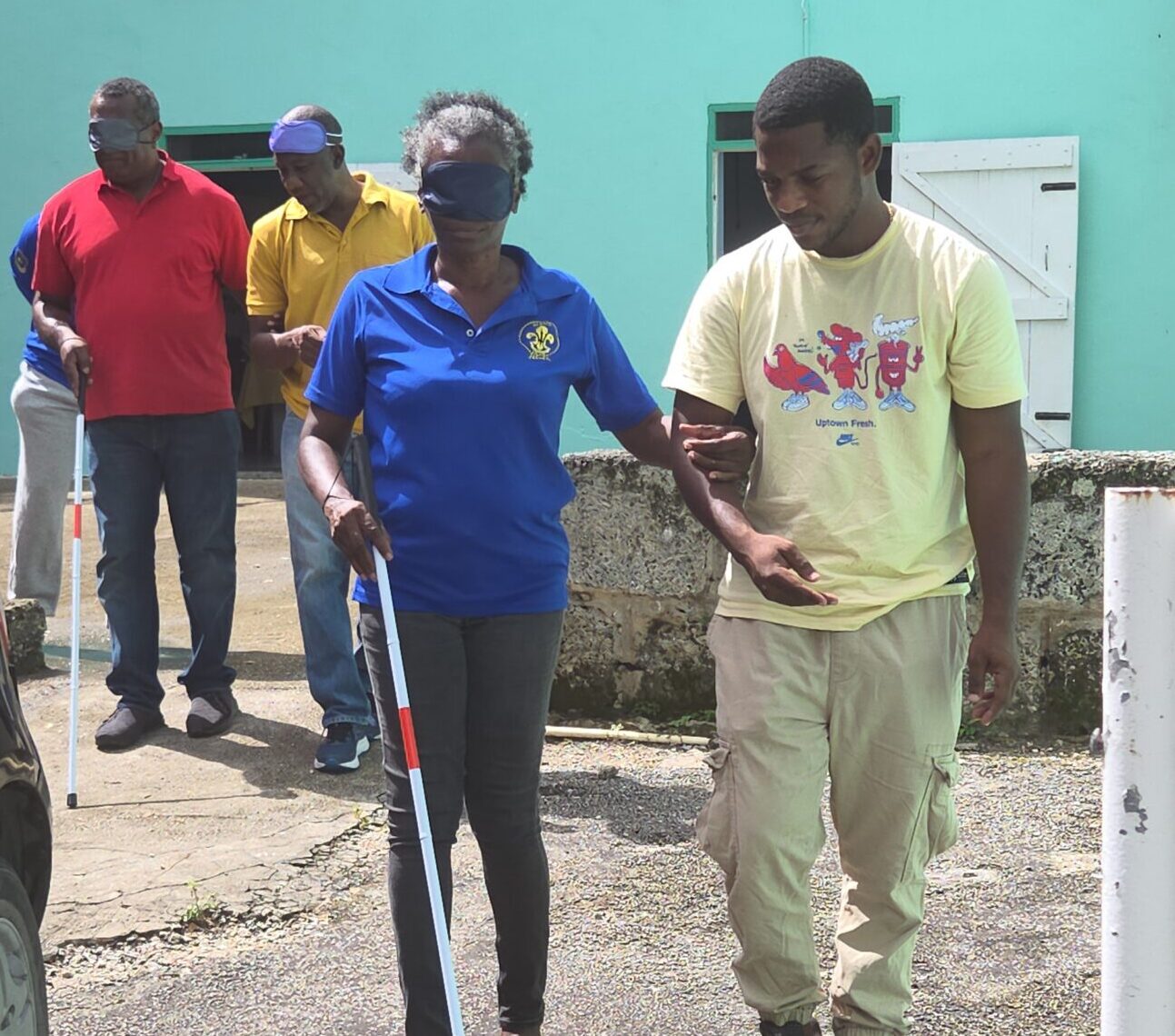
The Barbados Boy Scouts’ Association is breaking down long-standing barriers to participation by rolling out a groundbreaking training initiative designed to make scouting accessible to boys living with disabilities. At the heart of this effort is the Learning Inclusiveness, Entrepreneurship, and Environmental Protection (LIEEP) project, which puts scout leaders through immersive, hands-on experiences that force them to confront the daily challenges disabled people navigate, equipping them with the skills and empathy needed to welcome disabled members.
Marsha-Ann Clarke, lead consultant for the LIEEP project, explained that the immersive training exercises are crafted to help leaders move beyond abstract ideas of inclusivity and understand what equitable participation looks like in practice. The ultimate outcome of this preparation is that when a young person with a disability — whether they acquired a disability later in life or were born with it — expresses interest in joining scouting, leaders are ready to welcome them without hesitation. “If a boy becomes blind, or even if there is a boy who was born blind and he wants to join Scouts, these leaders are being prepared so that they can truly say, ‘Yes, you can come. You can be a part, and we are prepared for you,’” Clarke said.
The most recent training session, held Saturday at the association’s Hazelwood Upper Collymore Rock headquarters, was the third workshop held as part of the initiative. During this session, participating leaders were blindfolded, given canes, and asked to navigate the entire headquarters complex unassisted. Clarke noted that this exercise gave leaders a new, profound understanding of the level of trust required to navigate everyday environments without sight, as well as the persistent challenges that come with visual impairment.
Clarke referenced commentary from former Senator Kerry-Ann Ifill, who describes this experience as the “walk of trust” — a process where visually impaired people must place complete trust in others while relying on their mobility aids to assess physical surroundings, from the width of doorways to changes in elevation like two-inch steps, ramps, declines, and staircases. After completing the exercise, many leaders told Clarke they had a new appreciation for just how much planning and effort goes into moving through spaces most people take for granted.
In addition to the mobility simulation, the training also introduced leaders to basic Braille and sign language, and guided them through exercises to adapt existing scouting activities and badge requirements to accommodate different accessibility needs. Clarke emphasized that the single session can only give leaders a small glimpse into the lived reality of disabled people, but the overarching goal of the initiative is to foster a culture of inclusivity that will shape the next generation of scouts, growing up with a deeper understanding of what it means to welcome all people.
Dr. David Bynoe, national coordinator for the Global Environment Facility Small Grants Program, which is implemented by the United Nations Development Program, noted that the initiative is focused on building the internal capacity of the Boy Scouts Association to welcome people from all backgrounds and ability levels. Bynoe confirmed that the program has provided approximately $100,000 in funding and specialized equipment to support the inclusivity training program.
Now in its second year, the initiative stands as an example of what cross-organizational collaboration can accomplish when groups work together to remove systemic barriers to participation. “It’s amazing what we can do if we bring everyone to the table,” Bynoe said. He added that support from global organizations like the UNDP is critical because the funding and resources they provide speed up progress that would otherwise take far longer to achieve, helping the Boy Scouts build a more inclusive movement for all young Barbadians.