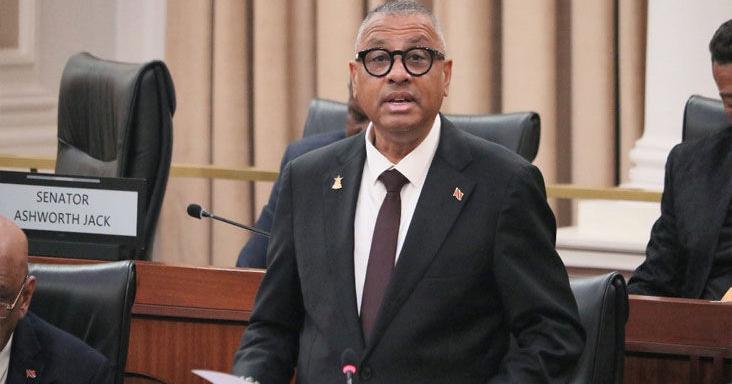
In a landmark legislative vote held yesterday morning, Trinidad and Tobago’s Senate has unanimously passed the Gambling (Gaming and Betting) (Remote Gambling) Order 2026, voting to amend the 2021 Gambling (Gaming and Betting) Act and establish a formal legal regime for regulated remote gambling operations nationwide.
First introduced by Minister of Finance Davendranath Tancoo, the regulatory order cleared the House of Representatives earlier this week, and secured cross-party backing from both opposition and independent legislators ahead of the Senate vote. The core change introduced by the order amends Section 76(1) of the existing act, which currently criminalizes the use of remote gambling infrastructure within Trinidad and Tobago for the purpose of soliciting or facilitating remote gambling participation from users in prohibited territories.
Speaking in robust support of the legislative change, Minister of Planning, Economic Affairs and Development Kennedy Swaratsingh framed the order as a critical step to unlock new economic opportunities and drive national growth, noting that decades of prohibition failed to eliminate unregulated, underground remote gambling activity in the country. According to Swaratsingh, the updated regulatory framework will generate new state revenue, create local job opportunities, nurture a domestic remote gambling sector, and boost the country’s foreign exchange reserves. He added that legalization will also allow Trinidad and Tobago to tap into a fast-expanding global industry projected to hit $700 billion in total annual revenue by 2028.
To back his argument, Swaratsingh referenced recent growth data from North America’s regulated gambling markets, where gross sports betting revenue ranged between $963 million and $1.3 billion from July 2025 to July 2026, with same-store sports betting revenue growing 31% over the same 12-month period. “These numbers confirm the massive scale and consistent growth of remote gambling revenue; while they do not offer a direct forecast for Trinidad and Tobago, they make one point impossible to ignore: it is no longer reasonable for our legislation to pretend this market does not exist,” he emphasized. “Overall, global data shows consistent expansion across the sector. Against the government’s goal of formalizing remote gambling to unlock economic opportunity, these figures create a positive outlook for Trinidad and Tobago’s gambling sector,” he added.
Swaratsingh explained that the update is a long-overdue modernization of Trinidad and Tobago’s gambling regulation, which was originally built on frameworks enacted as early as 1963 – a time before the internet, smartphones, and digital connectivity revolutionized global commerce. “Our outdated legal system was not designed for the current landscape of the global gambling industry, and that is why we are updating it to meet modern realities,” he said.
A key policy objective of the new order is to bring the economic value of online gambling into Trinidad and Tobago’s formal economy, tying the new regulatory regime to the already existing Gambling Control Commission to avoid institutional overlap. Swaratsingh stressed that legalization does not mean unregulated access: only operators that obtain a valid remote gambling license from the Commission and adhere to strict regulatory rules will be permitted to operate, and the government remains committed to tight oversight rather than open, unrestricted access.
Formalizing remote gambling, he noted, is a core component of the government’s broader national economic transformation agenda, which aims to encourage the development of non-traditional income sources and nurture a locally rooted digital gambling sector. Regulation also ensures that all licensed operators are subject to corporate income tax and business levies, guaranteeing the public shares in the sector’s profits. Swaratsingh added that the government’s shift away from prohibition is supported by existing preparatory work: the Central Bank of Trinidad and Tobago has already finalized work on licensing electronic money issuers, and completed public consultations on updated payment systems legislation.
“We are not pursuing open, unregulated gambling; we are building a properly supervised framework. Through this order, the government is seizing the chance to build a regulated industry that creates new economic activity, while strengthening the state’s ability to monitor and oversee all participating operators,” Swaratsingh said.
Despite the unanimous final vote, Opposition Senator Faris Al-Rawi raised critical questions about the timing and implementation of the order, saying he remained skeptical and that the move “does not make sense.” “Put plainly, this move is premature. It is not ready for approval, and it does not add up,” Al-Rawi said. He challenged the government’s plan for regulating license issuance, noting that while Section 20 of the 2021 Act grants the Gaming Commission licensing authority, the commission was appointed by the Cabinet in 2022 – and four years on, key implementation structures remain unbuilt. Al-Rawi also raised concerns about potential unregulated foreign exchange outflows that could accompany the launch of cross-border remote gambling operations.
Responding to the opposition’s concerns briefly, Attorney General John Jeremie confirmed that all the outstanding issues raised by Al-Rawi had already been discussed with technical advisors in his ministry and other relevant stakeholders. Jeremie committed that all open questions will be addressed on or before January of next year, ahead of the new regulatory framework entering into force.