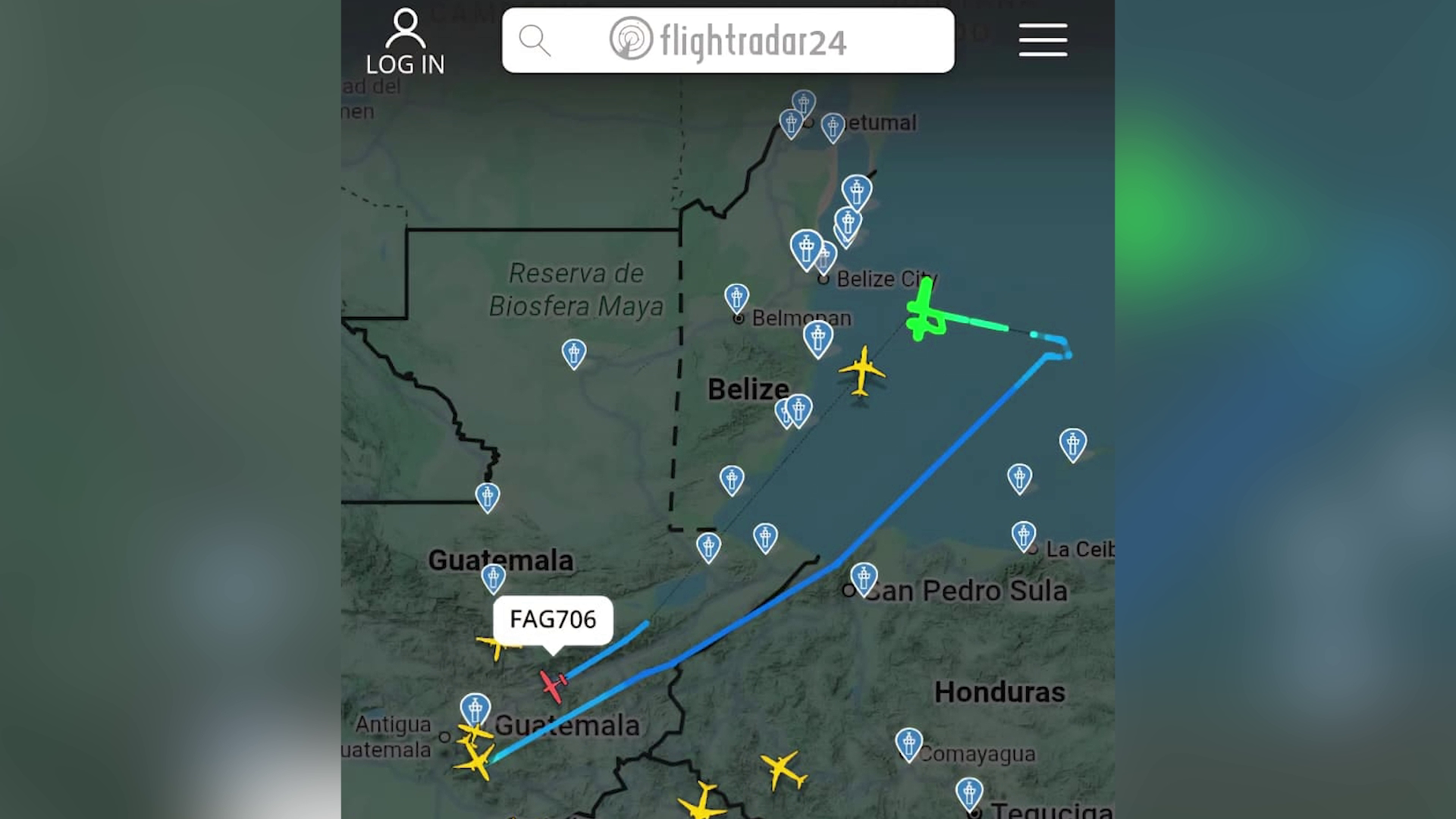
A bitter cross-border diplomatic dispute has erupted between Central American neighbors Belize and Guatemala after Belizean authorities confirmed evidence of an unauthorized Guatemalan military aircraft incursion into Belizean airspace, an incident that coincided with an illegal offshore narcotics drop off Belize’s coast.
The clash of narratives between the two nations could not be starker: Guatemala has flatly denied any military flight entered Belizean territory, but Belize’s top domestic security official says cutting-edge tracking technology leaves no room for doubt over the incursion.
Julius Espat, Belize’s Minister of Home Affairs, reaffirmed the government’s unwavering position in an on-record interview with local media, confirming that all collected tracking data has been shared with Belizean authorities and key international partners. What has elevated suspicions around the flight is its direct timing: Espat confirmed the military overflight occurred the very same day that an illegal “wet drop”—a smuggling tactic where contraband is dumped into coastal waters for later retrieval by smuggling crews—took place in the area.
The link between the two events has reignited longstanding concerns over transnational drug trafficking running through Central America’s Caribbean coast. When asked directly about the confluence of the incursion and the narcotics drop, Espat acknowledged the clear connection between the events, noting that contraband cocaine is already circulating in the region from the incident.
“We just need to look at it closely. We know it happened,” Espat stated. He emphasized that the tracking evidence, which was first picked up by young technology users before being confirmed by official defense sources, has been corroborated repeatedly, pushing back against claims that dismiss the incursion as unsubstantiated.
“Sometimes people try to underestimate and belittle the technology that youths have access to. Well now we’re in the AI reality and you have to respect those [tools] because they’re being confirmed,” Espat added. He confirmed that Belize’s Defense CEO has formally validated the tracking data, and the nation’s foreign ministry is now escalating the issue through diplomatic channels.
While Guatemala continues to deny any military aircraft entered Belizean airspace, Espat noted that multiple stakeholders hold the corroborating data: Belizean officials, North American counter-narcotics partners, and other Central American regional partners all have copies of the flight tracking records.
Espat stressed that Belize will work closely with its North American partners to address the persistent threat of transnational drug trafficking through the region. While he acknowledged that eliminating illicit smuggling entirely is an unrealistic goal, he noted that current cross-border cooperation is already yielding results and can be strengthened further to reduce drug trafficking activity.
This report is adapted from a verbatim transcript of an evening television news broadcast, with Kriol language dialogue preserved via standardized spelling conventions.