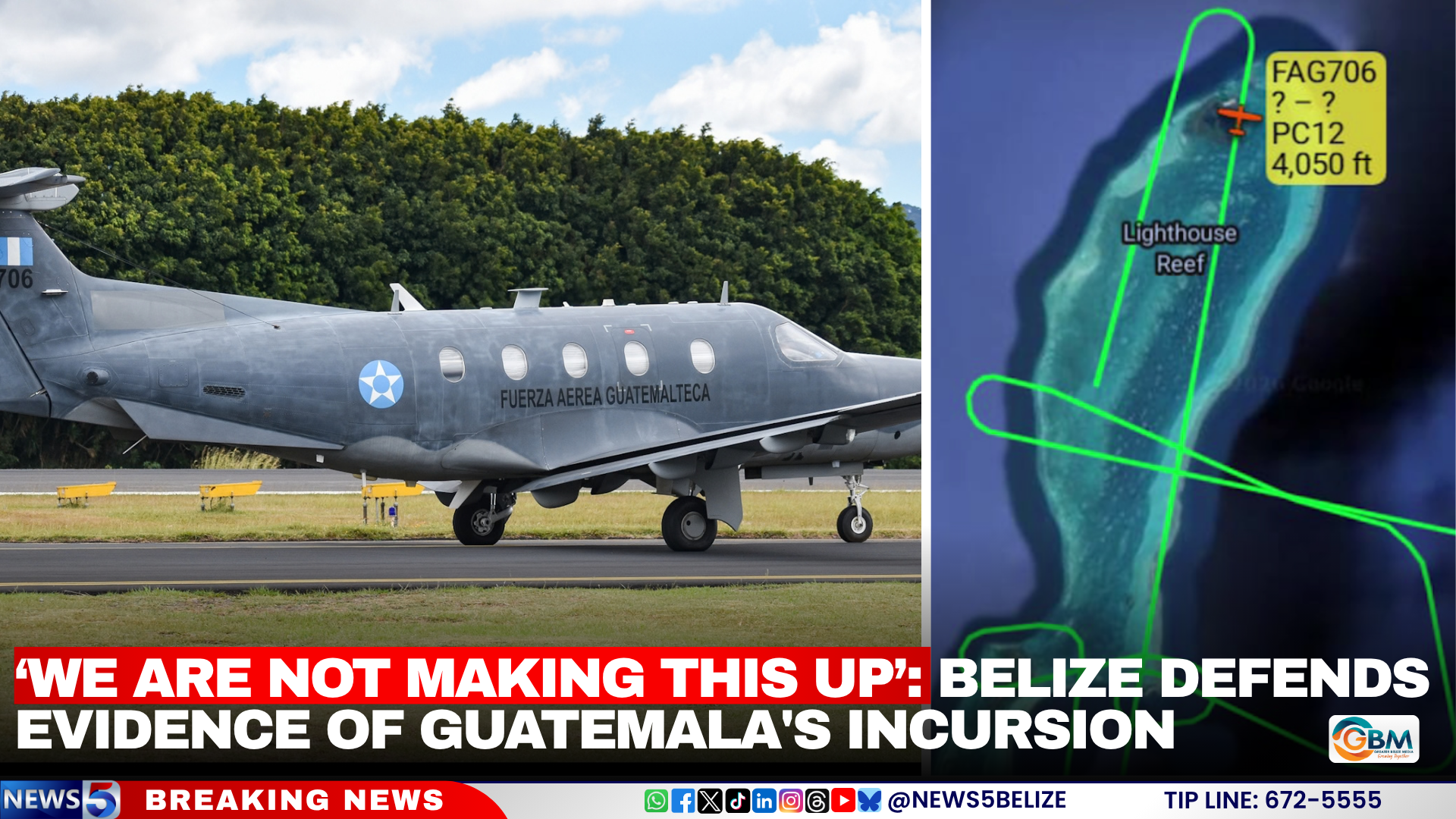
A cross-border diplomatic dispute between Central American neighbors Belize and Guatemala has erupted in early October 2026, after Belize formally accused Guatemala of allowing an unauthorized military-linked aircraft to violate its sovereign airspace — a claim Guatemalan President Bernardo Arévalo has flatly rejected. Oscar Arnold, Chief Executive Officer of Belize’s Ministry of Foreign Affairs, has forcefully defended the credibility of his country’s evidence, pushing back against any implication that the incursion claim is fabricated. Contrary to public speculation that Belize relied only on open-source flight tracking data to level the accusation, Arnold clarified that the government waited for confirmation from its own national radar systems before escalating the issue. “We had to await an official report from our agencies, personnel operating our primary and secondary radar networks, to confirm that an unauthorized aircraft had in fact entered our airspace,” Arnold explained in an official statement. Beyond in-house radar confirmation, Arnold added that Belize has secured independent third-party verification from multiple reputable, credible sources that both the flight and the unapproved border crossing took place. “We are not individuals who are in the business of making this information up,” he emphasized, rejecting any accusations of falsifying the diplomatic incident. In a key detail that raises questions about the flight’s intentions, Arnold confirmed that the aircraft’s transponder — the device that transmits a plane’s identity and location to air traffic control systems — was deliberately turned off during the incursion. He declined to expand on how this disabled transmitter affects official flight logging records, however, noting that the core principle at stake is far more important than technical details. According to Arnold, the central issue for Belize’s government remains the violation of national sovereignty: an unapproved aircraft entered Belize’s legally recognized airspace, and that incursion cannot be dismissed. After confirming the incident, Belize moved swiftly to file a formal diplomatic protest with Guatemala, and also submitted documentation of the incursion to the Organization of American States (OAS), the regional body tasked with mediating inter-state disputes in the Americas. Arnold noted that Guatemala has already publicly stated it would support a neutral OAS investigation into the claim, and Belize is now actively reviewing the prospect of inviting the OAS to oversee an impartial inquiry. “If both countries formally request intervention from the OAS Secretary General, the organization would step in to act as an impartial observer to resolve the dispute,” Arnold explained. The standoff comes as the two nations have a long history of intermittent border disputes, making this latest airspace incident a sensitive test of regional diplomatic mechanisms. As of press time, Guatemala has not issued any further comment beyond Arévalo’s initial flat denial that the flight ever occurred.