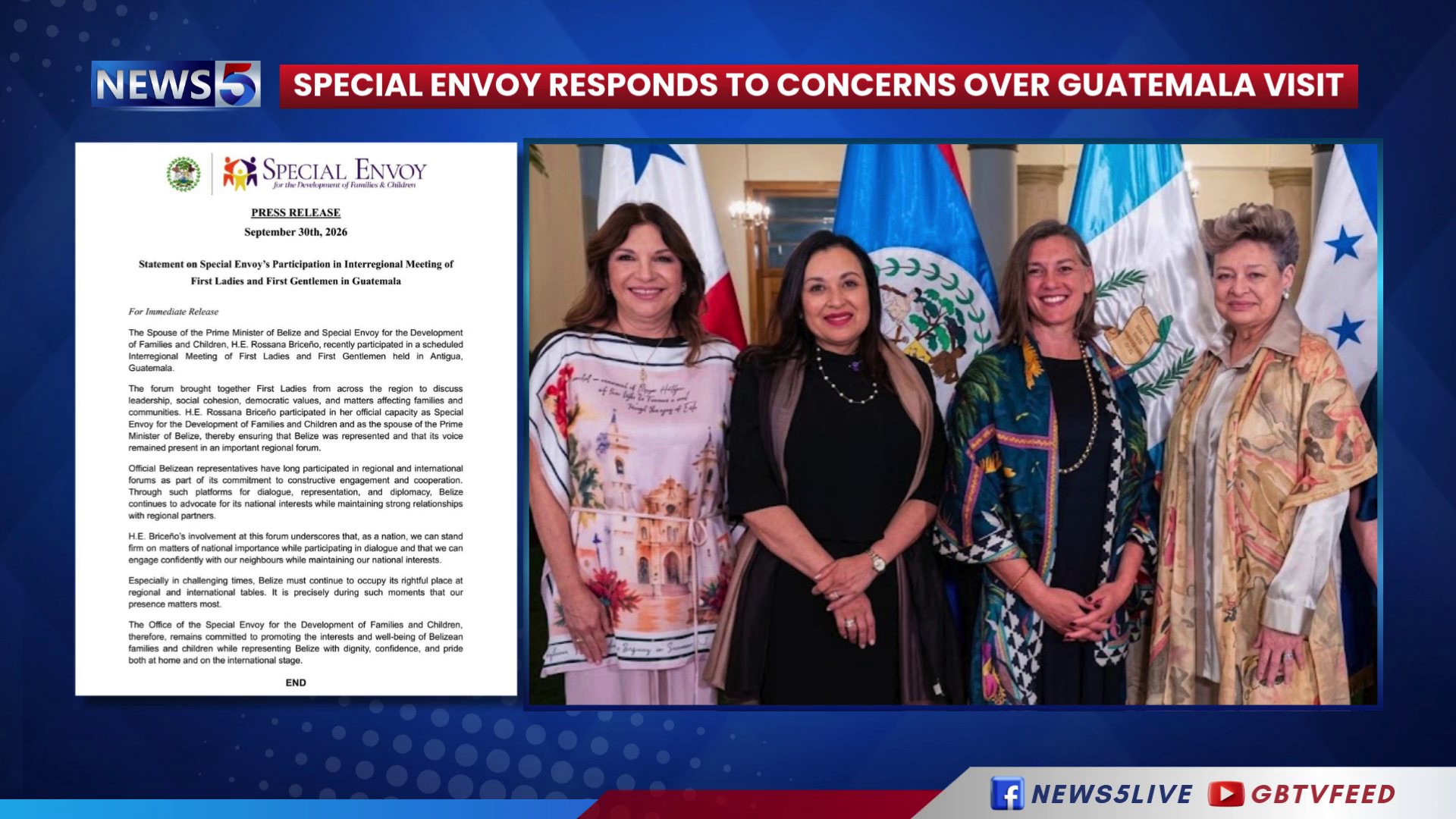
Against a backdrop of heightened scrutiny over fraught bilateral relations between Belize and its neighboring Guatemala, the Office of the Special Envoy has publicly defended Rossana Briceño’s recent participation in a high-profile regional gathering held on Guatemalan soil. In an official press statement released September 30, 2026, the office confirmed Briceño’s attendance at the Interregional Meeting of First Ladies and First Gentlemen, hosted in the Guatemalan city of Antigua.
The three-day forum brought together senior regional representatives from across Central America and beyond to deliberate on a range of pressing cross-cutting topics, including inclusive leadership, strengthening democratic norms, advancing social cohesion, and addressing the most urgent challenges facing working families and local communities. Per the official statement, Briceño took part in the meeting in two distinct roles: serving in her official capacity as Belize’s Special Envoy for the Development of Families and Children, and also as the spouse of Belize’s sitting prime minister.
The core argument put forward by the Special Envoy’s office centers on the necessity of sustained diplomatic engagement even amid bilateral friction. Officials emphasized that maintaining active representation at key regional forums is a critical strategic priority for Belize, allowing the small nation to retain its seat at the table when regional issues are being discussed. The statement was framed not only as a clarification of the visit’s purpose but also as a direct response to growing public and political concern over Briceño’s decision to attend the event at a time when long-simmering sensitive bilateral disputes have once again put Belize-Guatemala relations under intense public and diplomatic scrutiny.
“Belize is fully capable of advancing and protecting its core national interests while remaining constructively engaged with its neighbors, particularly during periods of strained relations,” the statement read. Officials added that multilateral regional forums create a critical space for small states like Belize to amplify their policy priorities, while supporting broader efforts toward diplomatic dialogue and cross-border cooperation on shared regional challenges.
Despite the defense of the trip, the official statement left multiple critical, unresolved questions unanswered. It provided no details on which internal authority approved Briceño’s travel, nor any information on the source of funding for the visit. Additionally, the statement did not address whether Briceño raised any of Belize’s long-standing bilateral concerns directly with Guatemalan government representatives during her time at the conference.
This report is adapted from a transcript of an evening television news broadcast, with standard orthography applied to Kriol language segments included in the original recording.