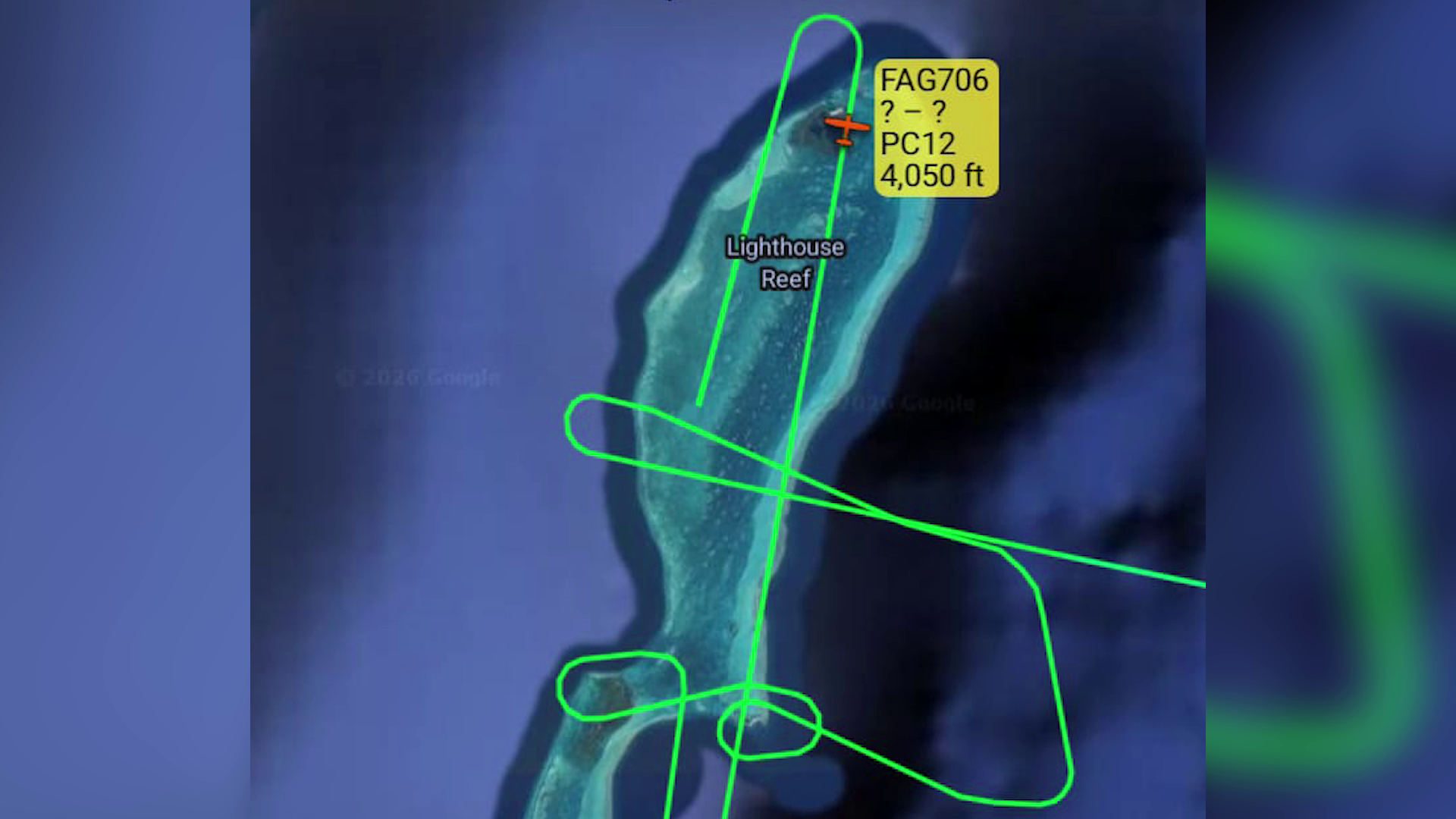
A cross-border diplomatic dispute has erupted between Central American neighbors Guatemala and Belize after Belize accused Guatemala of allowing a military aircraft to enter its sovereign airspace — a claim Guatemalan President Bernardo Arévalo has rejected outright, putting forward a full-throated defense of his country’s position and calling into question the credibility of the evidence used to support the allegation.
The controversy began after tracking data circulated online purportedly showing a Guatemalan military plane crossing into Belizean airspace, a claim Belize’s Ministry of National Defense and Border Security has since corroborated. Belizean Prime Minister John Briceño even raised the incident at the United Nations General Assembly, framing the incursion as a deliberate violation of Belizean sovereignty.
In his first public comments on the controversy, Arévalo dismissed the entire allegation as unfounded, stating clearly, “There has been no flight like the one being reported.” Going further than a simple denial, the Guatemalan leader questioned the origins of the original tracking data, identifying the source as a 17 to 18-year-old hobbyist who generated the flight information using a public tracking application. This line of attack seeks to undermine not just the data itself, but the credibility of the source that brought the supposed incursion to public attention.
To back up his country’s denial with tangible evidence, Arévalo announced that Guatemala has made the aircraft in question and its full flight logs available for independent inspection by the Organization of American States (OAS), the regional body that already maintains a permanent monitoring office in the border zone between the two nations. “We have made available to the Organization of American States the plane that has been identified as the one that supposedly would have been involved in that event, so that they can come and review its records, because those records that get logged are what show what route was taken, etcetera,” Arévalo explained. He also pushed back against Belize’s decision to escalate the issue to the UN General Assembly, noting that the OAS already has a formal mandate to resolve border disputes between the two countries.
Briceño, however, remains unconvinced by Guatemala’s denial, dismissing the offer of OAS inspection as mere posturing designed to save face. “It doesn’t matter what they say because I think the entire world knows that it happened. And of course probably they are trying to save face. I don’t know what they are trying to do. The point is that it happened. They should have never been here on our airspace,” Briceño stated. The Belizean prime minister also added another layer to the accusation, claiming that the Guatemalan aircraft turned off its transponder mid-flight — a move he says proves the crew knew they were violating Belizean airspace and intended to hide their activity.
For many Belizeans, the dispute comes after decades of unaddressed border tensions between the two nations, where repeated formal protests over unauthorized incursions have failed to produce tangible resolutions. That context has led many in Belize to support Briceño’s decision to raise the issue at the UN, arguing that public international scrutiny is necessary even if it creates bilateral friction, rather than continuing to rely on regional mechanisms that have delivered little results to date.