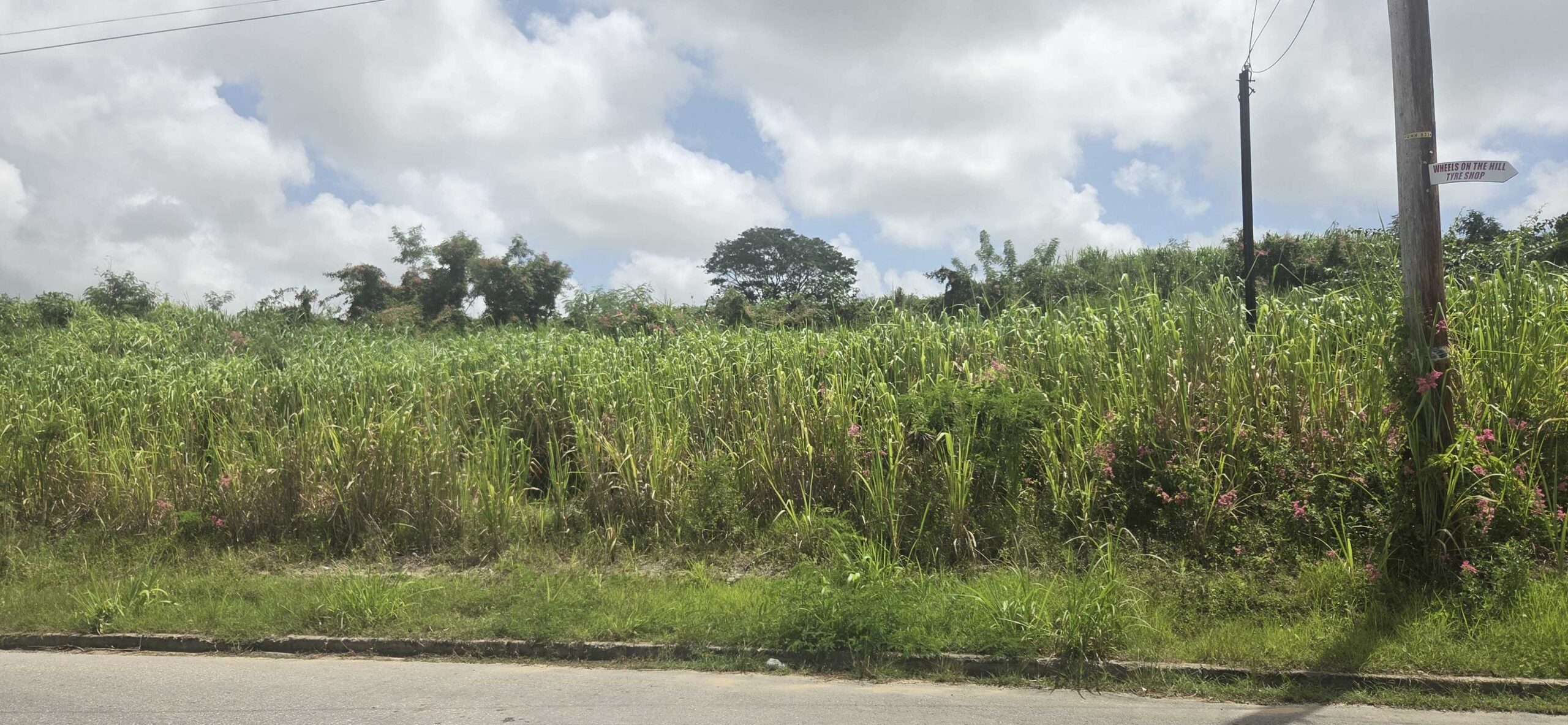
A contentious community debate has emerged in Lower Burney, St Michael, after Barbados’ Housing Minister Chris Gibbs unveiled plans to address overcrowding in aging, structurally compromised housing estates. The government’s strategy centers on building climate-resilient new homes on designated greenfield sites, including Lower Burney, to relocate households from dense, deteriorated estates such as The Pine where full refurbishment and rewiring are no longer feasible.
While some long-term locals have welcomed the prospect of new neighbors and expanded housing stock for the parish, many residents are pushing authorities to resolve decades-old unaddressed infrastructure and environmental issues before any ground is broken on the new development. Community members insist that close consultation with long-term residents—who hold intimate knowledge of the area’s unique terrain—is critical to preventing new construction from worsening existing flooding and utility shortfalls.
Sixty-three-year-old Dennis Douglas, a lifelong resident of the area, pointed out that outside developers and engineers regularly overlook local knowledge of the region’s hydrology when planning projects. “Engineers come into the neighbourhood and build, but they don’t come and ask the older residents about the water system in Burney,” Douglas explained. “When we have heavy rainfall, the water accumulates down here in the low-lying areas. Developers lay foundations and return a year later to find standing water where they built.”
Douglas added that historic watercourses running down from St David’s cross Lower Burney, and unaccounted-for subterranean channels and old plantation springs regularly lead to severe flooding during heavy rain events. He recalled a major downpour in the 1970s that sent floodwaters stretching from the Lower Burney valley all the way through adjacent neighborhoods, causing widespread disruption to homes and infrastructure.
Beyond chronic drainage flaws, residents are also calling for urgent expansion of basic utility access, most notably the long-overdue installation of residential natural gas lines. Even though many Lower Burney households sit just a short distance from main gas distribution lines and a nearby commercial petrol station, dozens of homes in the interior of the community remain cut off from the network.
“The natural gas infrastructure reached the valley and stopped halfway,” Douglas said. “Local residents have begged for connections for years, but officials claim there isn’t enough space to run lines past existing water pipes, or that the cost is too high. If a commercial developer comes in to build new homes here, they’ll get gas service immediately. We’ve been left waiting this whole time.”
Residents have also flagged serious concerns about the geotechnical conditions of the targeted development parcel, warning that deep layers of soft topsoil and muddy substrate will drastically drive up foundation construction costs for builders. Local resident Sean Adams explained that building stable, code-compliant homes on the terrain requires extensive pre-construction foundation engineering, which could put the final home prices out of reach for average buyers if public authorities do not prepare the land first.
“If you end up spending hundreds of thousands of dollars just on a foundation because you’re building on mud, you can’t afford to finish constructing the house,” Adams noted. “Foundations need to be deep, or built on reinforced columns, but it is far better to have a solid, level base that can withstand earth tremors than to rely on partial structural supports. The government should grade, stabilize and level the land before any lots are sold or developed.”
Adams also pushed for targeted investments in social infrastructure and community maintenance alongside the housing development, noting that overgrown vegetation in under-maintained public spaces creates hiding spots for criminal activity. “We have large areas of overgrown bush here, and when it’s not trimmed, it becomes a spot for illicit behavior,” he said. “The government could clean the canals regularly and clear the brush, and there are plenty of young local people looking for work who would jump at the opportunity. When you invest in the community, everything improves and crime goes down.”
Opinions on the government’s broader relocation scheme remain split across Lower Burney. Some residents acknowledged that housing agency representatives have conducted preliminary outreach in recent years to gather community feedback and share early development plans. While some established homeowners are skeptical that long-resident families from the overcrowded estates will agree to relocate, others see the addition of new housing as a net benefit for the entire parish, provided supporting infrastructure is upgraded first.
One 20-year resident summed up the mixed perspective: “The more the merrier, I don’t have an issue with new housing. But infrastructure has to keep up with the growth. We need speed humps on our local roads because drivers come through way too fast here. If the road network is upgraded to handle extra traffic and safety improvements are made, new housing will be a welcome addition.”