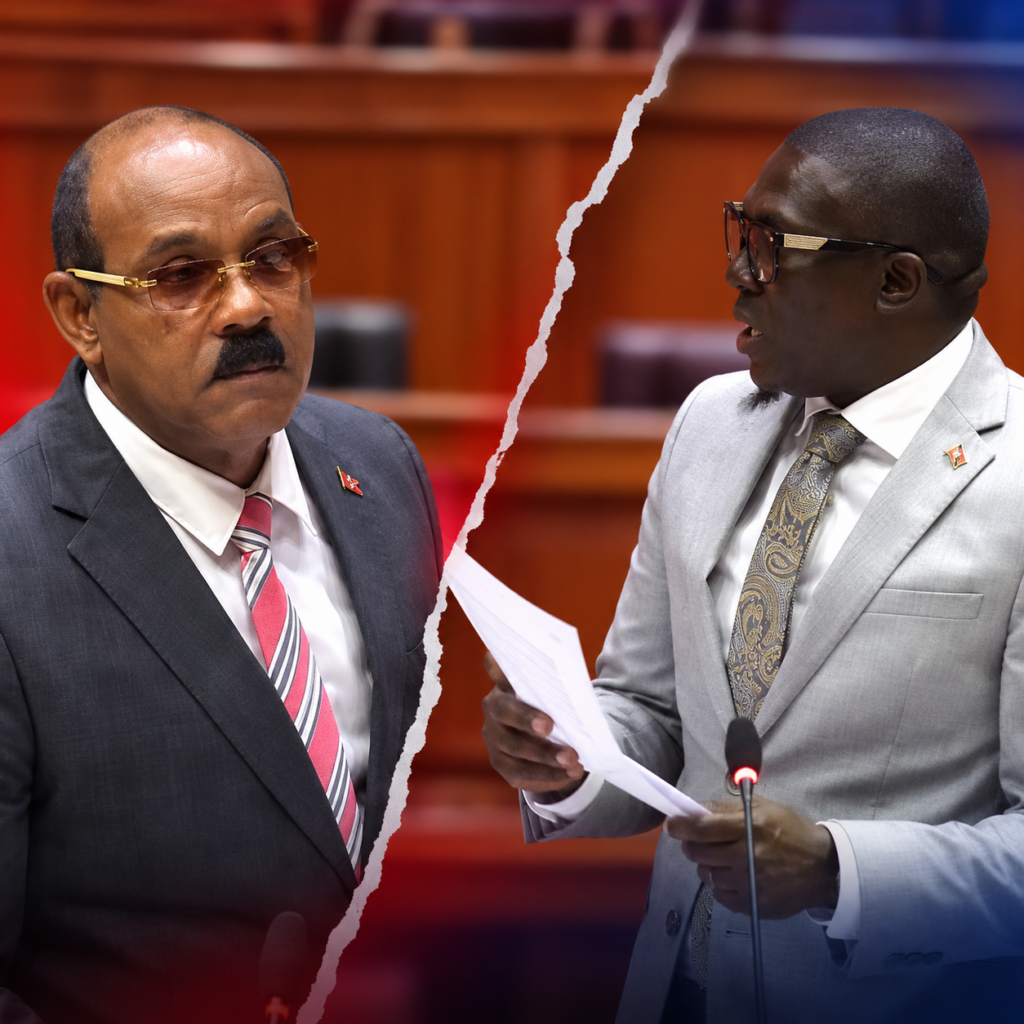
Lawmakers in Antigua and Barbuda have formally given their approval to a full government guarantee backing an EC$87 million loan extended to the Antigua and Barbuda Transport Board, closing a heated parliamentary debate that centered on the split of funds between existing debt refinancing and critical national road infrastructure upgrades. The approved resolution paves the way for the government to secure the 6.5% annual interest loan from a regional syndicate of three financial institutions: ACB Caribbean, Antigua Mortgage and Trust Company Limited, and ACB Grenada Bank Limited. Per the official terms of the facility, the funding will serve two core purposes: refinancing outstanding government liabilities and financing the development and rehabilitation of the country’s deteriorating road network. The government’s guarantee covers the entire principal sum of the loan, with a formal commitment to cover any gaps in monthly repayment installments if needed. The authorization process was carried out in compliance with Section 54 of the 2006 Finance Administration Act, which mandates parliamentary approval for such state-backed borrowing arrangements. The proposal drew immediate pushback from Opposition Leader Jamale Pringle, who challenged the governing administration over the opaque structure of the financing. Pringle highlighted that of the full EC$87 million, EC$67 million is allocated to paying down existing debt, leaving just EC$20 million in immediately accessible new capital for the government. He argued this allocation contradicts earlier public statements from the administration that it would secure approximately EC$100 million exclusively for a nationwide road rehabilitation initiative. “Out of this $87 million, $67 million is to cover existing debt. So the only amount that they have at their disposal, according to this document, is $20 million,” Pringle told parliament. In response, Prime Minister Gaston Browne refuted the opposition’s claims that only EC$20 million would ultimately go toward road works, framing the EC$87 million facility as a temporary bridging arrangement rather than the full final funding package. Browne explained that the EC$67 million portion will be used to clear outstanding liabilities owed to the Finance and Development Company, clearing the way for a larger, long-term funding deal to move forward. The remaining EC$20 million is an immediate advance to keep ongoing road projects active. “This is a facility in the amount of $87 million to cover the $67 million to pay out FDC, plus an advance of $20 million to the government,” Browne clarified. Once the broader, full loan arrangement is finalized, the prime minister confirmed an additional EC$80 million will be disbursed to the government, bringing the total net new funding for road works up to the previously announced EC$100 million. “Upon completion, that is a further $80 million that will come to the government, giving the government a net of $100 million,” Browne told the legislative chamber. The additional funding, he noted, will allow the administration to advance its national road rehabilitation program far beyond current progress, with the goal of completing nearly all planned upgrades. Browne called on residents who have faced disruptions and safety issues from deteriorated road conditions to remain patient, noting that the full $100 million budget will allow the government to finish nearly all outstanding projects. “And now that we’re getting $100 million, clearly, practically all of those roads will be completed,” he said. The prime minister also defended the government’s choice to bring the guarantee to parliament for a vote, emphasizing that his administration prioritizes fiscal transparency and legislative oversight by securing required approval before accessing any borrowed funds. “This is the discipline of my administration, coming before to get the necessary parliamentary approvals before we take one cent from the bank,” he said. Following the conclusion of the debate, the resolution was put to a vote in the House of Representatives and passed, clearing the final bureaucratic hurdle for the government to access the bridging facility and advance its long-term infrastructure plans.
Parliament Approves EC$87 Million Government Guarantee for Transport Board Loan