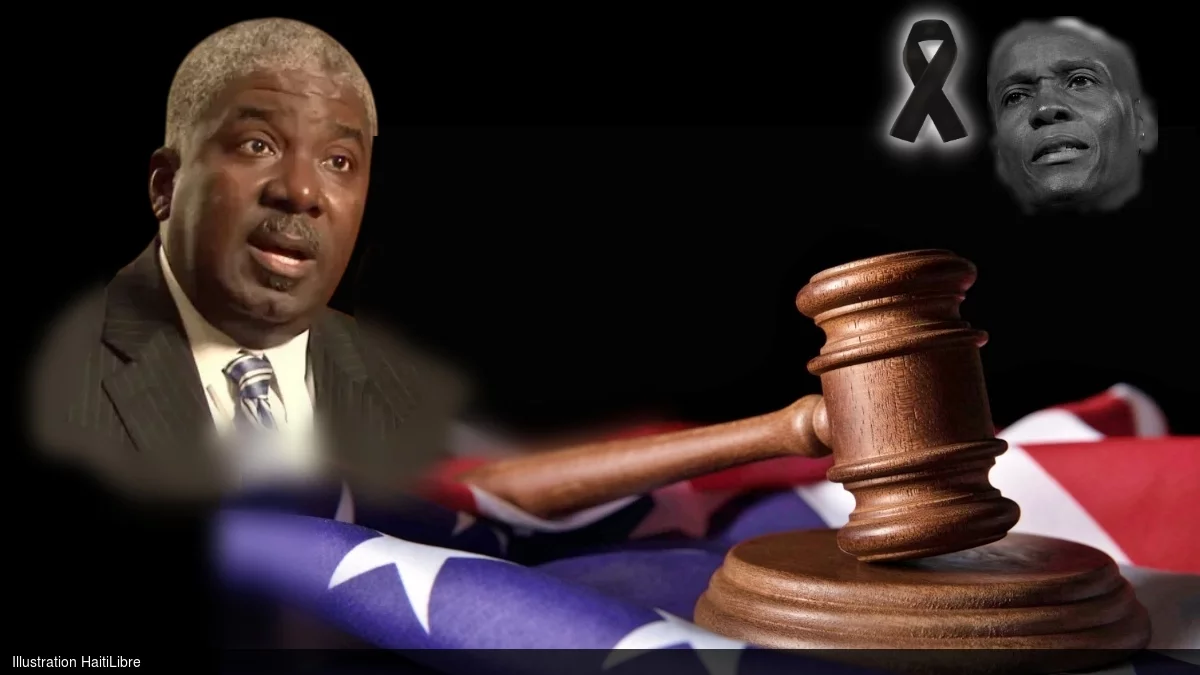
Five years after the high-profile assassination of Haitian President Jovenel Moïse sent shockwaves across the Caribbean and global political landscape, the federal trial of the man accused of orchestrating the plot has officially gotten underway in South Florida. On Monday, September 28, 2026, proceedings opened at the U.S. Federal District Court for the Southern District of Florida, with Judge Jacqueline Becerra presiding over the case against 67-year-old Haitian-American pastor Christian Emmanuel Sanon.
Prosecutors from the U.S. Attorney’s Office level a serious conspiracy charge against Sanon, alleging he planned Moïse’s 2021 killing as part of a bid to seize the Haitian presidency and install himself as the country’s new leader. The charges against him include conspiracy to commit assassination and kidnapping against a foreign head of state; if convicted on these counts, Sanon faces a mandatory maximum sentence of life imprisonment.
Sanon’s detention stretches back to just days after Moïse’s assassination, when he was taken into custody by Haitian law enforcement. A search of his residence uncovered a cache of suspicious materials, including multiple crates of ammunition, 19 separate passports, and other unregulated items. After more than a year in Haitian custody, he was deported to the United States to face federal charges in early 2023. He is currently represented by lead defense counsel Zeljka Bozanic, with assistance from co-counsel Humberto Dominguez.
Public records and local Haitian reporting outline Sanon’s background: born in southern Haiti, he completed medical studies in the Dominican Republic before relocating permanently to Florida. In the years leading up to Moïse’s assassination, he began circulating online videos positioning himself as a reformist political figure who could bring long-overdue change to Haiti’s unstable political landscape.
The prosecution’s narrative argues that Sanon was the central organizer of the assassination plot, actively recruiting co-conspirators and laying the groundwork for his own assumption of the presidency after Moïse was removed from power. But Sanon has entered a formal not guilty plea to all charges, and his defense team has laid out a clear, targeted strategy to distance their client from the violent criminal act while acknowledging his long-stated political aspirations.
In opening framing of the case, Bozanic has pushed back aggressively against the prosecution’s conspiracy claims. She does not dispute that Sanon harbored ambitions to win the Haitian presidency and advance widespread political reform in his home country, but she emphasizes that he pursued these goals through plans for a peaceful, legitimate political transition. According to the defense, Sanon’s only professional connection to the private security firm CTU centered on hiring the group to provide personal security for his political activities and support infrastructure development projects he planned to launch in Haiti. He had no advance knowledge of, or involvement in, any plan to kidnap or kill Moïse, Bozanic argues.
The defense further contends that Sanon was actually manipulated and later pushed aside by more hardline conspirators and leaders of the security firm. Prosecutorial records themselves support this claim, Bozanic notes: by June 2021, just a month before the assassination, other plotters sidelined Sanon because they questioned his constitutional eligibility for the Haitian presidency and doubted he could attract enough popular support to stabilize the country after the coup. The conspirators then turned to another political figure, former judge Wendelle Coq Thélot, to front their planned post-assassination government.
In sum, the defense’s core argument positions Sanon not as the mastermind of a presidential assassination, but as an idealistic would-be politician who was outmaneuvered, manipulated, and eventually discarded by a shadowy armed group with far more violent, criminal intentions.
Jury selection was completed in the opening days of proceedings, with formal opening statements from both the prosecution and defense set to begin shortly. The trial is scheduled to hold daily sessions over the course of several weeks. A number of Sanon’s co-defendants, who have already either been convicted or entered guilty pleas in U.S. federal court, are expected to take the witness stand to testify against Sanon in exchange for potential sentence reductions. Legal observers expect the jury to deliver its verdict by the end of fall 2026, closing a years-long legal process stemming from one of the most high-profile political assassinations in recent Caribbean history.